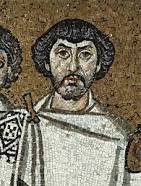
General Belisarius Enters Rome – on this day in 536CE

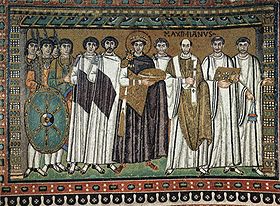
On this day, December 9th in 536CE, Roman General Flavius Belisarius (pictured above) entered the city of Rome through the Asinarian Gate (seen below) with his small cohort of Roman knights.
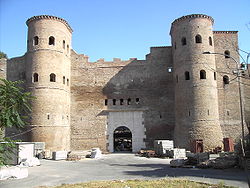
250px-Porta_Asinaria_2948

The city’s residents had not seen a Roman Legionnaire for almost exactly 60 years, when what remained of the Western armies deserted the Eternal City when the Goth warlord Odoacer toppled the last Western Roman Emperor, Romulus Augustulus.

Since that time, Rome (the city) had been under the control of a series of Goth rulers, including Odoacer, Theodoric (the “Great”), Amalasuntha (daughter of Theodoric), Theodad (cousin of Amalasuntha and her murderer) and at the time of Belisarius’ arrival, the Goth King Vitiges.

Imagine that!  For 60 years, the Roman Empire had gone about its business with an Emperor mounted on a throne in Constantinople, while Rome herself – the birthplace of Empire – was held by barbarians.  Imagine a United States continuing to exist, and to thrive, with a Washington D.C. belonging to a foreign power.  It sounds inconceivable and so it was to the Emperor Justinian who was determined to accomplish what none had dared, to return Rome to Rome.

By the time that Belisarius arrived in Rome his exploits (in Persia and Africa) were the stuff of legend.  But he arrived woefully understaffed and soon faced a Goth army that exceeded 100,000 in number surrounding the city, determined to crush Belisarius and with it, Justinian’s aspirations of restoration.

Absolutely fascinating stuff!

Following is a Wikipedia link which does a decent job of summarizing the ensuing Siege of Rome.
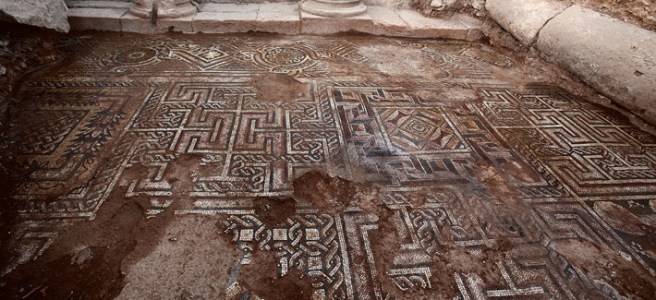
Roman Mosaic Floor Found in Turkey, near Syria

“The city is one of the few places where Syrian urban culture from the Hellenistic-Roman era can currently still be studied.” – Prof. Dr. Engelbert Winter from University of Münster

Archaeologists from Germany’s University of Munster have discovered a beautiful mosaic floor in Gaziantep, Turkey (just 60 miles from Aleppo, Syria),. once known as Doliche in Rome’s Syrian province.

This part of Turkey is one of the last protected parts of this once flourishing region of the Roman Empire.  Most of Roman Syria is now off-limits and under assault, as per the lead quote above making this corner of Turkey, and this find, that much more valuable.

Though the date in which the floor was set has not yet been disclosed it is of a late Roman vintage and very reminiscent of work seen in Istanbul’s Great Palace Mosaic Museum (once Constantinople’s Imperial Palace).

For more on the discovery see this link to the University of Munster’s press release.


Roman Glass in Ancient Japan

Roman Glass in Japan

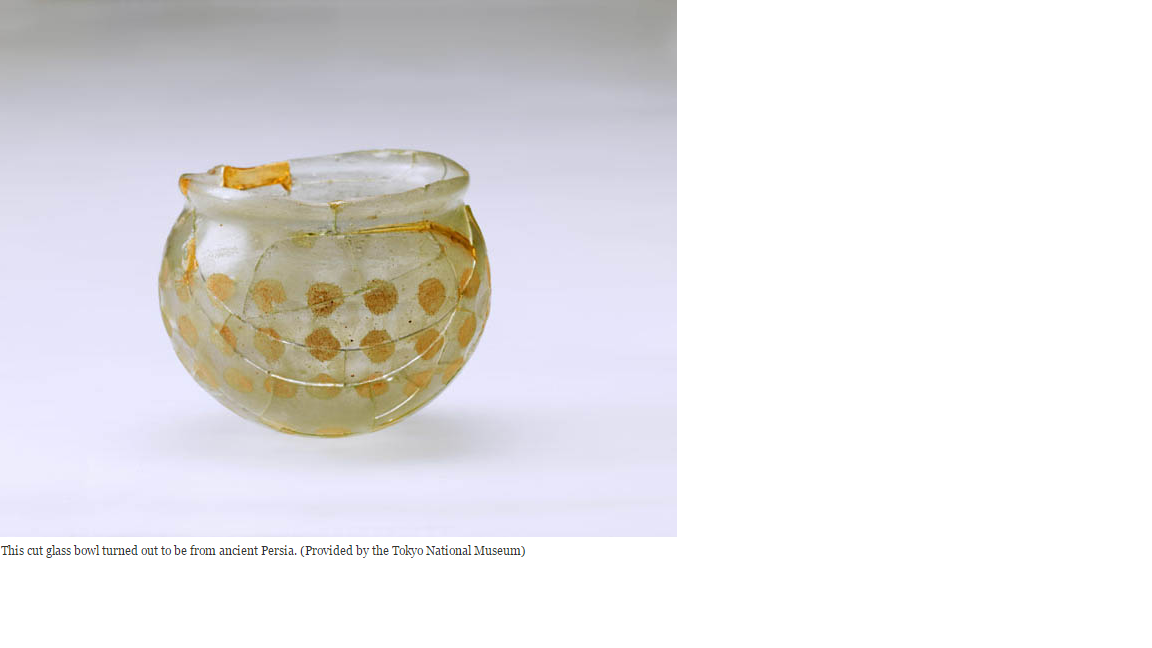
ROMAN GLASS has been found in a recently opened Japanese tomb dating to the 5th century, as per an article in this week’s Asahi Shimbum (courtesy of Adrian Murdoch’s fine blog).

Read the original article on this stunning discovery here: http://ajw.asahi.com/article/behind_news/social_affairs/AJ201411130064

map japan

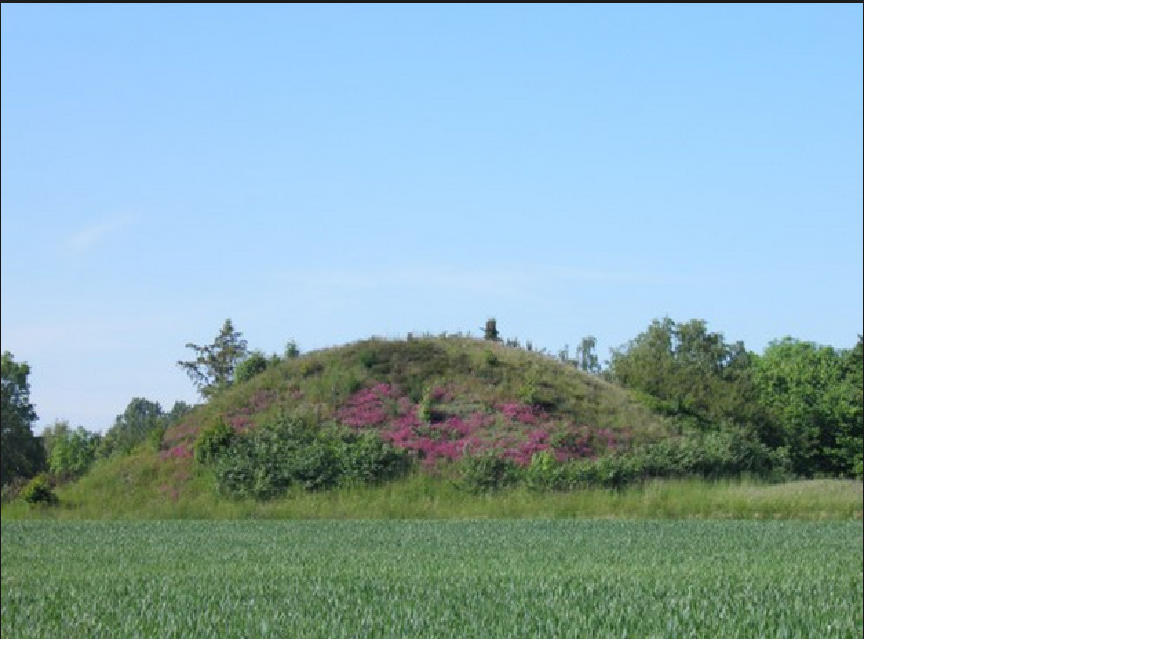
The ornamental glass (a beautiful cobalt blue plate and a delicate golden bowl seen above) is believed to have made it’s way to Japan through Sassanid Persia.  Scientific analysis suggests that both items were created by Roman artisans working within the Empire at some point in the 3rd century.  While it’s unknown precisely when and how they made their way to Japan, they were buried along with the denizen of tumulus #126, within a cluster of ancient graves dating to the late 5th century.

Niizawa Senzuka burial mounds

So what does it have to do with the Age of Justinian, this turbulent time when the light of Rome still shined in the East as darkness fell in the West?

In these fragile pieces of blue and gold glass, fantastically preserved, we have an example of how far Rome reached even in an era in which common wisdom says Rome had already “fallen”.

The truth, as found in this burial mound in Nara Prefecture suggests something very different.

While Roman trade with Japan was indeed rare, the Romans (and their trading partners and sometimes enemies, the Persians) traded actively with the East. Most of this trade centered around silk that could only be sourced from China at this time. Roman gold moved east, and Chinese silk moved West. That river of gold sustained the Persians.

But there would come a day, not long after our blue glass plate was buried in Japan, when an exceptional man, a missionary, took an extraordinary risk by smuggling silk worms out of the Forbidden City in a hollow-tipped cane. When he arrived at the Emperor Justinian’s court in Constantinople he irrevocably changed the course of history….

– Matthew J. Storm

The Conundrum – Rome Entering the Dark

Many books of fiction, academic studies, dry histories, shoddy blogs, shoddier movies and cheap soaps have been devoted to  that abstraction called ROME.

They devote themselves to the common questions we have been told that matter most, the “serious” questions.

Who were the Romans?

Where did they come from?

How did they achieve dominance over the classical world?

And most importantly in the eyes of many – what caused “THE FALL”.

The latter question is one that interested me as well, a great deal, until I understood a basic historical fact – a truly heretical historical fact.  That fact stunned me, blew me away really, fascinated me from the get-go and it hasn’t let go of me since.

ROME DID NOT FALL.

Or put more specifically, when Romulus Augustulus abdicated in favor of the Goth warlord Odoacer, he formally ended the Western Roman Empire.  Yet this apocryphal collapse was really just a historical asterisk.  Why?  How could I be so flip with the seminal event of modern western civilization.

The year was 476.  The “end” came in 476.

But the reality is that for another thousand years – until 1453 – a Roman Emperor continued to rule in the ancient Byzantium, the capital of the Roman Empire since Constantine the Great moved the capital of the Empire from Roman to the newly christened Constantinople in 330CE.

It is accurate to say that the Western Empire ceased to exist in 476, while in truth it had ceased to exist several decades before as an independent entity.  It is equally true, stunningly accurate, to assert that the Eastern Empire lived until it fell to Mehmed “the Conqueror” in 1453, on the eve of Columbus’ trip to the new world.

Assuming that what I have just abruptly foisted upon you is true, it begs the following questions.  I trust they will pique your interest as they have held me hostage since childhood,

– Why do Western school children know nothing of this “other Rome”?

– What is the missing history, these thousand years that is not taught?

– What debt do we owe to this Rome – how would our world be different if Rome hadn’t continued in the East?

– Who were these “other” Romans?  How did they perceive the falling darkness, the barbarian invasions, the retreat of classical civilization?

– How did they navigate the Dark Ages?  How did civilization survive in their hands when the West lived in darkness, ignorance, brutish squalor?

– What was the role of this forgotten Rome in the reawakening of the West in the Renaissance?

These are the basic questions that have kept me occupied for many years – they are obviously far greater than I.  But I’ve delved into these things in a very small way, pursuing my obsession and attempting to share a germ of this fascinating world with others in the form of my novel, FROM AFRICANUS, and it’s sequel, AVENGING AFRICANUS that will be released in the summer of 2014.

Please stay tuned, share your thoughts, your passion, and curiosity, for the forgotten Rome.  Not to say that the story of the Republic and early Empire isn’t worthy – it is most worthy of study and discussion but it’s not neglected.   The same can’t be said of the Rome of Justinian the Great.