566 Years After The Fall – Rome Lives…
ON THIS DAY IN HISTORY, September 13th 533, the Roman General Flavius Belisarius changed the history of the world by winning an unwinnable battle against the barbarian Vandals in what had once been Roman Africa, at a place known to us as AD DECIMUM, the tenth mile marker…
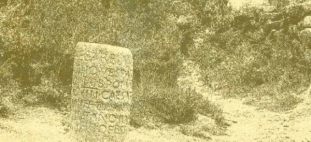
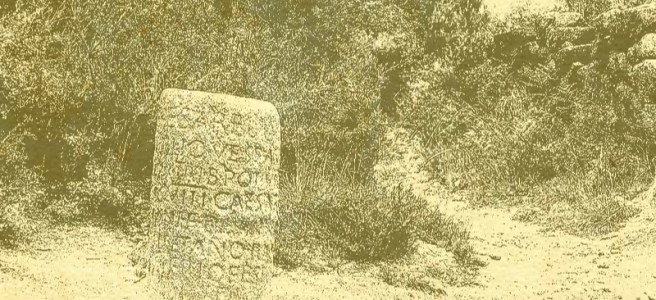
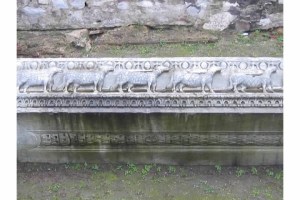
Humble milestones like the one pictured below marked each mile throughout the Roman highway system, spanning the 250,000 miles of roadway that once stretched from modern Scotland to Yemen. So extraordinarily durable was their construction that a number of those roads (and the bridges they crossed) are still in use today across former Roman territories in Europe, Africa and the Middle East. Roman mile markers allowed the traveler to know precisely where they stood in relation to their departure point and destination, long before our slavish devotion to smart phones and GPS.

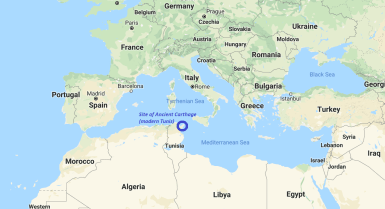
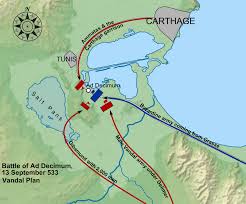
In what had been Roman Africa, stolen by the Vandals 100 years before, there stood such a stone on the approach to Carthage from the east on the ancient Roman highway that ran along the coast. To put this battle into a modern geographical context, note that where Carthage once stood in the ancientworld the sprawling metropolis of Tunis, capital of Tunisia, sits today (see map below). The actual battle took place at the tenth milestone from Carthage, known simply as Decimum Miliare (the tenth mile). This milestone, along with the battlefield itself has not been rediscovered by archaeologists as it lies beneath the suburbs of modern Tunis.

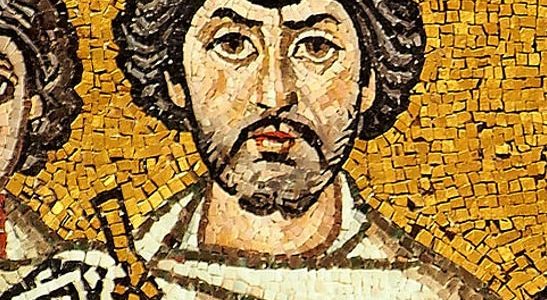
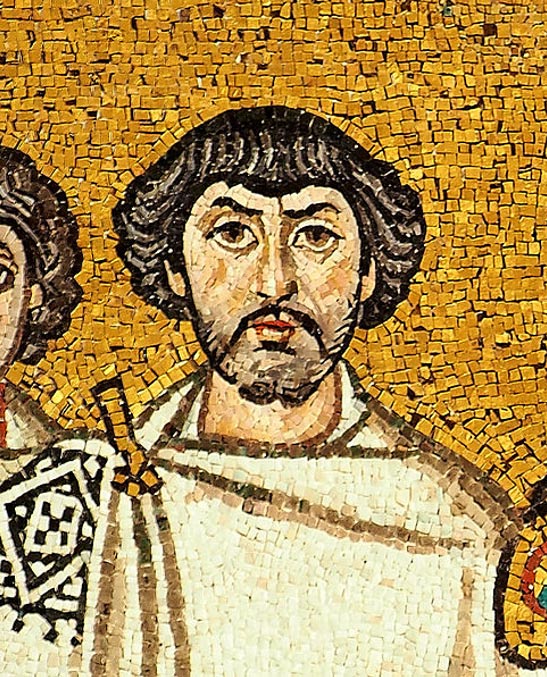
At that now lost tenth milestone (Ad Decimum), on this day – September 13th of 533 – the Roman Army led by General Flavius Belisarius (pictured below) met the Vandal King Gelimer in a battle that would change the course of history.
The world fully expected the Romans to fail as Roman armies had failed in the field against the Vandals and their Germanic ‘barbarian’ cousins for generations. Let’s recall which Romans sailed into battle against the Vandals – these were the Eastern Romans who had managed to avoid the fate that befell the Western Roman Empire for many reasons, not least of which was their geographical distance from the Vandals, Goths, Visigoths and other Northern Barbarians that had extinguished the Western Roman Empire in 476 with the formal abdication of the last Western Emperor, Romulus Augustulus. The Vandal theft of Africa and their brutal sack of the City of Rome were undoubtedly two of the key events that made the loss of the West inevitable.
Now these Eastern Romans sailed straight towards mortal danger over 1,000 miles from home – having set sail with an invasion armada for the first time in decades (on ships that were specially built for the purpose since Rome no longer possessed a deep water navy). If they lost to the Vandals there would be no retreat and no hope of reinforcements. If Belisarius lost the battle at the tenth milestone, the Eastern Roman Empire would be in grave jeopardy. See below for something of Belisarius’ battle plan at Ad Decimum.

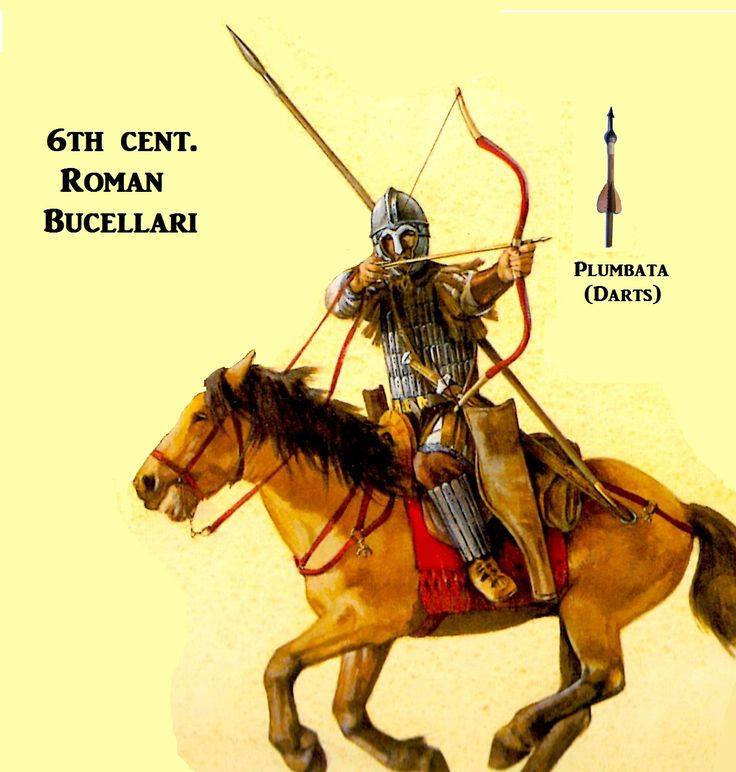
Belisarius and his Roman knights (see an image below for the decidedly medieval looking Roman knight that was very much the product of Belisarius’ experimentation with military technology and tactics) would triumph at Decimum Miliare against all odds and went on to extinguish the upstart Vandal kingdom and to bring Africa back into the Roman fold.
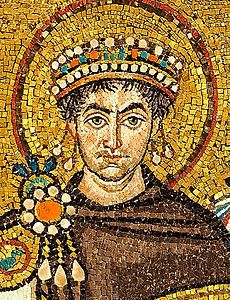
This was the first in a string of stunning victories engineered by Belisarius that would restore much of the lost Western Empire in the name of the reigning Caesar, the Emperor Justinian. These recuperated lands (Africa, Italy, parts of Gaul and Hispania) would remain part of the Roman Empire until after Justinian’s death – the moment when the ancient world truly ended and the Dark Ages began.
This moment, the battle that became known as Ad Decimum, figures prominently in the second book of my Legend of Africanus series: Avenging Africanus (available at amazon.com).
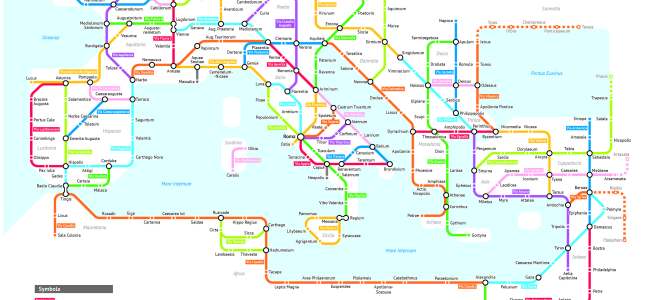
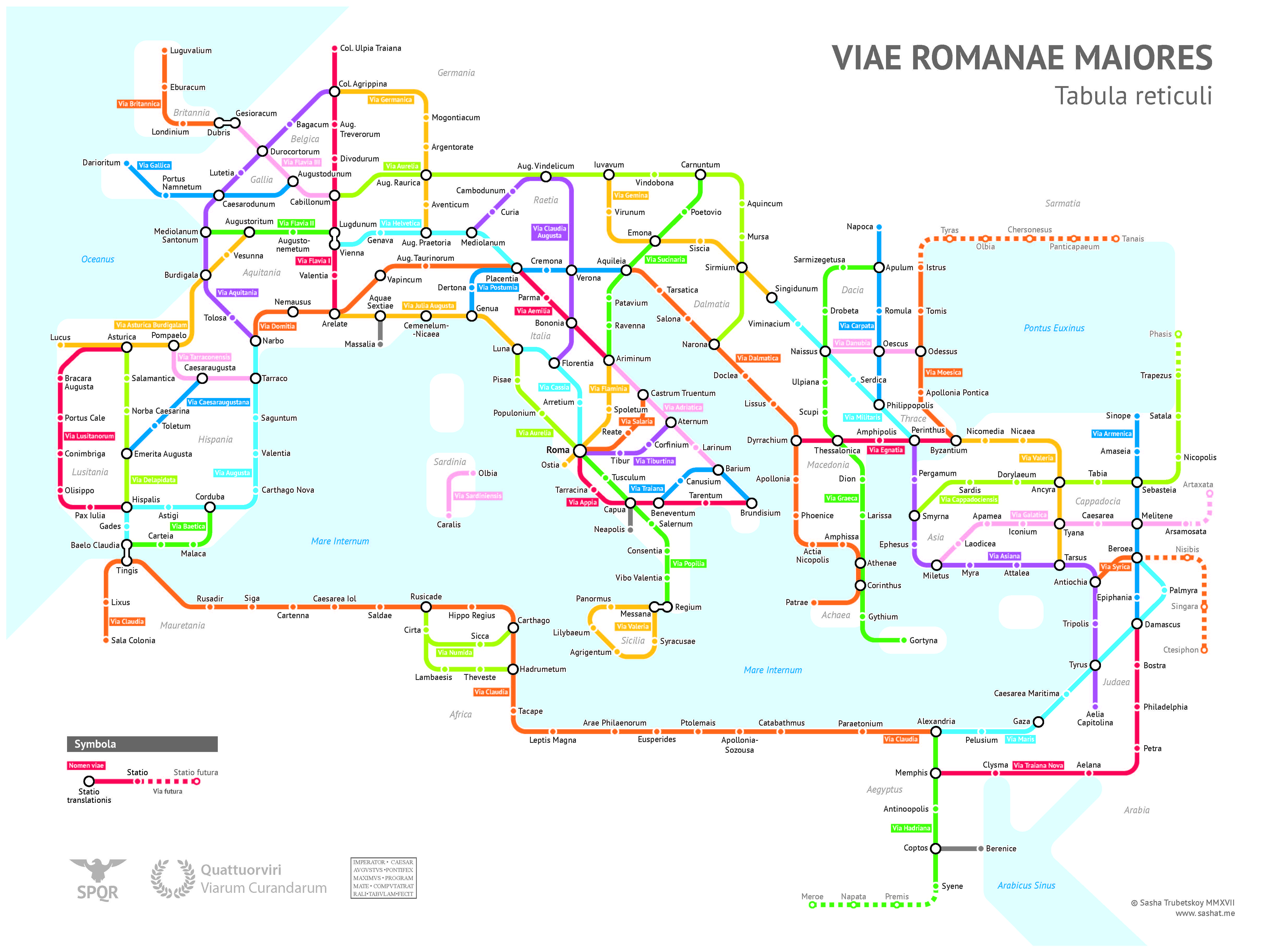
Urban dwellers will recognize this map at first glance! But when you look a little closer you will see that you are not in Kansas anymore.
You are, in fact, in the Roman Empire in the year 125CE. And the “subway lines” you see are the Roman highway system as it existed in that year to the best of our knowledge (with some assumptions). Solid lines reflect existing routes, dotted lines reflect Roman aspirations or partially complete routes where the Romans might have been active but had not yet established the control required to extend their infrastructure.
The map is the brainchild of a graduate student at the University of Chicago, Sasha Trubetskoy and it is absolutely brilliant, rendering the stunning breadth and scope of the Roman footprint in such a tangible way. I have not stopped marveling at it and I’m sure that you will as well.
Hop on the highway in Londinium and ride it to Petra? No problem, it could be accomplished within the confines of the Empire. To provide a concrete example of this marvelous system, Mr. Trubetskoy estimates that a trip from Rome to Constantinople would take approximately 2 months on foot, a journey that could be reduced by half if the traveler “transferred” to sailboat for part of the trip…
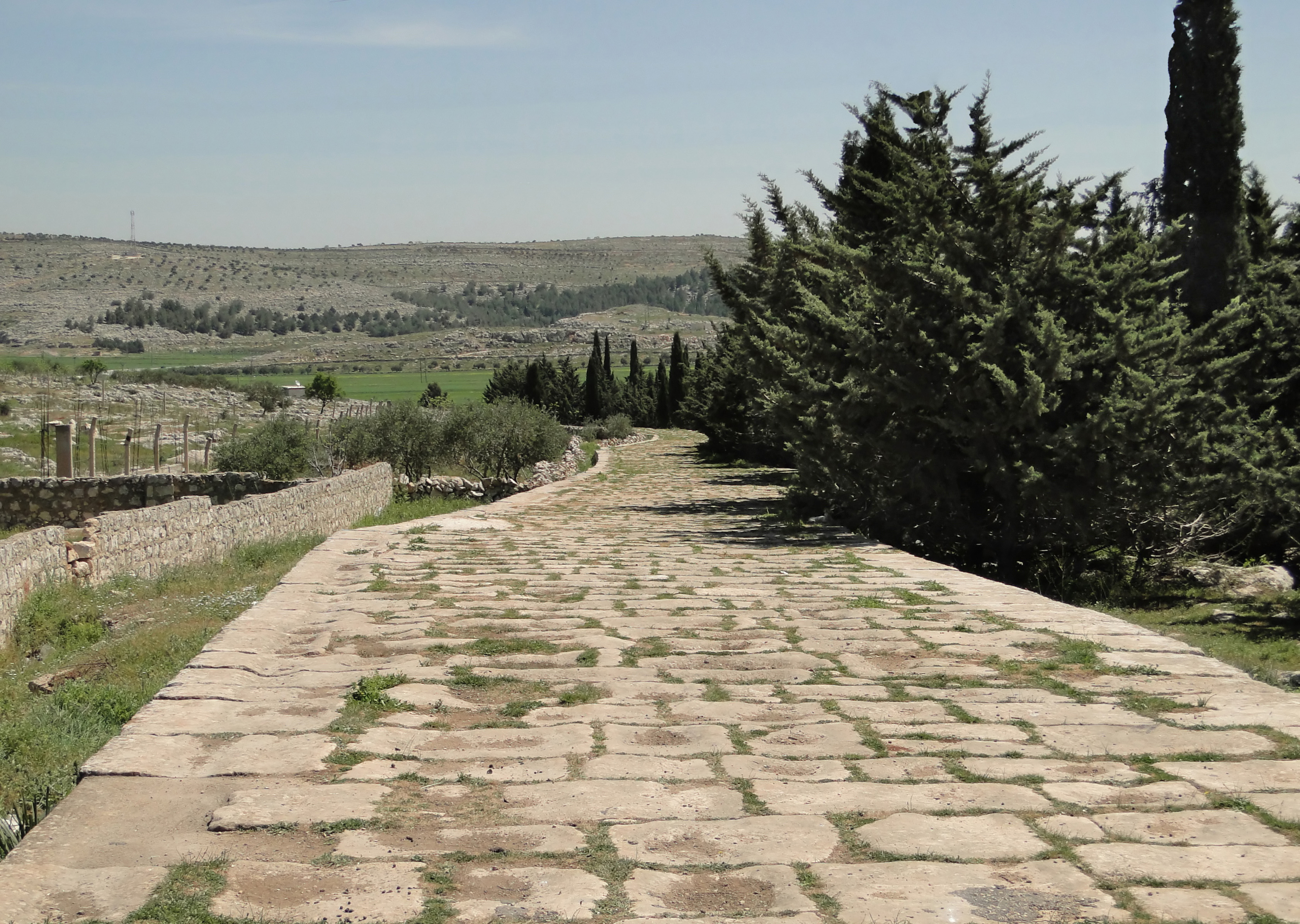
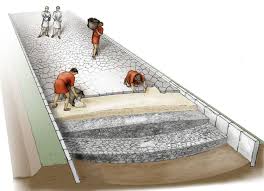
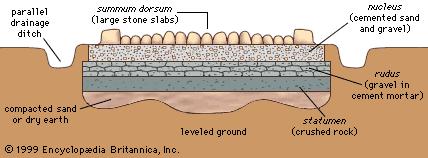
In addition to Trubetskoy’s subway map, below you will find images depicting the design of the typical Roman highway as well as actual examples of such roads as they currently continue to exist across the Empire (including in war-
torn Syria such as in this image to the right), where two thousand years later the accomplishment of Roman engineers is still remarkably evident.
For those interested in readying more please see the website of the map’s creator by clicking here.
It doesn’t look like much in the picture above, but this restaurant just unearthed in Southern France has archaeologists quite excited. It is located in what was once the Roman seaside town of Lattara, and two millenia ago it catered to local diners as well as Roman immigrants that had settled in the area. Few such Roman taverns have been found making this discovery particularly compelling. Archaeologists have concluded that the restaurant made its own bread, served food and in an adjacent space they served libations as well (traces of alcohol have been identified in bowls imported from Italy for that purpose).
For more on this discovery see Archaeology Magazine.
And for more on the port city of Littara (remains pictured below) see the website for the local museum, Henri Prades of Montpellier Méditerranée Métropole in Lattes.
I love when a little piece of ancient Rome pops up unexpectedly in modern Istanbul reminding everyone of the city’s prior and longest tenured residents – the Romans!
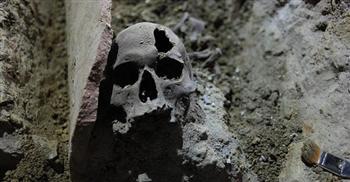
The skeletons were found beneath the “Casa Garibaldi”, also known as “Societa Operaia Italiana di Mutuo Soccorso in Costantinopoli,” built in 1863 and located close to Taksim Square in a part of Istanbul closely associated with the city’s Ottoman past. Taksim Square lies across the Golden Horn from Sultanahmet – the historical center of the Roman and Greek city.
What were the Romans doing in this fashionable Ottoman district?Beyoglu, the neighborhood where the Casa Garibaldi is located was once in fact a Roman suburb of Constantinople. It’s not known precisely when these Romans were buried, or why, or what precisely had been located on this spot in Justinian’s day and perhaps we will never know. But I am heartened by the fact that more attention is being given to these types of discoveries in Istanbul despite the clear opposition of the Turkish state to archaeological studies of the city’s Roman past. A recently founded department of Byzantine (Roman) Studies at Istanbul’s Bosporus (Bogazici) University is a reflection of this movement.
Orthodox Christian monks from the monastery at Mount Athos were invited to bless the skeletons before they were moved to the Istanbul Archaeological Museum.
For more on this discovery, see the article in Hurriyet.
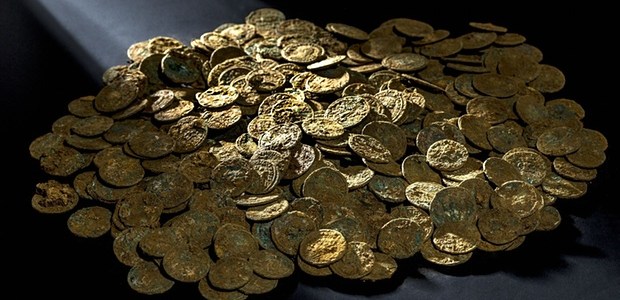
A Swiss farmer found a hoard of 4,166 Roman coins in a mole hill beneath his cherry orchard recently. The 1,700 year old coins were in fantastic condition, the most recent of which dates to the reign of the Emperor Maximilian (buried shortly after it was minted in the year 294CE). Their pristine condition was in part attributed to the fact that the land in which they were deliberately buried had never been built upon – it has been continuously farmed since this part of Switzerland was part of the Roman Empire.
Click here for more.
Humble milestones like the one picture above marked each mile throughout the Roman highway system, spanning the 250,000 miles of roadway that once stretched from modern Scotland to Yemen.
The milestones allowed the traveller to know precisely where they stood in relation to their departure point and destination, long before our slavish devotion to smart phones and GPS.
In what had been Roman Africa, stolen by the Vandals 100 years before, there stood such a stone on the approach to Carthage from the east on the ancient Roman highway that ran along the coast. It was the tenth milestone from Carthage, known simply as Decimum Miliare (the tenth mile).
At the tenth milestone (Ad Decimum), on September 13th of 533, the Roman Army led by General Flavius Belisarius met the Vandal King Gaiseric in a battle that would change the course of history.
The world fully expected the Romans to fail as Roman armies had failed in the field against the Vandals and their Germanic ‘barbarian’ cousins for generations. The Romans were 1,000 miles from home – having set sail with an invasion armada for the first time in decades (on ships that were specially built for the purpose since Rome no longer possessed a deep water navy). If they lost to the Vandals there would be no retreat and no hope of reinforcements. The Western Roman Empire had already ceased to exist with Romulus Augustulus’ abdication in 476 (in great part due to the Vandal theft of Africa and their brutal sack of the City of Rome). If Belisarius lost the battle at the tenth milestone, the Eastern Roman Empire would be in grave jeopardy.
Belisarius and his Roman knights would triumph at Decimum Miliare against all odds and went on to extinguish the upstart Vandal kingdom and to bring Africa back into the Roman fold. This was the first in a string of stunning victories engineered by Belisarius that would restore much of the lost Western Empire in the name of the reigning Caesar, the Emperor Justinian. These recuperated lands (Africa, Italy, parts of Gaul and Hispania) would remain part of the Roman Empire until after Justinian’s death – the moment when the ancient world truly ended and the Dark Ages began.
This moment, the battle that became known as Ad Decimum, figures prominently in the second book of the Legend of Africanus series: Avenging Africanus (available at amazon.com here).
For those that would like to read more of the military history of Ad Decimum, see the excellent Byzantine Military blog by clicking here.
“Oh, some archaeological crockery turned up—oh, some finding turned up,” he told the press. “That’s how they put obstacles in our path. Are these things really more important than the human?”
– Turkish Prime Minister Erdogan on the archaeological dig in what once was Constantinople’s Eleutherion Harbor
Istanbul – Nova Roma – Constantinople – BYZANTIUM.
Few more fascinating places exist on the face of the planet, layered with history and culture, teeming with life, speeding into the future.
As part of that race, in 2004, Turkey revived Ottoman-era plans to build a tunnel beneath the Bosporus to accommodate a subway line (prior to the tunnel the only way to cross the Bosporus was via ferry or over one of two bridges). Having lived in Istanbul, I can testify to the city’s remarkably bad traffic (which is getting worse – when I left in ’98 the city had 9 million residents, today that number is 14 million).
In an effort to avoid burrowing through the historic district of Sultanahmet for the subway (formerly the heart of both Greek-Byzantium and Roman-Constantinople), the tunnel’s designers chose the modern neighborhood of Yenikapi (that was built on reclaimed land that had once been water) for the subway’s principal European stop.
However that reclaimed land upon which Yenikapi was built was of particular significance to the city’s Roman era – it had once been known as Eleutherion Harbor (or the ‘Theodosian Harbor’), one of the Imperial city’s principal harbors during its early days as the capital of the Roman Empire and through Justinian’s era. However, with time it silted over and was eventually abandoned in the city’s later Roman period.
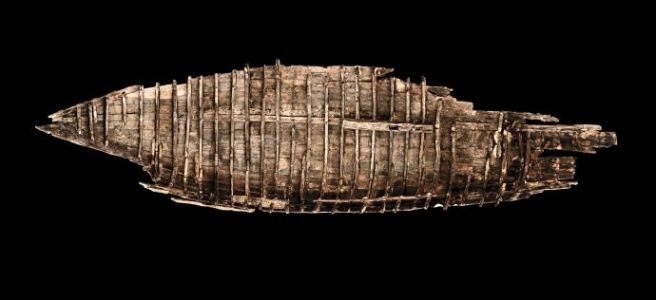
Once Istanbul’s Big Dig began it quickly became clear that Yenikapi contained a Roman treasure trove including some of the best preserved Roman ships of war ever found (many from Justinian-era Rome including the featured image above) and a piece of Constantine’s original city wall. Additional excavations unearthed previously unknown Neolithic settlements dating to 6000 BC (the earliest known settlements prior to this discovery dated to ~1,300 BC).
The superb Istanbul Archaeology Museum was brought in to monitor and control the dig, resulting in many of these exceptional finds being preserved for future study – a process that will take decades given the scale of the finds. Having the Museum involved in the process (fortunately) resulted in an equally exceptional delay to the dig which was just completed in 2014 (raising hackles in the Turkish government as per lead quote above).
See an interesting article in the current New Yorker that does a good job of summarizing the Tunnel project, the associated politics and the stunning discoveries that resulted from it all.
http://www.newyorker.com/magazine/2015/08/31/the-big-dig
For more on the Istanbul Archaeology Museum see here:
A house whose size and elegance these details should be sufficient to relate: Its courtyard was so large that a 120-foot colossal statue of the emperor himself stood there; it was so spacious that it had a mile-long triple portico; also there was a pool of water like a sea, that was surrounded by buildings which gave it the appearance of cities; and besides that, various rural tracts of land with vineyards, cornfields, pastures, and forests, teeming with every kind of animal both wild and domesticated. In other parts of the house, everything was covered in gold and adorned with jewels and mother-of-pearl; dining rooms with fretted ceilings whose ivory panels could be turned so that flowers or perfumes from pipes were sprinkled down from above; the main hall of the dining rooms was round, and it would turn constantly day and night like the Heavens; there were baths, flowing with seawater and with the sulfur springs of the Albula; when he dedicated this house, that had been completed in this manner, he approved of it only so much as to say that he could finally begin to live like a human being. Suetonius, The Lives of the Caesars
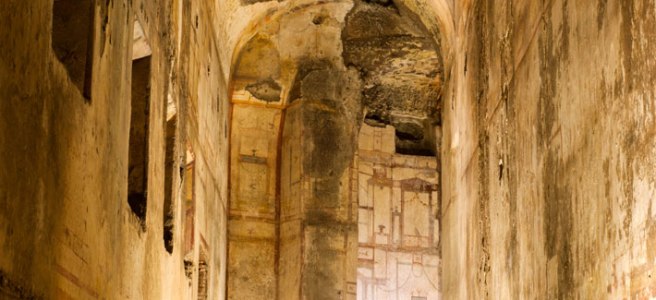
An intriguing piece appeared in this month’s “Archaeology Magazine” on Nero’s Domus Aurea or “Golden House” that has been undergoing a painstaking and extended renovation. After the tyrant Nero’s death the Roman Senate had this sprawling city-within-the-city filled with earth and buried so that the dictator’s memory too would be submerged (but never forgotten). Spanning the area between the Palatine and Esquiline hills in Rome (where the Colosseum stands today) – the scale of the structure and its contents are difficult to fathom. On a side note, the Flavian Amphitheatre took its colloquial name, the Colosseum from the hundred foot tall statue of the “Colossus” as the stature of Nero on the grounds of his Golden House was known.
The Domus Aurea stood for four years after completion before it was buried in 69CE following the Emperor’s death. And it slept peacefully underground until the Renaissance when a boy fell through the roof into the halls below in the 15th century. A generation of some of the great artists of the period including Raphael heard of the chance discovery and had themselves lowered by rope into the palace through holes drilled in the roof (contributing greatly to the subsequent damage that archeologists today are trying mightily to undo). While its difficult to say how these glimpses of the ancient world influenced them one can begin to imagine as we look at the stunning Domus Aurea today.
I couldn’t help but think, as I read the article, that as these Renaissance pioneers were rediscovering an ancient world in the West that had been lo
st for so many centuries, in Constantinople at that same
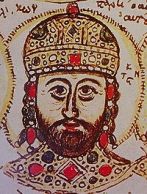
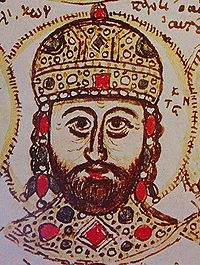
approximate time the very last Caesar, the Emperor Constantine XI (see contemporary image at right) was battling Mehmed the Conqueror to prevent the fall of Constantinople that would finally and forever extinguish what remained of the Roman Empire. I am fascinated by this contrast, artists in the West re-learning, rediscovering their patrimony and in the East, a flickering light finally extinguished. Incidentally, the Fall of the East that ensued when Mehmed breached the Theodosian Walls of Constantinople made the Renaissance possible, flooding Italy with scholars, artists and philosophers and the contents of the world’s greatest libraries from Constantinople that had kept the flame of ancient Greece, Rome and Persia alive while the rest of Europe had wallowed in centuries of darkness and comparative ignorance.
Here is a link to the article on the Domus Aurea in Archeology Magazine:
http://www.archaeology.org/issues/187-1509/features/3562-golden-house-of-an-emperor
And for those interested in learning a bit more about the Last Roman Emperor, Constantine XI, who will appear prominently in my next novel (now being researched), please see this fair summary in Wikipedia:
On August 1st 527, the old warrior and Roman Emperor, Justin I died in the Imperial capital of Constantinople.
Justin had risen to the throne in 518. He had previously held the position of Commander of the Excubitors, the elite palace guard, and upon the death of the Emperor Anastasius, Justin was nominated to the purple with the considerable help of his brilliant young nephew, Pietrus Sabbatius.
As Justin’s health failed he named his nephew (now re-christened “Justinian” in honor of his uncle) as co-Emperor in April of 527.
And when Justin died on August 1st, Justinian became sole Emperor, a position that he would hold until his death in November of 565.
So began the Age of Justinian (though he also exerted tremendous influence behind the throne while his Uncle reigned) – a period which continues to impact the world that we live in today.
He would be the last Roman Emperor to speak Latin as his first language, and the last Caesar to rule over an Empire that included the city of Rome in its domains. Justinian would count many other “lasts”, and many “firsts” amongst his accomplishments though for me what continues to resonate is that as Justinian ascends, the world stands on a razor’s edge, with the Ancient World on one side and the Dark Ages on the other. Upon his death the passage to the Dark Ages was irrevocably made.