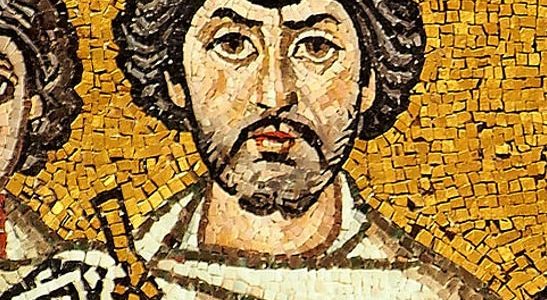
On This Day in 533, Belisarius Avenged Rome’s Honor “Ad Decimum Miliare”

ON THIS DAY IN HISTORY, September 13th 533, the Roman General Flavius Belisarius changed the history of the world by winning an unwinnable battle against the barbarian Vandals in what had once been Roman Africa, at a place known to us as AD DECIMUM, the tenth mile marker…

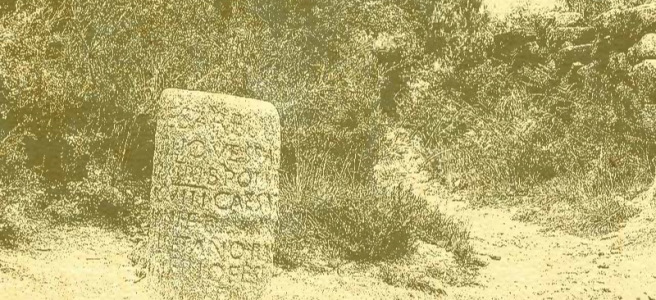
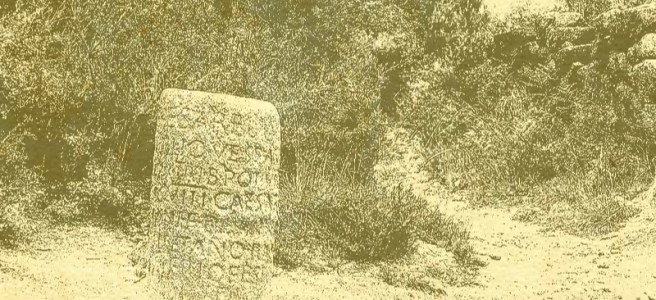
Humble milestones like the one pictured below marked each mile throughout the Roman highway system, spanning the 250,000 miles of roadway that once stretched from modern Scotland to Yemen. So extraordinarily durable was their construction that a number of those roads (and the bridges they crossed) are still in use today across former Roman territories in Europe, Africa and the Middle East.  Roman mile markers allowed the traveler to know precisely where they stood in relation to their departure point and destination, long before our slavish devotion to smart phones and GPS.
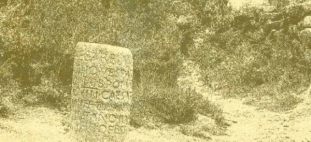
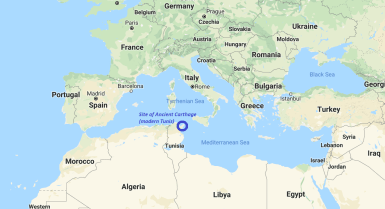
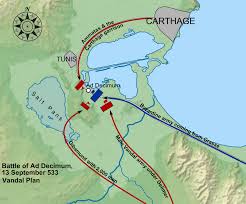
In what had been Roman Africa, stolen by the Vandals 100 years before, there stood such a stone on the approach to Carthage from the east on the ancient Roman highway that ran along the coast. To put this battle into a modern geographical context, note that where Carthage once stood in the ancientworld the sprawling metropolis of Tunis, capital of Tunisia, sits today (see map below). The actual battle took place at the tenth milestone from Carthage, known simply as Decimum Miliare (the tenth mile). This milestone, along with the battlefield itself has not been rediscovered by archaeologists as it lies beneath the suburbs of modern Tunis.


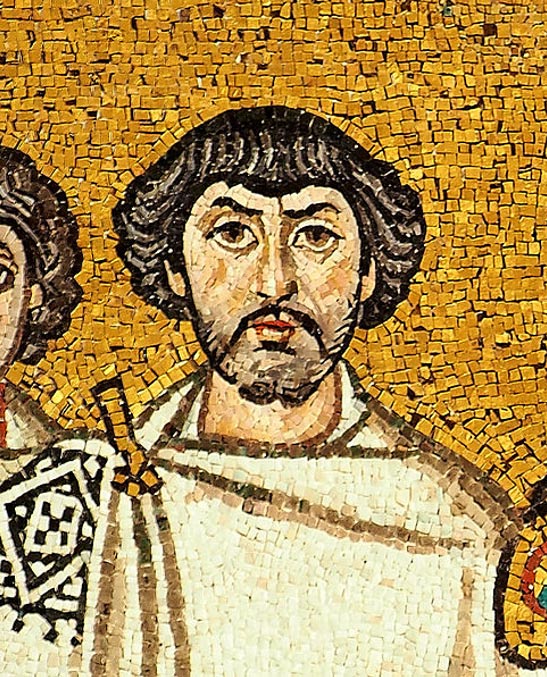
At that now lost tenth milestone (Ad Decimum), on this day – September 13th of 533 – the Roman Army led by General Flavius Belisarius (pictured below) met the Vandal King Gelimer in a battle that would change the course of history.
The world fully expected the Romans to fail as Roman armies had failed in the field against the Vandals and their Germanic ‘barbarian’ cousins for generations. Let’s recall which Romans sailed into battle against the Vandals – these were the Eastern Romans who had managed to avoid the fate that befell the Western Roman Empire for many reasons, not least of which was their geographical distance from the Vandals, Goths, Visigoths and other Northern Barbarians that had extinguished the Western Roman Empire in 476 with the formal abdication of the last Western Emperor, Romulus Augustulus. The Vandal theft of Africa and their brutal sack of the City of Rome were undoubtedly two of the key events that made the loss of the West inevitable.

Now these Eastern Romans sailed straight towards mortal danger over 1,000 miles from home – having set sail with an invasion armada for the first time in decades (on ships that were specially built for the purpose since Rome no longer possessed a deep water navy). If they lost to the Vandals there would be no retreat and no hope of reinforcements. If Belisarius lost the battle at the tenth milestone, the Eastern Roman Empire would be in grave jeopardy.  See below for something of Belisarius’ battle plan at Ad Decimum.


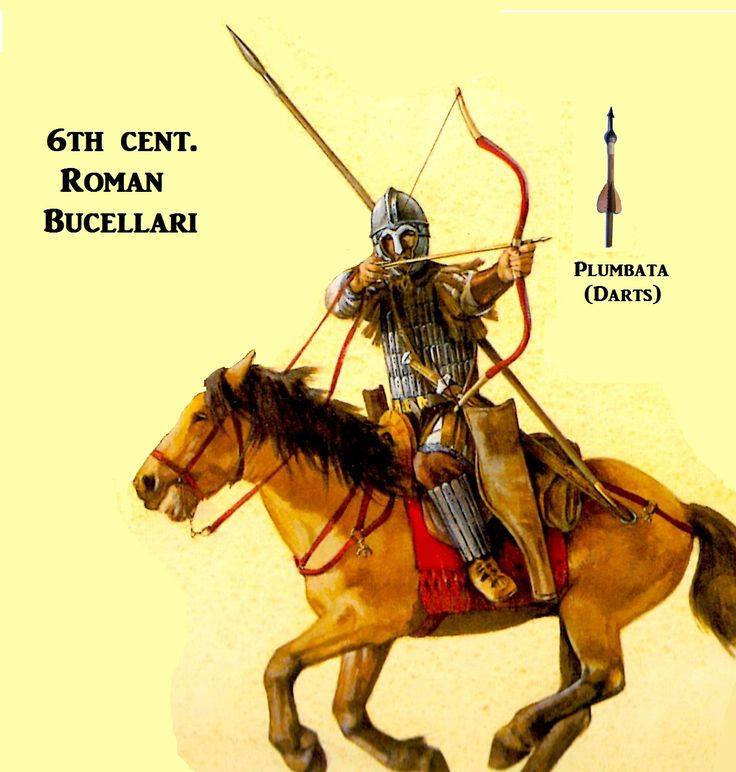
Belisarius and his Roman knights (see an image below for the decidedly medieval looking Roman knight that was very much the product of Belisarius’ experimentation with military technology and tactics) would triumph at Decimum Miliare against all odds and went on to extinguish the upstart Vandal kingdom and to bring Africa back into the Roman fold.


This was the first in a string of stunning victories engineered by Belisarius that would restore much of the lost Western Empire in the name of the reigning Caesar, the Emperor Justinian. These recuperated lands (Africa, Italy, parts of Gaul and Hispania) would remain part of the Roman Empire until after Justinian’s death – the moment when the ancient world truly ended and the Dark Ages began.
This moment, the battle that became known as Ad Decimum, figures prominently in the second book of my Legend of Africanus series: Avenging Africanus (available at amazon.com).
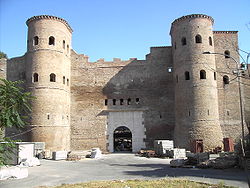
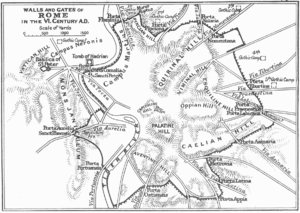
ON THIS DAY, December 9th in the year 536CE (AD), Roman General Flavius Belisarius entered the city of Rome through the Asinarian Gate with his small cohort of Roman knights.

The city’s residents had not seen a Roman Legionnaire for almost exactly 60 years, when what remained of the Western armies deserted the Eternal City after the Goth warlord Odoacer toppled the last Western Roman Emperor, Romulus Augustulus (the “little Augustus”).

Since that time, Rome (the city) had been under the control of a series of Goth rulers, including Odoacer, Theodoric (the “Great”), Amalasuntha (daughter of Theodoric), Theodad (cousin of Amalasuntha and her murderer) and at the time of Belisarius’ arrival, the Goth King Vitiges.

Imagine that! For 60 years, the Roman Empire had gone about its business with an Emperor mounted on a throne in Constantinople, while Rome herself – the birthplace of the Romans – was held by barbarians. Imagine a United States continuing to exist, and to thrive, with a Washington D.C. belonging to a foreign power. It sounds inconceivable and so it was to the Emperor Justinian who was determined to accomplish what none had dared, to return Rome to Rome.

By the time that Belisarius arrived in Rome his exploits (in Persia and Africa) were the stuff of legend despite his tender age of ~31. But he arrived woefully understaffed with barely 5,000 Roman knights, and soon faced a Goth army that exceeded 100,000 in number surrounding the city, determined to crush Belisarius and with it, Justinian’s aspirations of restoration.

Did Belisarius panic in the face of such impossible odds? This quote from Procopius – an eyewitness to these events – makes the hairs on my neck stand on end every time I read it:

“On the eighteenth day from the beginning of the siege the Goths moved against the fortifications at about sunrise […] and all the Romans were struck with consternation at the sight of the advancing towers and rams, with which they were altogether unfamiliar. But Belisarius, seeing the ranks of the enemy as they advanced with the engines, began to laugh, and commanded the soldiers to remain quiet and under no circumstances to begin fighting until he himself should give the signal.” – Procopius

Belisarius stood atop the Aurelian Walls and drew his bow (a compound bow design that he borrowed from the Huns and improved upon) and in a blur fired three arrows that killed the three Goth field commanders that commanded the attack, causing chaos in the Goth ranks. Then he began to fire one arrow after another at the oxen that drew the siege engines forth and order his knights to do the same, stopping the towers dead in their tracks. The Siege of Rome that followed would last for one year and nine days and its outcome would make indelible history…

Absolutely fascinating stuff!

This Wikipedia link which does a decent job of summarizing the ensuing Siege of Rome.

Ad Decimum – Belisarius Ends Vandal Africa…

roman-milestoneHumble milestones like the one picture above marked each mile throughout the Roman highway system, spanning the 250,000 miles of roadway that once stretched from modern Scotland to Yemen.

The milestones allowed the traveller to know precisely where they stood in relation to their departure point and destination, long before our slavish devotion to smart phones and GPS.

In what had been Roman Africa,  stolen by the Vandals 100 years before, there stood such a stone on the approach to Carthage from the east on the ancient Roman highway that ran along the coast.  It was the tenth milestone from Carthage, known simply as Decimum Miliare (the tenth mile).

At the tenth milestone (Ad Decimum), on this day – September 13th of 533 – the Roman Army led by General Flavius Belisarius met the Vandal King Gaiseric in a battle that would change the course of history.belisarius-mosaic

The world fully expected the Romans to fail as Roman armies had failed in the field against the Vandals and their Germanic ‘barbarian’ cousins for generations.  The Romans were 1,000 miles from home – having set sail with an invasion armada for the first time in decades (on ships that were specially built for the purpose since Rome no longer possessed a deep water navy).  If they lost to the Vandals there would be no retreat and no hope of reinforcements.  The Western Roman Empire had already ceased to exist with Romulus Augustulus’ abdication in 476 (in great part due to the Vandal theft of Africa and their brutal sack of the City of Rome).  If Belisarius lost the battle at the tenth milestone, the Eastern Roman Empire would be in grave jeopardy.

Belisarius and his Roman knights would triumph at Decimum Miliare against all odds and went on to extinguish the upstart Vandal kingdom and to bring Africa back into the Roman fold.  This was the first in a string of stunning victories engineered by Belisarius that would restore much of the lost Western Empire in the name of the reigning Caesar, the Emperor Justinian.  These recuperated lands (Africa, Italy, parts of Gaul and Hispania) would remain part of the Roman Empire until after Justinian’s death – the moment when the ancient world truly ended and the Dark Ages began.

This moment, the battle that became known as Ad Decimum, figures prominently in the second book of the Legend of Africanus series: Avenging Africanus (available at amazon.com here).

For those that would like to read more of the military history of Ad Decimum, see the excellent Byzantine Military blog by clicking here.

9/13/533 – Belisarius and the battle of Ad Decimum

Humble milestones like the one picture above marked each mile throughout the Roman highway system, spanning the 250,000 miles of roadway that once stretched from modern Scotland to Yemen.

The milestones allowed the traveller to know precisely where they stood in relation to their departure point and destination, long before our slavish devotion to smart phones and GPS.

In what had been Roman Africa,  stolen by the Vandals 100 years before, there stood such a stone on the approach to Carthage from the east on the ancient Roman highway that ran along the coast.  It was the tenth milestone from Carthage, known simply as Decimum Miliare (the tenth mile).

At the tenth milestone (Ad Decimum), on September 13th of 533, the Roman Army led by General Flavius Belisarius met the Vandal King Gaiseric in a battle that would change the course of history.

The world fully expected the Romans to fail as Roman armies had failed in the field against the Vandals and their Germanic ‘barbarian’ cousins for generations.  The Romans were 1,000 miles from home – having set sail with an invasion armada for the first time in decades (on ships that were specially built for the purpose since Rome no longer possessed a deep water navy).  If they lost to the Vandals there would be no retreat and no hope of reinforcements.  The Western Roman Empire had already ceased to exist with Romulus Augustulus’ abdication in 476 (in great part due to the Vandal theft of Africa and their brutal sack of the City of Rome).  If Belisarius lost the battle at the tenth milestone, the Eastern Roman Empire would be in grave jeopardy.

Belisarius and his Roman knights would triumph at Decimum Miliare against all odds and went on to extinguish the upstart Vandal kingdom and to bring Africa back into the Roman fold.  This was the first in a string of stunning victories engineered by Belisarius that would restore much of the lost Western Empire in the name of the reigning Caesar, the Emperor Justinian.  These recuperated lands (Africa, Italy, parts of Gaul and Hispania) would remain part of the Roman Empire until after Justinian’s death – the moment when the ancient world truly ended and the Dark Ages began.

This moment, the battle that became known as Ad Decimum, figures prominently in the second book of the Legend of Africanus series: Avenging Africanus (available at amazon.com here).

For those that would like to read more of the military history of Ad Decimum, see the excellent Byzantine Military blog by clicking here.