“The sun gave forth its light without brightness, and it seemed exceedingly like the sun in eclipse, for the beams it shed were not clear.” – Procopius of Caesarea
This has been an unusually rich last couple weeks for the Age of Justinian in the news but of all the recent bits, this takes the cake.
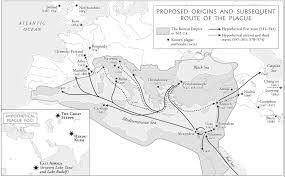
Not many know that the Black Plague of the 14th century first appeared (in recorded history) during Justinian’s reign and was one of the primary reasons for the calamities that followed (including the loss of many of Belisarius’ territorial gains and the collapse of the Persian Empire). For more on the Justinian Plague, during which over a 1/3 of Constantinople’s one million residents died within a matter of months in the summer of 541, see the brilliant book – “Justinian’s Flea” by William Rosen (on Amazon.com). The Justinian Plague was savage, ferocious, and more than any single factor can claim to have hastened the end of the ancient world (ushering in the Dark Ages).
This week we learned more about the origins of Justinian’s Plague. A scientific study just published in the Journal of Nature, and summarized well for the lay-reader on Smithsonian.com, reveals that there were two epic volcanic eruptions that likely facilitated the terrifying Plague. The first happened in 535/536 (possibly in El Salvador) and the second came later in 540 (somewhere in the Northern Hemisphere). Together they spewed inconceivable quantities of sulfate and ash into Earth’s atmosphere and dimmed the sun around the Mediterranean Basin for years (as per the quote from Procopius above). The dimmed sun cooled the planet, causing crops to fail and sparking widespread famine just at the very moment that y. pestis (the organism responsible for bubonic plague) began to spread northward and eastward from the Nile River Basin on the backs of rats.
The volcanic eruptions had opened the gates to Constantinople for the Plague, and Rome (and the civilized world) would never be the same.
For the article on Smithsonian.com see here:
 ROME ON THE CUSP