2000 Year Old Roman Fresco Discovered Under London

I am always captivated by news of archaeological discoveries in modern cities that have descended from Roman towns, forts and metropolises.  I’m particularly thrilled by finds in seemingly incongruous locations, those that remind us of how truly sprawlng the Roman Empire once was, like this recent discovery in London.

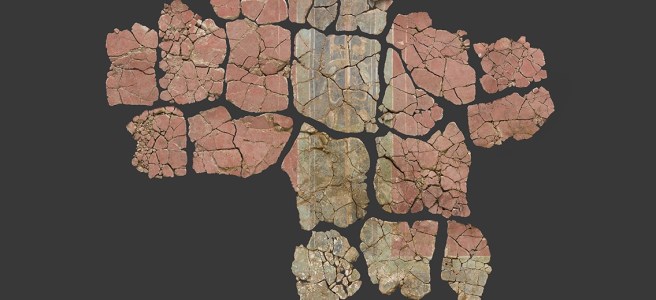
This week, archaeologists conducting a survey of the ground beneath 21 Lime Street in central London in preparation for the construction of a new office building discovered a remarkably well preserved Roman fresco in what must have been a stunning home built in Roman Londinium’s first decades in the first century CE.  The home was subsequently flattened by the Romans who built the largest temple north of the Alps on that same site.  This mosaic, discovered twenty feet underground, was preserved when it was deliberately buried under that new structure.  The quality of the craftmanship is still evident as is the wealth of the family that commissioned it for their home, as is indicated by the rare pigments that were used in its creation (like the very rare cinnabar used for its red coloring).  For more on the discovery see this article in the New Historian.

Justinian Era Mosaics found in Israel

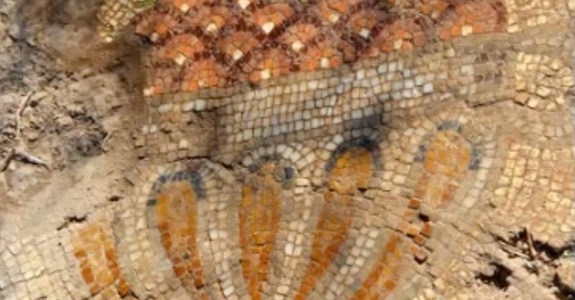
The Israel Antiquities Authority just released pictures of marvelous mosaics found in an industrial park in Qiryat Gat, Israel – they once graced the floor of a church likely built in Justinian’s lifetime, featuring christian and more traditional (pagan) images.  Curiously, the mosaics also depicted a map of an Egyptian city – Chortaso – which might have been the original home of this congregation though the true meaning of the map is a mystery.

Why would a church in Judaea have a map of a town in Egypt gracing its floor?

See here for more:

http://www.livescience.com/52335-photos-ancient-church-mosaic.html


Belisarius – the “Africanus of New Rome” – in the news

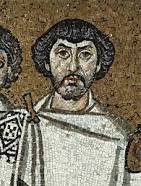
It’s not often that a mainstream blog or news outlet posts something on General Flavius Belisarius so I thought that I would pass along this link to a recent post in the Ancient Origins blog which does a decent job of providing an overview of Belisarius’ life and achievements.

The piece also repeats many of the fallacies pioneered by Sir Edward Gibbon 300 years ago that have been repeated in similar pieces and histories about the Justinian era ever since (i.e. the Roman Empire is the “Byzantine” empire, Romans are”Greeks”, etc.).

That said, it’s entertaining nonetheless for those not familiar with the General.

Please click here for the full article.

And please note that for a fictional account of General Belisarius’ life and times, my Legend of Africanus trilogy in which he figures most prominently is now available on amazon.com here.

Romans in Germany!

Nothing gets my juices flowing like a new archaeological find that illustrates the breathtakingly broad reach of Imperial Rome.

Though this doesn’t date to the era of Rome on the Cusp, this little find is fascinating nonetheless.

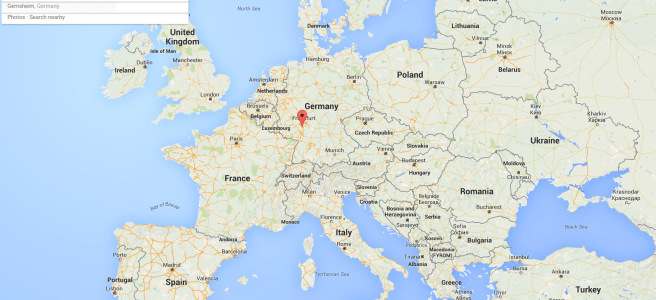
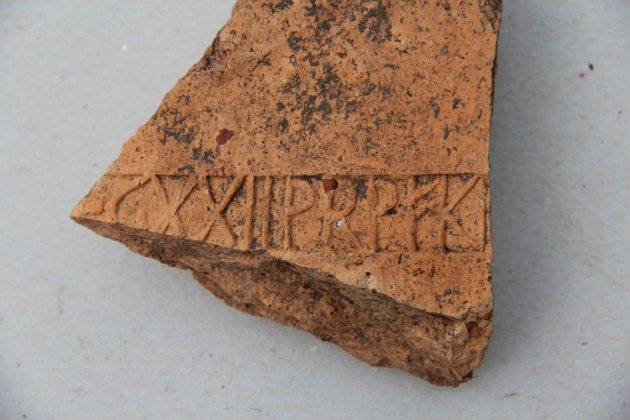
Near the modern town of Gernsheim (on the Rhine River), archaeologists from Goethe University just discovered an early 2nd century Roman fort.  They estimate that it was abandoned around 120CE when the soldiers stationed there were moved to the Roman frontier with Germania along the Danube.  Found in the dig thus far are signs of ordinary life, dice, combs, etc. and a masonry fragment indicating the name of the unit stationed there (see below), the Legio XXII Primigenia Pia Fidelis, part of the Limes Germanicus.

gernsheim find

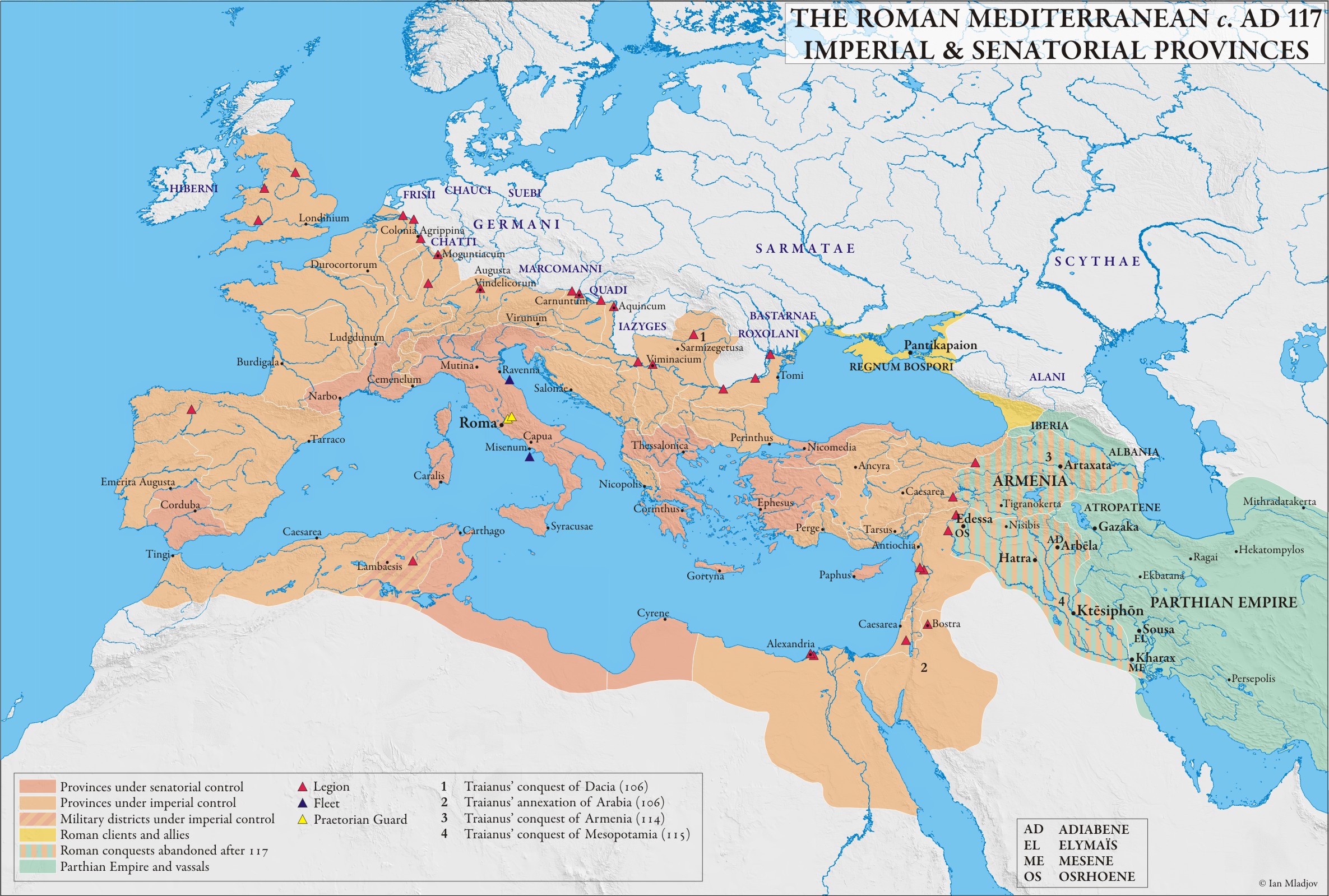
Here is a reminder of what the Roman Empire looked like at that date.

romana117

And here is a brief article on the dig in Archaeology.

And a better article in the International Business Tribune.

Nero’s Golden House

A house whose size and elegance these details should be sufficient to relate: Its courtyard was so large that a 120-foot colossal statue of the emperor himself stood there; it was so spacious that it had a mile-long triple portico; also there was a pool of water like a sea, that was surrounded by buildings which gave it the appearance of cities; and besides that, various rural tracts of land with vineyards, cornfields, pastures, and forests, teeming with every kind of animal both wild and domesticated. In other parts of the house, everything was covered in gold and adorned with jewels and mother-of-pearl; dining rooms with fretted ceilings whose ivory panels could be turned so that flowers or perfumes from pipes were sprinkled down from above; the main hall of the dining rooms was round, and it would turn constantly day and night like the Heavens; there were baths, flowing with seawater and with the sulfur springs of the Albula; when he dedicated this house, that had been completed in this manner, he approved of it only so much as to say that he could finally begin to live like a human being.  Suetonius, The Lives of the Caesars

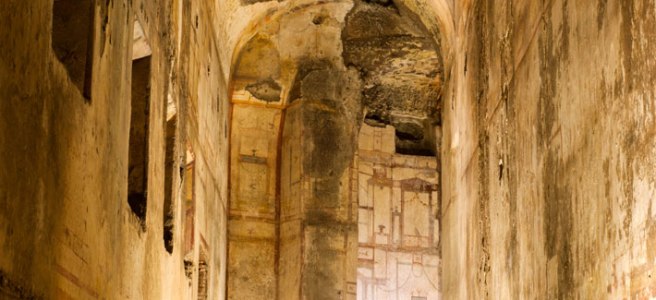
An intriguing piece appeared in this month’s “Archaeology Magazine” on Nero’s Domus Aurea or “Golden House” that has been undergoing a painstaking and extended renovation.  After the tyrant Nero’s death the Roman Senate had this sprawling city-within-the-city filled with earth and buried so that the dictator’s memory too would be submerged (but never forgotten).  Spanning the area between the Palatine and Esquiline hills in Rome (where the Colosseum stands today) – the scale of the structure and its contents are difficult to fathom.  On a side note, the Flavian Amphitheatre took its colloquial name, the Colosseum from the hundred foot tall statue of the “Colossus”  as the stature of Nero on the grounds of his Golden House was known.

The Domus Aurea stood for four years after completion before it was buried in 69CE following the Emperor’s death.  And it slept peacefully underground until the Renaissance when a boy fell through the roof into the halls below in the 15th century.  A generation of some of the great artists of the period including Raphael heard of the chance discovery and had themselves lowered by rope into the palace through holes drilled in the roof (contributing greatly to the subsequent damage that archeologists today are trying mightily to undo).  While its difficult to say how these glimpses of the ancient world influenced them one can begin to imagine as we look at the stunning Domus Aurea today.

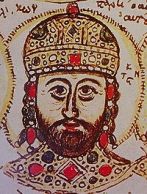
I couldn’t help but think, as I read the article, that as these Renaissance pioneers were rediscovering an ancient world in the West that had been lo200px-Constantine_XI_Palaiologos_miniaturest for so many centuries, in Constantinople at that same
approximate time the very last Caesar, the Emperor Constantine XI (see contemporary image at right) was battling Mehmed the Conqueror to prevent the fall of Constantinople that would finally and forever extinguish what remained of the Roman Empire.  I am fascinated by this contrast, artists in the West re-learning, rediscovering their patrimony and in the East, a flickering light finally extinguished.  Incidentally, the Fall of the East that ensued when Mehmed breached the Theodosian Walls of Constantinople made the Renaissance possible, flooding Italy with scholars, artists and philosophers and the contents of the world’s greatest libraries from Constantinople that had kept the flame of ancient Greece, Rome and Persia alive while the rest of Europe had wallowed in centuries of darkness and comparative ignorance.

Here is a link to the article on the Domus Aurea in Archeology Magazine:

http://www.archaeology.org/issues/187-1509/features/3562-golden-house-of-an-emperor

And for those interested in learning a bit more about the Last Roman Emperor, Constantine XI, who will appear prominently in my next novel (now being researched), please see this fair summary in Wikipedia:

https://en.wikipedia.org/wiki/Constantine_XI_Palaiologos

The Conundrum – Rome Entering the Dark

Many books of fiction, academic studies, dry histories, shoddy blogs, shoddier movies and cheap soaps have been devoted to  that abstraction called ROME.

They devote themselves to the common questions we have been told that matter most, the “serious” questions.

Who were the Romans?

Where did they come from?

How did they achieve dominance over the classical world?

And most importantly in the eyes of many – what caused “THE FALL”.

The latter question is one that interested me as well, a great deal, until I understood a basic historical fact – a truly heretical historical fact.  That fact stunned me, blew me away really, fascinated me from the get-go and it hasn’t let go of me since.

ROME DID NOT FALL.

Or put more specifically, when Romulus Augustulus abdicated in favor of the Goth warlord Odoacer, he formally ended the Western Roman Empire.  Yet this apocryphal collapse was really just a historical asterisk.  Why?  How could I be so flip with the seminal event of modern western civilization.

The year was 476.  The “end” came in 476.

But the reality is that for another thousand years – until 1453 – a Roman Emperor continued to rule in the ancient Byzantium, the capital of the Roman Empire since Constantine the Great moved the capital of the Empire from Roman to the newly christened Constantinople in 330CE.

It is accurate to say that the Western Empire ceased to exist in 476, while in truth it had ceased to exist several decades before as an independent entity.  It is equally true, stunningly accurate, to assert that the Eastern Empire lived until it fell to Mehmed “the Conqueror” in 1453, on the eve of Columbus’ trip to the new world.

Assuming that what I have just abruptly foisted upon you is true, it begs the following questions.  I trust they will pique your interest as they have held me hostage since childhood,

– Why do Western school children know nothing of this “other Rome”?

– What is the missing history, these thousand years that is not taught?

– What debt do we owe to this Rome – how would our world be different if Rome hadn’t continued in the East?

– Who were these “other” Romans?  How did they perceive the falling darkness, the barbarian invasions, the retreat of classical civilization?

– How did they navigate the Dark Ages?  How did civilization survive in their hands when the West lived in darkness, ignorance, brutish squalor?

– What was the role of this forgotten Rome in the reawakening of the West in the Renaissance?

These are the basic questions that have kept me occupied for many years – they are obviously far greater than I.  But I’ve delved into these things in a very small way, pursuing my obsession and attempting to share a germ of this fascinating world with others in the form of my novel, FROM AFRICANUS, and it’s sequel, AVENGING AFRICANUS that will be released in the summer of 2014.

Please stay tuned, share your thoughts, your passion, and curiosity, for the forgotten Rome.  Not to say that the story of the Republic and early Empire isn’t worthy – it is most worthy of study and discussion but it’s not neglected.   The same can’t be said of the Rome of Justinian the Great.