On This Day in 533, Belisarius Avenged Rome’s Honor “Ad Decimum Miliare”

ON THIS DAY IN HISTORY, September 13th 533, the Roman General Flavius Belisarius changed the history of the world by winning an unwinnable battle against the barbarian Vandals in what had once been Roman Africa, at a place known to us as AD DECIMUM, the tenth mile marker…

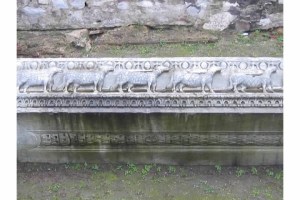
Humble milestones like the one pictured below marked each mile throughout the Roman highway system, spanning the 250,000 miles of roadway that once stretched from modern Scotland to Yemen. So extraordinarily durable was their construction that a number of those roads (and the bridges they crossed) are still in use today across former Roman territories in Europe, Africa and the Middle East.  Roman mile markers allowed the traveler to know precisely where they stood in relation to their departure point and destination, long before our slavish devotion to smart phones and GPS.
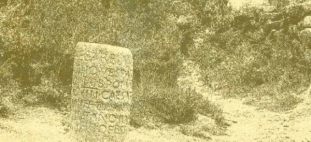
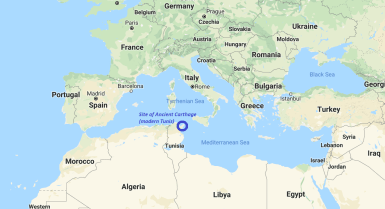
In what had been Roman Africa, stolen by the Vandals 100 years before, there stood such a stone on the approach to Carthage from the east on the ancient Roman highway that ran along the coast. To put this battle into a modern geographical context, note that where Carthage once stood in the ancientworld the sprawling metropolis of Tunis, capital of Tunisia, sits today (see map below). The actual battle took place at the tenth milestone from Carthage, known simply as Decimum Miliare (the tenth mile). This milestone, along with the battlefield itself has not been rediscovered by archaeologists as it lies beneath the suburbs of modern Tunis.


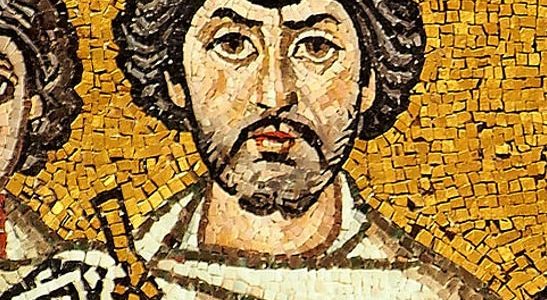
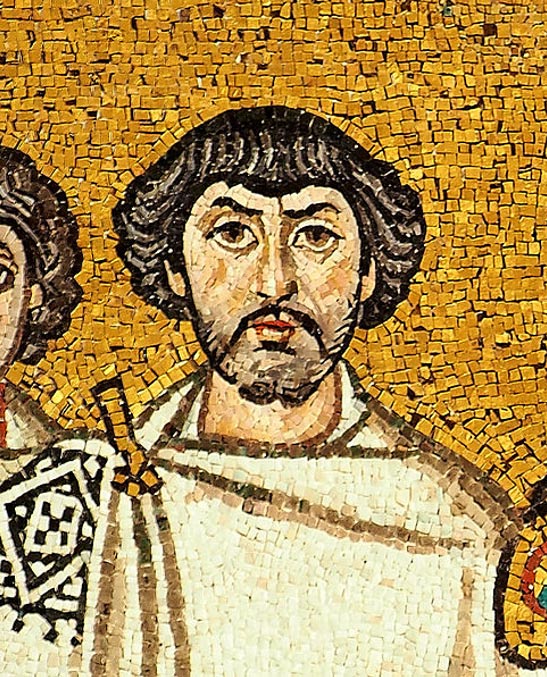
At that now lost tenth milestone (Ad Decimum), on this day – September 13th of 533 – the Roman Army led by General Flavius Belisarius (pictured below) met the Vandal King Gelimer in a battle that would change the course of history.
The world fully expected the Romans to fail as Roman armies had failed in the field against the Vandals and their Germanic ‘barbarian’ cousins for generations. Let’s recall which Romans sailed into battle against the Vandals – these were the Eastern Romans who had managed to avoid the fate that befell the Western Roman Empire for many reasons, not least of which was their geographical distance from the Vandals, Goths, Visigoths and other Northern Barbarians that had extinguished the Western Roman Empire in 476 with the formal abdication of the last Western Emperor, Romulus Augustulus. The Vandal theft of Africa and their brutal sack of the City of Rome were undoubtedly two of the key events that made the loss of the West inevitable.

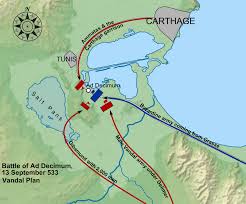
Now these Eastern Romans sailed straight towards mortal danger over 1,000 miles from home – having set sail with an invasion armada for the first time in decades (on ships that were specially built for the purpose since Rome no longer possessed a deep water navy). If they lost to the Vandals there would be no retreat and no hope of reinforcements. If Belisarius lost the battle at the tenth milestone, the Eastern Roman Empire would be in grave jeopardy.  See below for something of Belisarius’ battle plan at Ad Decimum.


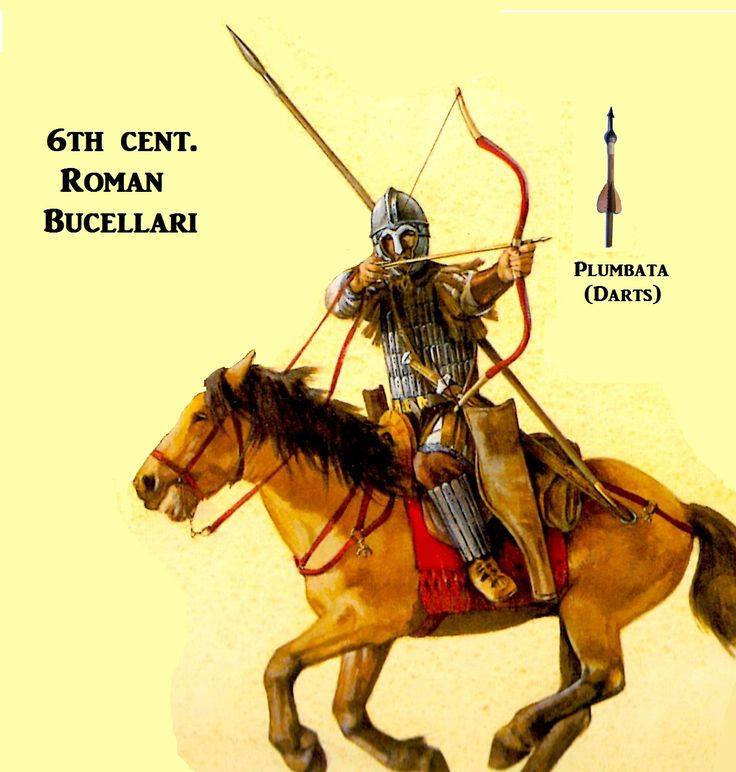
Belisarius and his Roman knights (see an image below for the decidedly medieval looking Roman knight that was very much the product of Belisarius’ experimentation with military technology and tactics) would triumph at Decimum Miliare against all odds and went on to extinguish the upstart Vandal kingdom and to bring Africa back into the Roman fold.


This was the first in a string of stunning victories engineered by Belisarius that would restore much of the lost Western Empire in the name of the reigning Caesar, the Emperor Justinian. These recuperated lands (Africa, Italy, parts of Gaul and Hispania) would remain part of the Roman Empire until after Justinian’s death – the moment when the ancient world truly ended and the Dark Ages began.
This moment, the battle that became known as Ad Decimum, figures prominently in the second book of my Legend of Africanus series: Avenging Africanus (available at amazon.com).
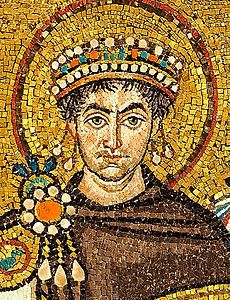
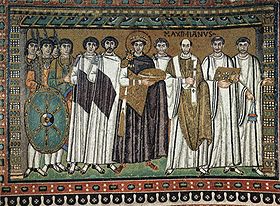
Happy Anniversary – Justinian “the Great”

On August 1st 527, the old warrior and Roman Emperor, Justin I died in the Imperial capital of Constantinople.

Justin had risen to the throne in 518.  He had previously held the position of Commander of the Excubitors, the elite palace guard, and upon the death of the Emperor Anastasius, Justin was nominated to the purple with the considerable help of his brilliant young nephew, Pietrus Sabbatius.

As Justin’s health failed he named his nephew (now re-christened “Justinian” in honor of his uncle) as co-Emperor in April of 527.

And when Justin died on August 1st, Justinian became sole Emperor, a position that he would hold until his death in November of 565.

So began the Age of Justinian (though he also exerted tremendous influence behind the throne while his Uncle reigned) – a period which continues to impact the world that we live in today.

He would be the last Roman Emperor to speak Latin as his first language, and the last Caesar to rule over an Empire that included the city of Rome in its domains.  Justinian would count many other “lasts”, and many “firsts” amongst his accomplishments though for me what continues to resonate is that as Justinian ascends, the world stands on a razor’s edge, with the Ancient World on one side and the Dark Ages on the other.  Upon his death the passage to the Dark Ages was irrevocably made.

Roman Glass in Ancient Japan

Roman Glass in Japan

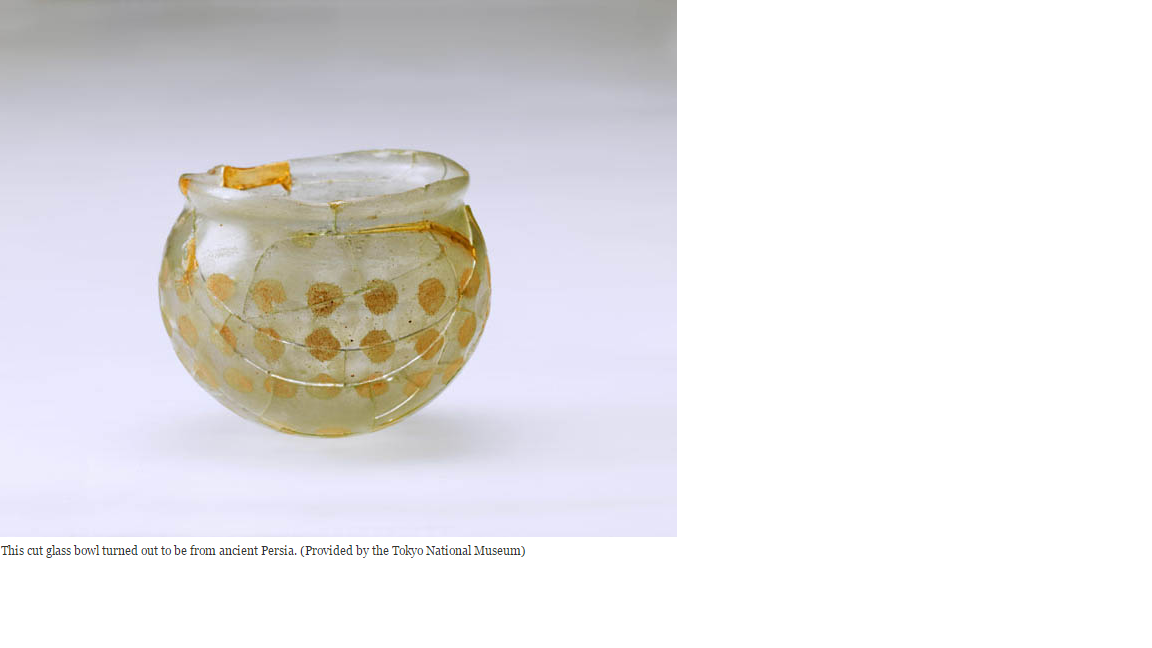
ROMAN GLASS has been found in a recently opened Japanese tomb dating to the 5th century, as per an article in this week’s Asahi Shimbum (courtesy of Adrian Murdoch’s fine blog).

Read the original article on this stunning discovery here: http://ajw.asahi.com/article/behind_news/social_affairs/AJ201411130064

map japan

The ornamental glass (a beautiful cobalt blue plate and a delicate golden bowl seen above) is believed to have made it’s way to Japan through Sassanid Persia.  Scientific analysis suggests that both items were created by Roman artisans working within the Empire at some point in the 3rd century.  While it’s unknown precisely when and how they made their way to Japan, they were buried along with the denizen of tumulus #126, within a cluster of ancient graves dating to the late 5th century.

Niizawa Senzuka burial mounds

So what does it have to do with the Age of Justinian, this turbulent time when the light of Rome still shined in the East as darkness fell in the West?

In these fragile pieces of blue and gold glass, fantastically preserved, we have an example of how far Rome reached even in an era in which common wisdom says Rome had already “fallen”.

The truth, as found in this burial mound in Nara Prefecture suggests something very different.

While Roman trade with Japan was indeed rare, the Romans (and their trading partners and sometimes enemies, the Persians) traded actively with the East. Most of this trade centered around silk that could only be sourced from China at this time. Roman gold moved east, and Chinese silk moved West. That river of gold sustained the Persians.

But there would come a day, not long after our blue glass plate was buried in Japan, when an exceptional man, a missionary, took an extraordinary risk by smuggling silk worms out of the Forbidden City in a hollow-tipped cane. When he arrived at the Emperor Justinian’s court in Constantinople he irrevocably changed the course of history….

– Matthew J. Storm

The Conundrum – Rome Entering the Dark

Many books of fiction, academic studies, dry histories, shoddy blogs, shoddier movies and cheap soaps have been devoted to  that abstraction called ROME.

They devote themselves to the common questions we have been told that matter most, the “serious” questions.

Who were the Romans?

Where did they come from?

How did they achieve dominance over the classical world?

And most importantly in the eyes of many – what caused “THE FALL”.

The latter question is one that interested me as well, a great deal, until I understood a basic historical fact – a truly heretical historical fact.  That fact stunned me, blew me away really, fascinated me from the get-go and it hasn’t let go of me since.

ROME DID NOT FALL.

Or put more specifically, when Romulus Augustulus abdicated in favor of the Goth warlord Odoacer, he formally ended the Western Roman Empire.  Yet this apocryphal collapse was really just a historical asterisk.  Why?  How could I be so flip with the seminal event of modern western civilization.

The year was 476.  The “end” came in 476.

But the reality is that for another thousand years – until 1453 – a Roman Emperor continued to rule in the ancient Byzantium, the capital of the Roman Empire since Constantine the Great moved the capital of the Empire from Roman to the newly christened Constantinople in 330CE.

It is accurate to say that the Western Empire ceased to exist in 476, while in truth it had ceased to exist several decades before as an independent entity.  It is equally true, stunningly accurate, to assert that the Eastern Empire lived until it fell to Mehmed “the Conqueror” in 1453, on the eve of Columbus’ trip to the new world.

Assuming that what I have just abruptly foisted upon you is true, it begs the following questions.  I trust they will pique your interest as they have held me hostage since childhood,

– Why do Western school children know nothing of this “other Rome”?

– What is the missing history, these thousand years that is not taught?

– What debt do we owe to this Rome – how would our world be different if Rome hadn’t continued in the East?

– Who were these “other” Romans?  How did they perceive the falling darkness, the barbarian invasions, the retreat of classical civilization?

– How did they navigate the Dark Ages?  How did civilization survive in their hands when the West lived in darkness, ignorance, brutish squalor?

– What was the role of this forgotten Rome in the reawakening of the West in the Renaissance?

These are the basic questions that have kept me occupied for many years – they are obviously far greater than I.  But I’ve delved into these things in a very small way, pursuing my obsession and attempting to share a germ of this fascinating world with others in the form of my novel, FROM AFRICANUS, and it’s sequel, AVENGING AFRICANUS that will be released in the summer of 2014.

Please stay tuned, share your thoughts, your passion, and curiosity, for the forgotten Rome.  Not to say that the story of the Republic and early Empire isn’t worthy – it is most worthy of study and discussion but it’s not neglected.   The same can’t be said of the Rome of Justinian the Great.