Ancient Rome vs. Istanbul’s New Subway

“Oh, some archaeological crockery turned up—oh, some finding turned up,” he told the press. “That’s how they put obstacles in our path. Are these things really more important than the human?”

Turkish Prime Minister Erdogan on the archaeological dig in what once was Constantinople’s Eleutherion Harbor

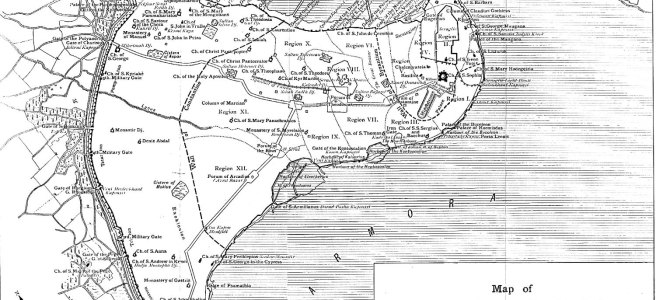
Istanbul – Nova Roma – Constantinople – BYZANTIUM.

Few more fascinating places exist on the face of the planet, layered with history and culture, teeming with life, speeding into the future.

As part of that race, in 2004, Turkey revived Ottoman-era plans to build a tunnel beneath the Bosporus to accommodate a subway line (prior to the tunnel the only way to cross the Bosporus was via ferry or over one of two bridges).  Having lived in Istanbul, I can testify to the city’s remarkably bad traffic (which is getting worse – when I left in ’98 the city had 9 million residents, today that number is 14 million).

In an effort to avoid burrowing through the historic district of Sultanahmet for the subway (formerly the heart of both Greek-Byzantium and Roman-Constantinople), the tunnel’s designers chose the modern neighborhood of Yenikapi (that was built on reclaimed land that had once been water) for the subway’s principal European stop.

However that reclaimed land upon which Yenikapi was built was of particular significance to the city’s Roman era – it had once been known as Eleutherion Harbor (or the ‘Theodosian Harbor’), one of the Imperial city’s principal harbors during its early days as the capital of the Roman Empire and through Justinian’s era.  However, with time it silted over and was eventually abandoned in the city’s later Roman period.

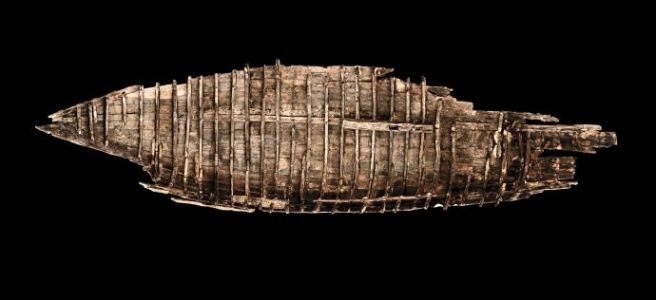
Once Istanbul’s Big Dig began it quickly became clear that Yenikapi contained a Roman treasure trove including some of the best preserved Roman ships of war ever found (many from Justinian-era Rome including the featured image above) and a piece of Constantine’s original city wall.  Additional excavations unearthed previously unknown Neolithic settlements dating to 6000 BC (the earliest known settlements prior to this discovery dated to ~1,300 BC).

The superb Istanbul Archaeology Museum was brought in to monitor and control the dig, resulting in many of these exceptional finds being preserved for future study – a process that will take decades given the scale of the finds.  Having the Museum involved in the process (fortunately) resulted in an equally exceptional delay to the dig which was just completed in 2014 (raising hackles in the Turkish government as per lead quote above).

See an interesting article in the current New Yorker that does a good job of summarizing the Tunnel project, the associated politics and the stunning discoveries that resulted from it all.

http://www.newyorker.com/magazine/2015/08/31/the-big-dig

For more on the Istanbul Archaeology Museum see here:
http://www.istanbularkeoloji.gov.tr/main_page

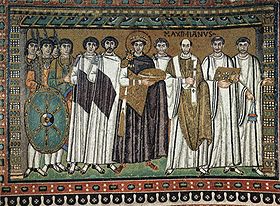
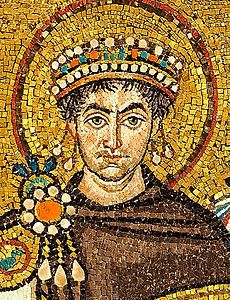
Happy Anniversary – Justinian “the Great”

On August 1st 527, the old warrior and Roman Emperor, Justin I died in the Imperial capital of Constantinople.

Justin had risen to the throne in 518.  He had previously held the position of Commander of the Excubitors, the elite palace guard, and upon the death of the Emperor Anastasius, Justin was nominated to the purple with the considerable help of his brilliant young nephew, Pietrus Sabbatius.

As Justin’s health failed he named his nephew (now re-christened “Justinian” in honor of his uncle) as co-Emperor in April of 527.

And when Justin died on August 1st, Justinian became sole Emperor, a position that he would hold until his death in November of 565.

So began the Age of Justinian (though he also exerted tremendous influence behind the throne while his Uncle reigned) – a period which continues to impact the world that we live in today.

He would be the last Roman Emperor to speak Latin as his first language, and the last Caesar to rule over an Empire that included the city of Rome in its domains.  Justinian would count many other “lasts”, and many “firsts” amongst his accomplishments though for me what continues to resonate is that as Justinian ascends, the world stands on a razor’s edge, with the Ancient World on one side and the Dark Ages on the other.  Upon his death the passage to the Dark Ages was irrevocably made.

Writing Rome Out Of Istanbul’s History

History has always  been written by the victors.

But what is it about the lingering power of Rome’s legacy in Istanbul (formerly Constantinople – Nova Roma – Byzantium), that 600 hundred years after Mehmed the Conqueror breached Constantinople’s walls, the modern Turkish government finds the Roman Empire to be such a threat?  Or so it would seem given the resources that Turkey (led by Prime Minister Erdogan’s party) has devoted to programs to eliminate Rome from the archaelogical record by selectively restoring Roman monuments and buildings in Istanbul to emphasize their Ottoman influences at the expense of their Roman origins.

Perhaps the headline from this recent piece in the Financial Times should have read (encouragingly) as follows: “Rome Still Matters.”

http://www.ft.com/intl/cms/s/0/e697a0b2-0a97-11e5-a8e8-00144feabdc0.html#

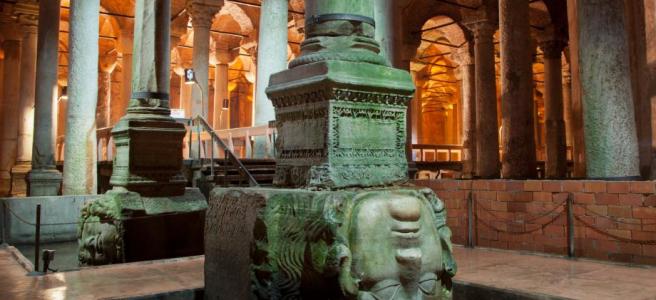
Justinian’s Basilica Cistern

This is an unconventional post for me, but it’s not often that Justinian appears in popular media, so I couldn’t resist posting a link to this decent piece on the grand cistern in Istanbul known as the “Basilica Cistern” due to it’s close proximity to the Hagia Sophia (the breathtaking Church of the Holy Wisdom, Justinian’s stunning cathedral rebuilt after the prior incarnation was incinerated in the Nika Riots).

Note that while the cistern was begun during the reign of Anastasius (not Justinian as the article claims) it’s completion was nonetheless Justinian’s achievement.  For anyone who has visited it in person I’m sure you would agree that pictures can’t properly convey the majesty of this place.  For anyone heading to Istanbul, please do not visit the city without descending below the streets to get a sense of Justinian’s Constantinople.

Here is a link to the Slate article:

http://www.slate.com/blogs/atlas_obscura/2015/03/09/basilica_cistern_in_istanbul.html


Roman Glass in Ancient Japan

Roman Glass in Japan

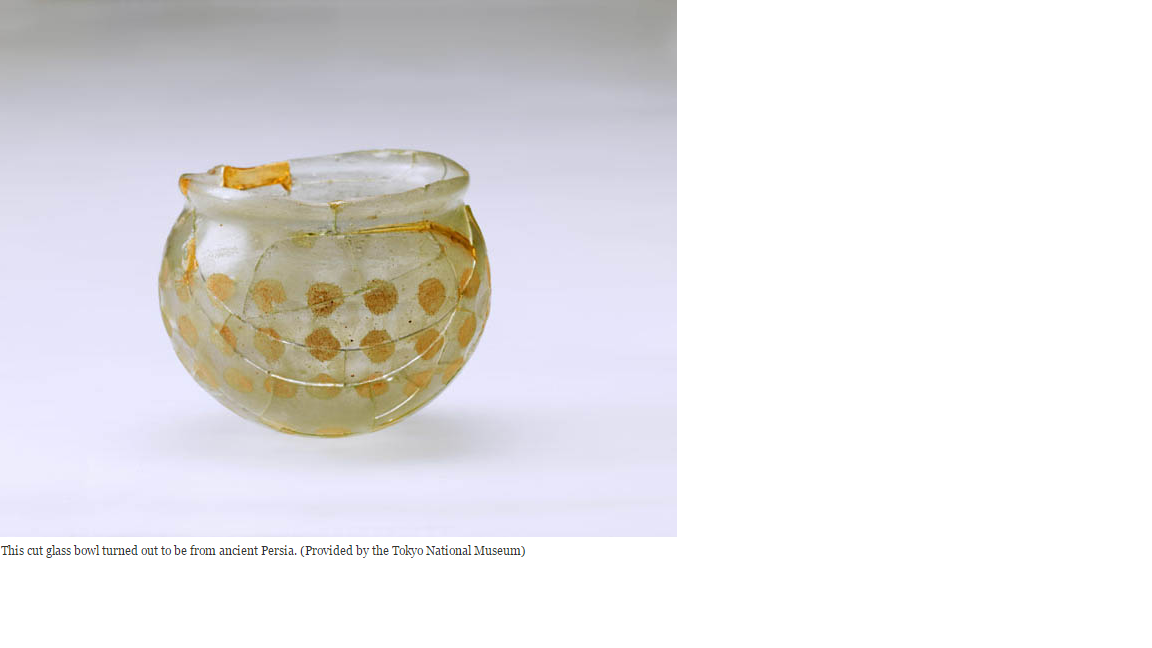
ROMAN GLASS has been found in a recently opened Japanese tomb dating to the 5th century, as per an article in this week’s Asahi Shimbum (courtesy of Adrian Murdoch’s fine blog).

Read the original article on this stunning discovery here: http://ajw.asahi.com/article/behind_news/social_affairs/AJ201411130064

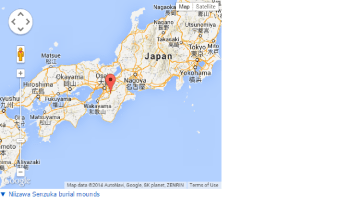
map japan

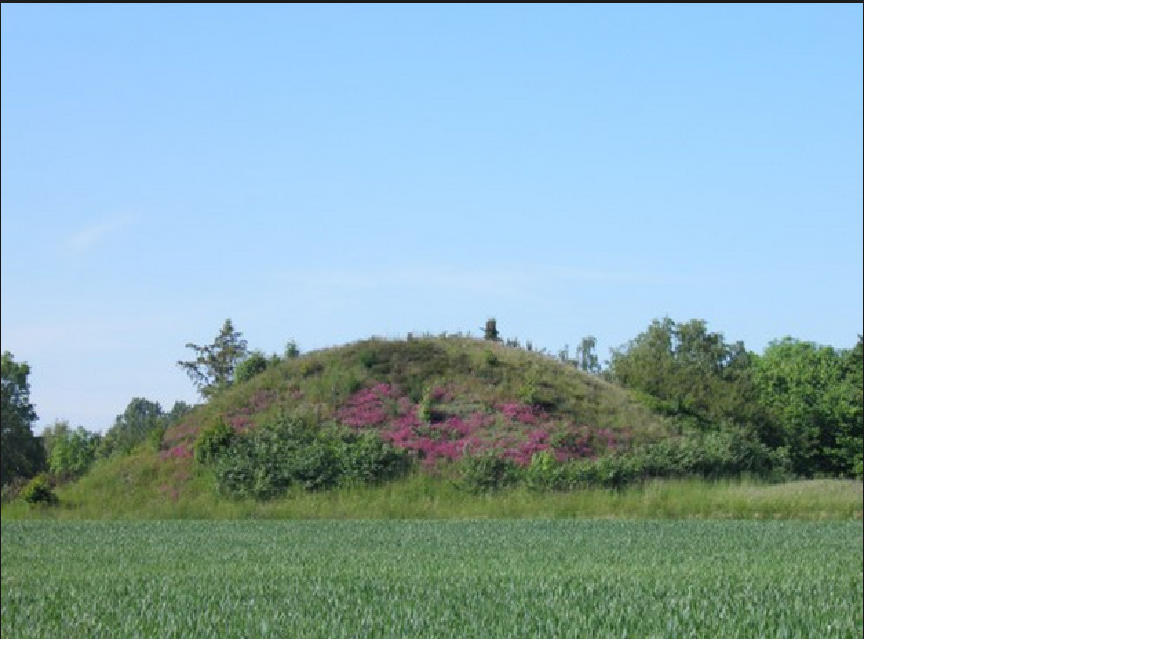
The ornamental glass (a beautiful cobalt blue plate and a delicate golden bowl seen above) is believed to have made it’s way to Japan through Sassanid Persia.  Scientific analysis suggests that both items were created by Roman artisans working within the Empire at some point in the 3rd century.  While it’s unknown precisely when and how they made their way to Japan, they were buried along with the denizen of tumulus #126, within a cluster of ancient graves dating to the late 5th century.

Niizawa Senzuka burial mounds

So what does it have to do with the Age of Justinian, this turbulent time when the light of Rome still shined in the East as darkness fell in the West?

In these fragile pieces of blue and gold glass, fantastically preserved, we have an example of how far Rome reached even in an era in which common wisdom says Rome had already “fallen”.

The truth, as found in this burial mound in Nara Prefecture suggests something very different.

While Roman trade with Japan was indeed rare, the Romans (and their trading partners and sometimes enemies, the Persians) traded actively with the East. Most of this trade centered around silk that could only be sourced from China at this time. Roman gold moved east, and Chinese silk moved West. That river of gold sustained the Persians.

But there would come a day, not long after our blue glass plate was buried in Japan, when an exceptional man, a missionary, took an extraordinary risk by smuggling silk worms out of the Forbidden City in a hollow-tipped cane. When he arrived at the Emperor Justinian’s court in Constantinople he irrevocably changed the course of history….

– Matthew J. Storm

The Conundrum – Rome Entering the Dark

Many books of fiction, academic studies, dry histories, shoddy blogs, shoddier movies and cheap soaps have been devoted to  that abstraction called ROME.

They devote themselves to the common questions we have been told that matter most, the “serious” questions.

Who were the Romans?

Where did they come from?

How did they achieve dominance over the classical world?

And most importantly in the eyes of many – what caused “THE FALL”.

The latter question is one that interested me as well, a great deal, until I understood a basic historical fact – a truly heretical historical fact.  That fact stunned me, blew me away really, fascinated me from the get-go and it hasn’t let go of me since.

ROME DID NOT FALL.

Or put more specifically, when Romulus Augustulus abdicated in favor of the Goth warlord Odoacer, he formally ended the Western Roman Empire.  Yet this apocryphal collapse was really just a historical asterisk.  Why?  How could I be so flip with the seminal event of modern western civilization.

The year was 476.  The “end” came in 476.

But the reality is that for another thousand years – until 1453 – a Roman Emperor continued to rule in the ancient Byzantium, the capital of the Roman Empire since Constantine the Great moved the capital of the Empire from Roman to the newly christened Constantinople in 330CE.

It is accurate to say that the Western Empire ceased to exist in 476, while in truth it had ceased to exist several decades before as an independent entity.  It is equally true, stunningly accurate, to assert that the Eastern Empire lived until it fell to Mehmed “the Conqueror” in 1453, on the eve of Columbus’ trip to the new world.

Assuming that what I have just abruptly foisted upon you is true, it begs the following questions.  I trust they will pique your interest as they have held me hostage since childhood,

– Why do Western school children know nothing of this “other Rome”?

– What is the missing history, these thousand years that is not taught?

– What debt do we owe to this Rome – how would our world be different if Rome hadn’t continued in the East?

– Who were these “other” Romans?  How did they perceive the falling darkness, the barbarian invasions, the retreat of classical civilization?

– How did they navigate the Dark Ages?  How did civilization survive in their hands when the West lived in darkness, ignorance, brutish squalor?

– What was the role of this forgotten Rome in the reawakening of the West in the Renaissance?

These are the basic questions that have kept me occupied for many years – they are obviously far greater than I.  But I’ve delved into these things in a very small way, pursuing my obsession and attempting to share a germ of this fascinating world with others in the form of my novel, FROM AFRICANUS, and it’s sequel, AVENGING AFRICANUS that will be released in the summer of 2014.

Please stay tuned, share your thoughts, your passion, and curiosity, for the forgotten Rome.  Not to say that the story of the Republic and early Empire isn’t worthy – it is most worthy of study and discussion but it’s not neglected.   The same can’t be said of the Rome of Justinian the Great.