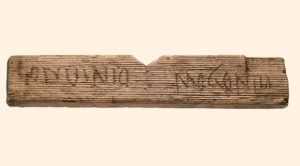
“I ASK YOU IN YOUR OWN INTEREST NOT TO LOOK TOO SHABBY.”
A message that only true friends or family could deliver and only then with a certain degree of caution – it takes love to tell the unvarnished truth!
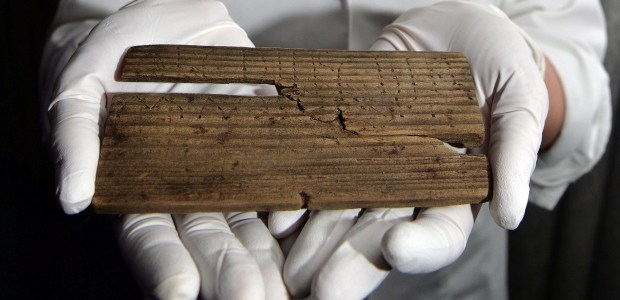
The note could easily have been written by any of us today, in a text or email. Instead it was written 2,000 years ago in a Roman settlement known as LONDINIUM, modern London. It, along with a treasure trove of
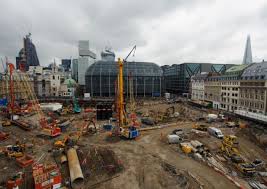
wood tablets was just discovered during a construction project for Bloomberg’s new European headquarters in London.
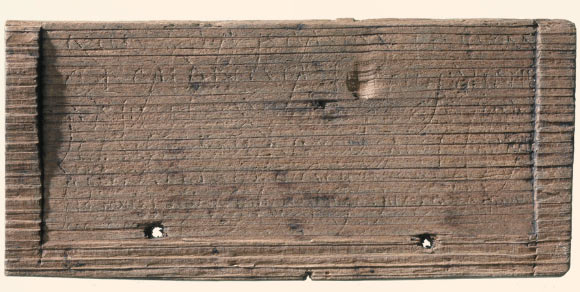
Most amazing is that this note (one of 405 writing tablets unearthed on London’s Queen Victoria street), was written on bees’ wax pressed on wood. The original wax has long disappeared but impressions from the writing were pressed into the wood which was miraculously preserved.
As one article described:
“The preservation of the tablets is in itself remarkable, as wood rarely survives when buried in the ground. The wet mud of the Walbrook, a river that dominated the area in the Roman period but is now buried, stopped oxygen from decaying the wooden tablets, preserving them in excellent condition.”
The find is historical for another reason. On one of the wood tablets, archaeologists identified the earliest mention of the city’s name ever found, dating to mere years after the city’s founding in 43CE.
BREAKING NEWS – TURKEY DEFEATS THE ROMANS (563 years ago – too late to celebrate?).
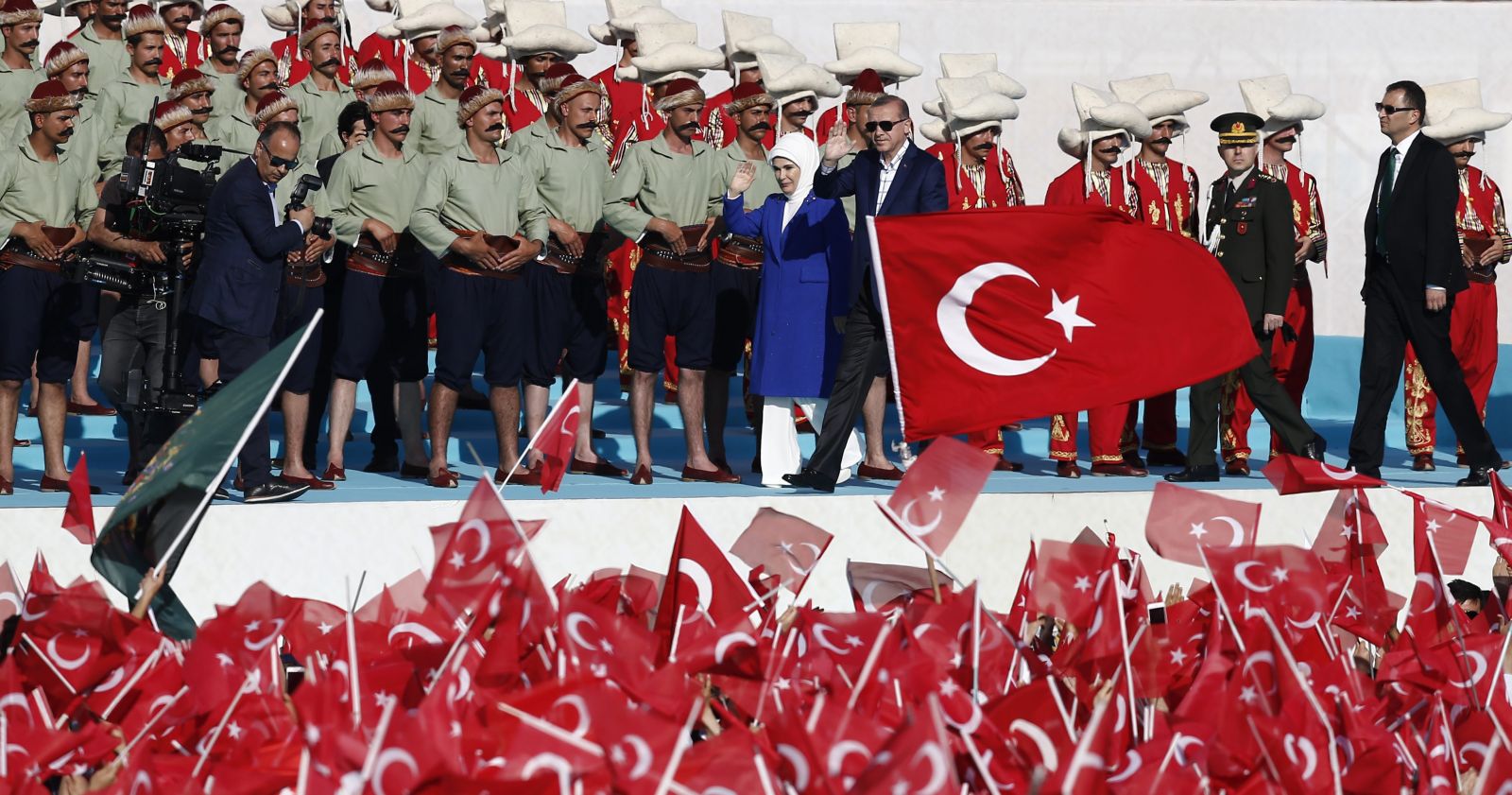
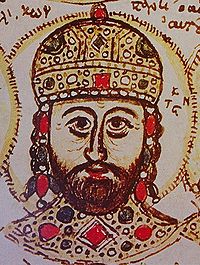
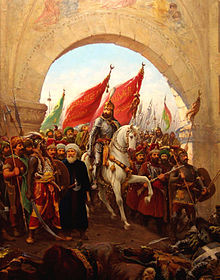
Talk about being desperate for good news! Over the weekend the autocratic regime of Turkish President Recip Tayyip Erdogan (image at right) mounted a major celebration to mark the anniversary of the Ottoman Sultan Mehmed II’s (“The Conqueror”) victory over the final Roman Emperor, Constantine XI (“the Marble Emperor”). A million people were expected to attend the celebrations and the President’s extravaganza would feature the army, navy (replete with submarines), etc. Just in case the nasty Romans pop up to ruin the festivities?
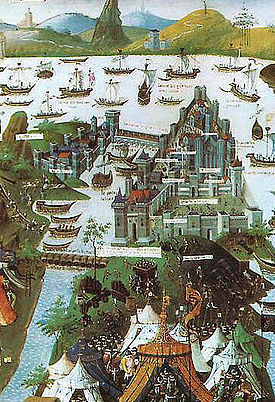
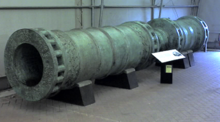
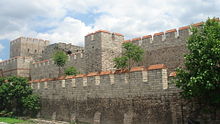
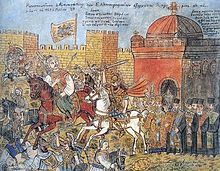
None can deny that when Mehmed finally pierced Constantinople (now Istanbul’s) Theodosian City Walls on April 6 1453, it marked a turning point in world history. The Turks had spent nearly 700 years trying (unsuccessfully) to take the city that had been the center of human civilization since it was founded by Constantine the Great in 330CE, and thanks to some of the largest cannon ever cast they finally succeeded.
A sad day for lovers of Roman history!
And evidently a very happy day for Erdogan. Nothing like kicking a dog when he’s down, especially when the dog (the Roman Empire) has been down for about six hundred years.
Yet another enduring testament to the power of Rome – still resonant, and relevant, six centuries after it finally disappeared from the face of the planet.
Some images from that fateful day, including one of the Marble Emperor, one of the famous canons, and one of Mehmed entering the city.
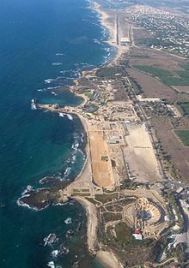
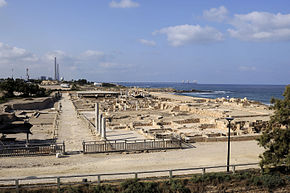
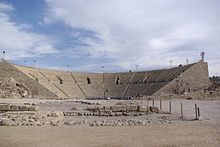
A pile of marble, concrete and sandstone sits off a highway between Haifa and Tel Aviv.
Once a city.
Once a Roman colony, its residents Roman citizens, one of the most important cities in the Roman orbit.
Colonia Prima Flavia Augusta Caesarea.
Named after the first Emperor, Caesar Augustus, the city sat on the turquoise Mediterranean coast in Rome’s Palestina province and dominated Mare Nostrum’s waters, a beacon in the Roman east for many centuries.
The city had many distinguishing features but none more remarkable than its massive, man-made harbor, the biggest in the world when it was built enclosing 100,000 square meters. It was known as Sebastos Harbor (“sebastos” from the Greek for Augustus), and its construction was made possible by the Roman’s brilliant invention of a new kind of concrete upon which they built their world-spanning Empire. A mix of lime and pozzolana (volcanic ash imported from Italy), this almost indestructible concrete has the unique quality of growing harder with time – even underwater – one of the reasons why there are so many well preserved Roman maritime ruins in the world.
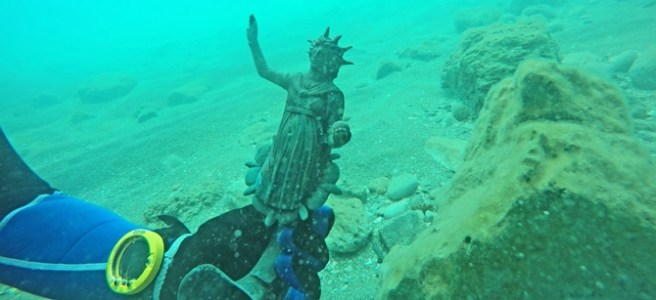
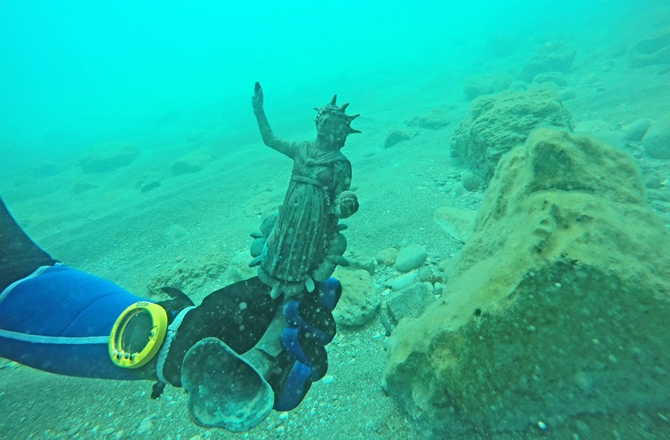
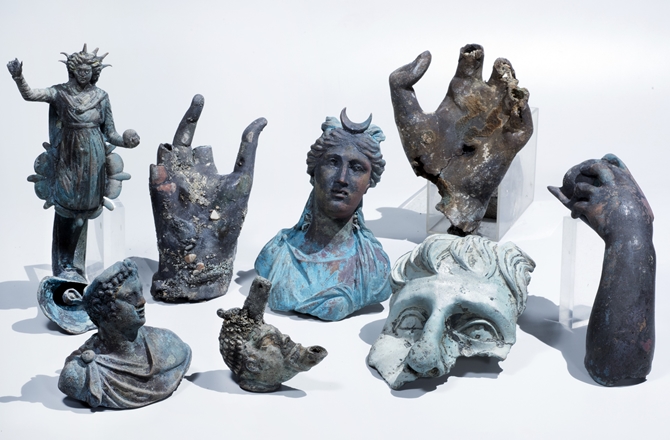
Recently, somewhere in those waters off Caesarea, two divers discovered an ancient Roman wreck, a ship that sunk in the age of Constantine the Great – 1,600 years ago. IAA (Israel Antiquities Authority) archaeologists who explored the wreck speculate that the ship must have foundered when trying to make the harbor in a storm, depositing its cargo in the sand where it has been well preserved for nearly two millennium.
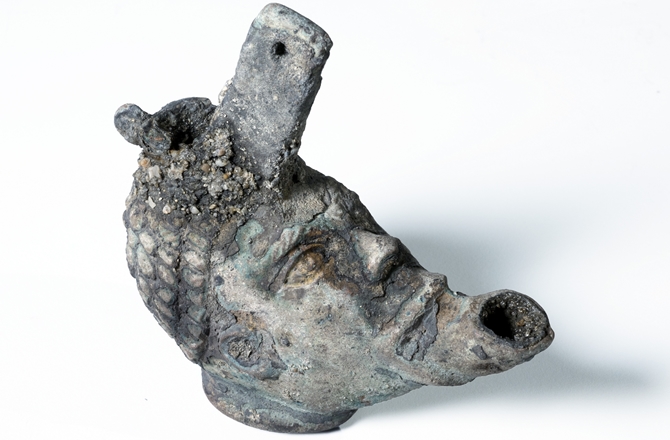
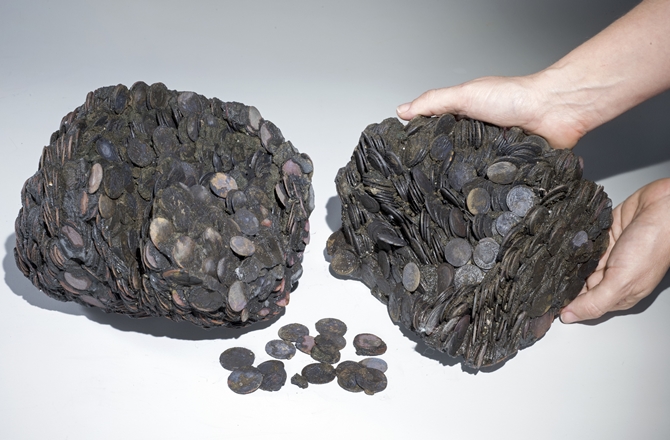
Among its contents were exceptional statues, including one of the Moon Goddess Luna (see below) that’s as beautiful as any I have seen, a grand collection of Roman coins, anchors, and other metal objects that were bound for recycling according to the IAA. Thanks to the storm they never made it to the foundry, giving us one of the most important maritime discoveries of Roman artifacts in Israel in the last three decades.
A request from the Author to those of you (special souls and odd ducks all of you) who have read one of my books.
The most important way that indie authors like me can ‘promote’ our books is through the reviews that readers post online, especially on Amazon.com and at book-club sites like Goodreads.
On Amazon, the undeniable Goliath of the book world, the placement of my books is entirely determined by the number and quality of my reviews (good or bad, to an author an honest negative review is more important than a false glowing review!).
To the readers of my books, I ask you to please, pretty please, take two seconds and leave an online review as short or long as you would like online at Amazon – it makes an IMMENSE difference to the humble author plugging away without publicist, editor, ad agency, etc.
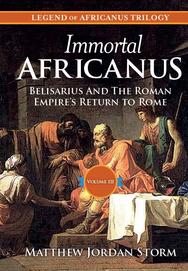
I am proud to announce that my third novel, IMMORTAL AFRICANUS, was just recognized as a finalist by the National Indie Excellence Awards in the Historical Fiction category! This is the most prestigious annual book competition for indie authors and I am truly honored, and more than a bit surprised.
Immortal Africanus is the third, and final novel in the Legend of Africanus series. In Immortal Africanus, Caesar sends General Belisarius and his band of Roman knights to Italy to reclaim the City of Rome for the Empire. But the Goth King and his hundred thousand man horde will do whatever they can to crush the Emperor Justinian’s dream of restoring the Western Empire.
For anyone interested in learning more about this lost sliver of Roman history, when the Empire teetered on the cusp of the Dark Ages, please see all three Legend of Africanus novels at matthewjordanstorm.com or look for me on Amazon at amazon.com/author/matthewjstorm.
We all feel a little thrill when we put on a pair of pants or a jacket and find a long forgotten bill inside, the thrill of found money. But nothing quite like this!
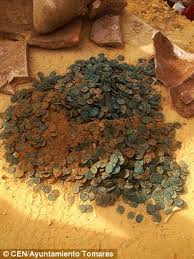
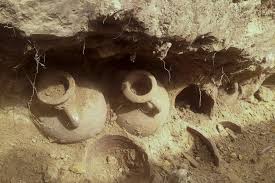
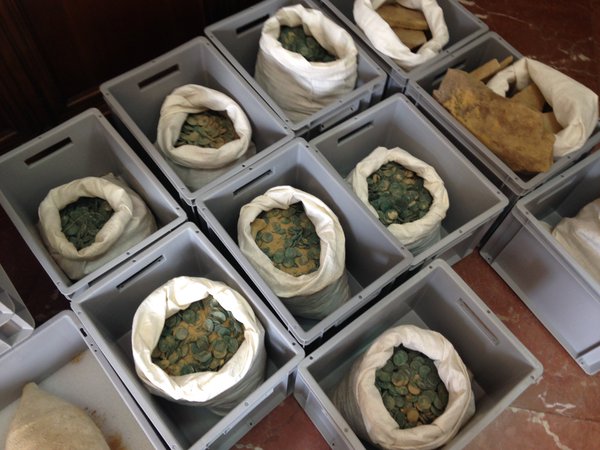
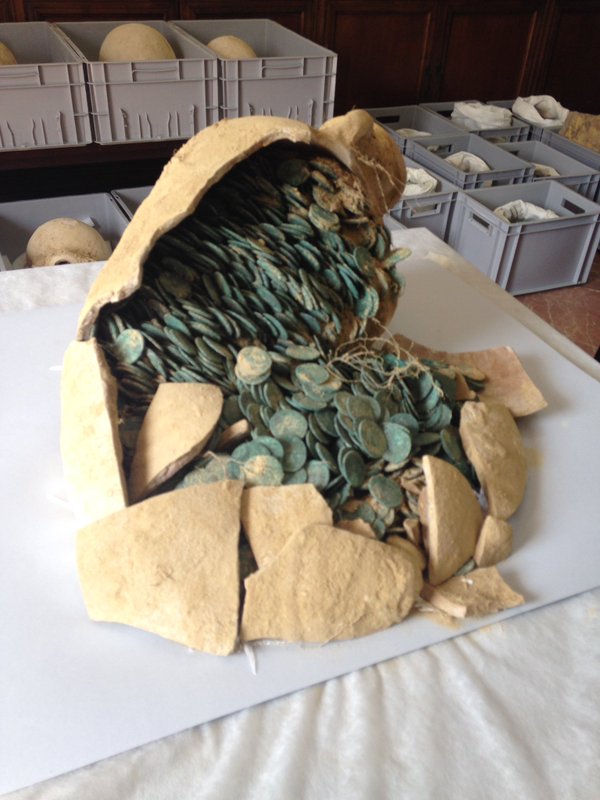
Construction workers in Tomares, Spain (just outside Seville) were at work last week, digging a ditch in order to lay electricity lines in an urban park when they struck something unusually hard a few feet below the surface. Quick work revealed 19 terracotta jugs (known as “amphorae”) – containers that were commonly used in the Roman Empire to transport everything under the sun, from wine and olive oil to valuables, including coins.
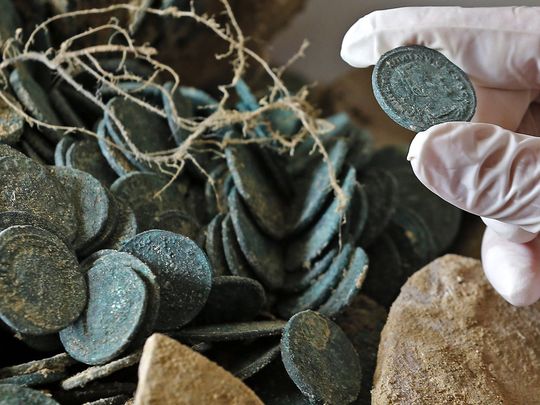
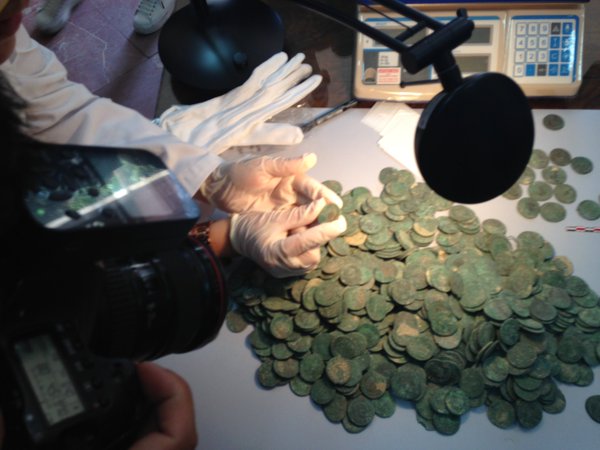
That was the case with these amphorae which contained 1,300 pounds of silver Roman coins in pristine condition, dating to the era of Constantine the Great. It is the greatest collection of Roman coins ever found – dwarfing all previous discoveries.
The coins were minted in the Eastern Roman Empire (where Constantine had relocated the capital from Italy to the old Greek city of Byzantium on the Bosporus which he re-christened Nova Roma or Constantinople – now known as Istanbul) and transported to Spain. The archaeologists that are analyzing this massive hoard (the number of coins has not yet been identified as the collection is so massive and the find so recent) were likely sent to Spain (then Hispania, one of the original Roman provinces dating to 218BC) to pay the Roman army’s wages.
Why were the coins buried? And why were they forgotten? That is the mystery…
Imagine you are a loving father – not such a terrible stretch, and you want to wire your old country barn for electricity so that your children can play indoor tennis at night. That’s something that many of us would gladly do. Just lay some electric cable (hire a professional of course), and there you have it, tennis day and night, year round, and grateful children…
Now if you are in the former Roman colony of Britannia, homeowners that take a spade to their backyard are used to surprises given the rich history of the island. Yet no one in their right might would expect anything quite as rich as what this homeowner uncovered – one of the most stunning Roman villas ever unearthed, anywhere in the world.
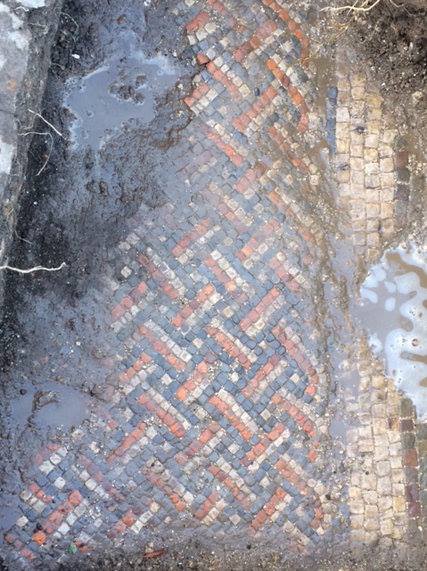
Workers had sunk their shovels about 24 inches below the surface when they struck something hard. Some quick work with their hands revealed Roman mosaic (right) whereupon the homeowner called in the archaeologists who quickly determined that what lay beneath this country home was the most perfectly intact Roman villa ever discovered in England, one that had been virtually untouched since it collapsed in the 6th century CE, approximately a century after Roman legions were evacuated from Britannia by the Emperor Honorius who told the Romans in Britain to “look to their own defenses”, in 410CE, because Rome could no longer support its most distant borders.
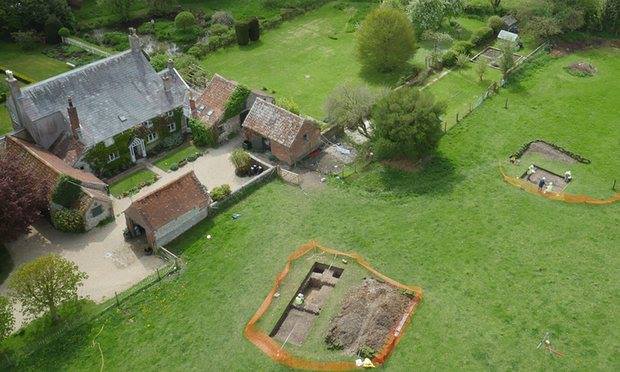
Returning to the villa (images of the dig below along with an artist’s rendering of the home), which was believed to possess three stories – it has rather stunned archaeologists thrilling with what might be found once it is excavated. As one opined: “This is a hugely valuable site with incredible potential. The discovery of such an elaborate and extraordinarily well-preserved villa, undamaged by agriculture for over 1,500 years, is unparalleled in recent years and it gives us a perfect opportunity to understand Roman and post-Roman Britain.”
That said, for the time being, Historic England covered over the recent finds with earth to preserve them until such time as their raise sufficient funds to run a proper dig, a thoughtful move. Until then this Roman villa will continue to slumber underground, dreaming of Honorius perhaps, and his fateful decision one thousand four hundred years ago to abandon Britannia…
I can’t help imagine what the owner of that palatial estate thought as they watched the Picts, Celts and Jutes come loping out of the forest, knowing that their time had come.
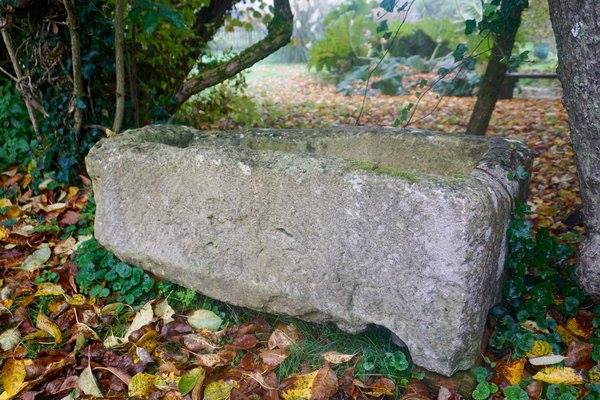
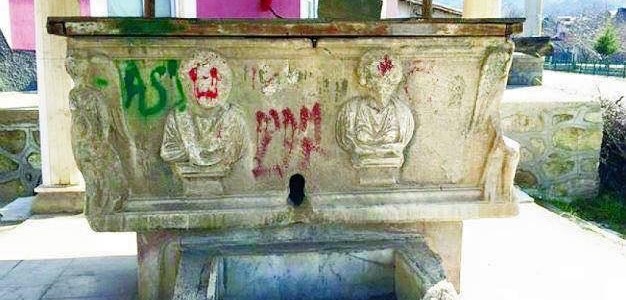
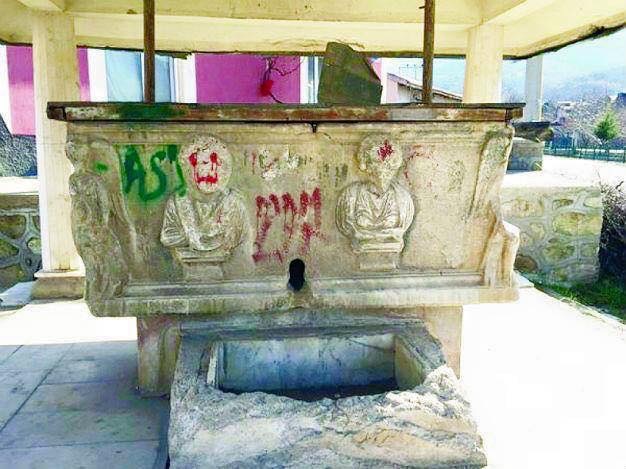
A Roman tomb, graffiti clad, filled with water, quenches thirst, lost in Çakırköy, Turkey.
This little snippet (below) fascinated me. How this 2,000 year old Roman tomb was unearthed and somehow wound up as a fountain in this small town in the heart of what once was Roman Anatolia and is now Turkey – somewhere between Istanbul and Ankara – no one knows. But there it is in the picture below, alive, used. Perhaps that is best. One wonders what the thirsty passerby thinks when they lean in to take sip…
“A 2,000-year-old tomb from the late Roman era serves as a fountain in the village of Çakırköy in the western province Afyonkarahisar.
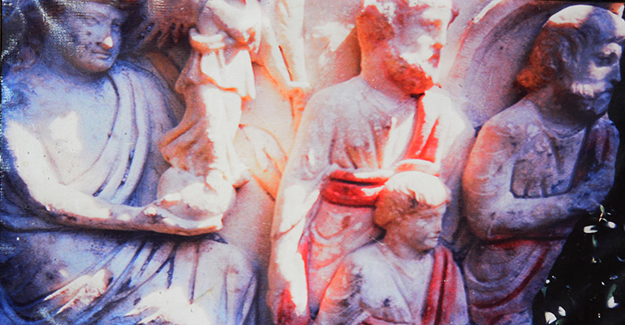
Nike, the god of victory, is depicted on four sides of the Roman tomb, which was discovered in 1986 by the Turkish Grain Board. On one of the long sides of the tomb, the reliefs depict a man and woman, who were most probably the owners of the tomb, and two Medusa heads on the other side. The writings on the tomb have been destroyed, as reported by Aktüel Archaeology magazine. The tomb is thought to have served as an important family grave in the ancient age.
Museum officials say the tomb is used as a fountain in order to keep treasure hunters away from the area.”
March/29/2016 – From Hurriyet Daily News
Once upon a time she was a Roman city, the first Roman city in Britannia.
Today Camulodunum goes by the name of Colchester, and it lies 66 miles northeast of London (Roman “Londinium”). It is known as the oldest town in England and was once the capital of Britannia, one of Rome’s prized possessions when it was part of the Roman Empire from 43CE to 410CE.
Camulodunum / Colchester was recently in the news when workers renovating a department store on High Street discovered the charred ruins of a Roman home beneath the shop’s basement.
The Dig in Colchester
Archaeologists are used to sifting through the charred remnants of Roman-era Colchester, because the first Camulodunum was sacked and burnt to the ground shortly after the city of London was founded. This destruction left a layer of burnt sediment upon which the Roman city was subsequently rebuilt. That sediment remains under Colchester and is frequently encountered.
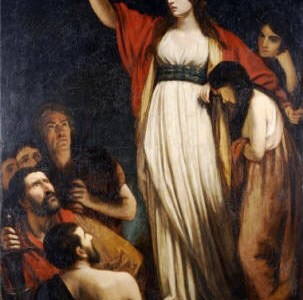
Colchester was sacked during the revolt of Queen Boudica (see featured image of this post for representation), the Celtic warrior queen who led a brief but smashingly destructive uprising against Roman rule in 61CE, a revolt that left an estimated 70,000 Romans and Britons dead before the Romans reestablished control over the island. In the Battle for Camulodunum, the Roman IX Legion tried to relieve the residents of the city but arrived too late to provide succor. Gaius Suetonius Pauline’s, the Roman Governor of Britannia eventually prevailed over Boudica at the Battle of Watling Street. Though they were grossly outnumbered, Roman discipline and strategy prevailed over Boudica’s Celts and Roman rule was reestablished on the island for 400 years.
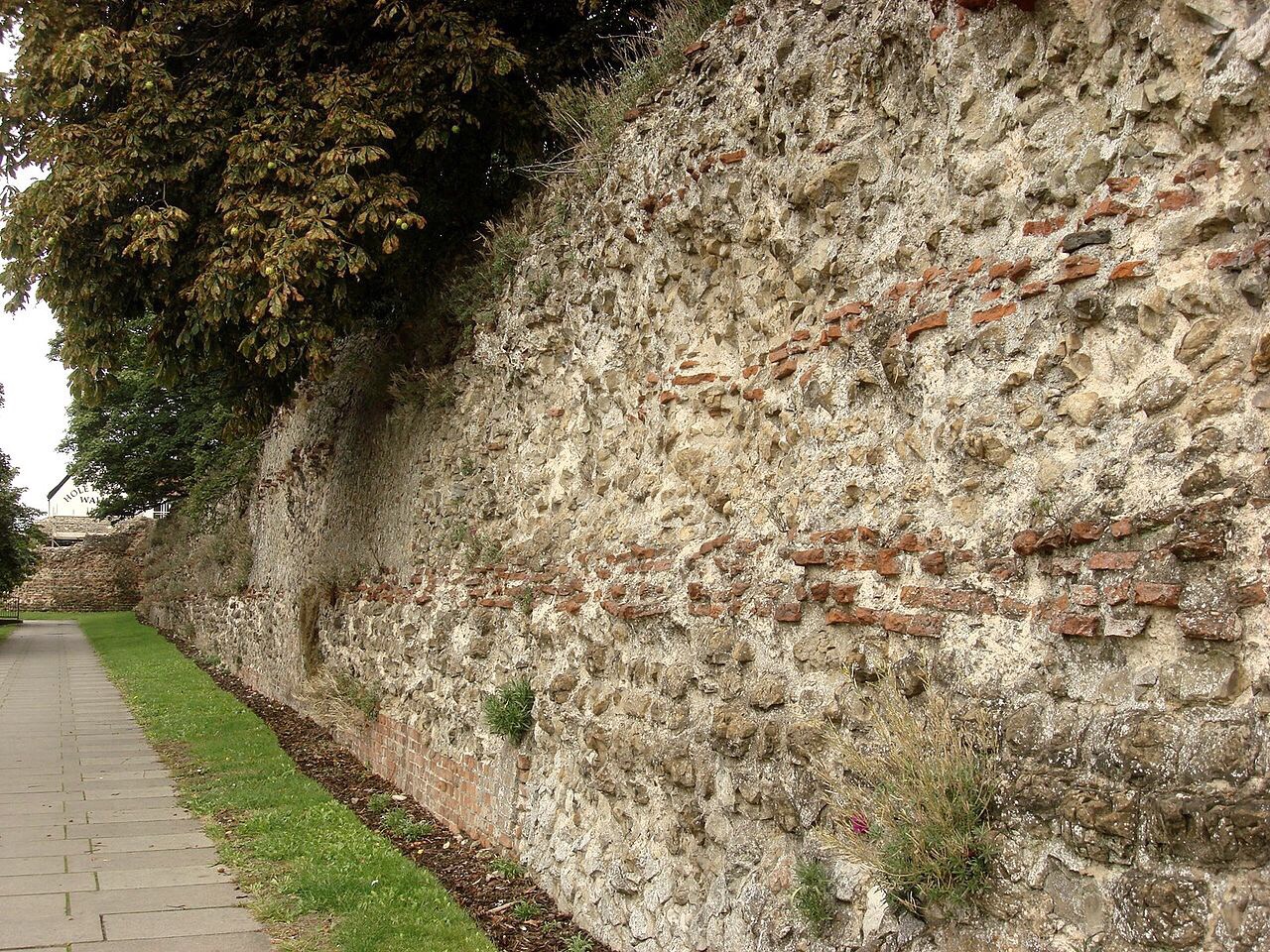
Roman Walls of Colchester
Found under the Department Store
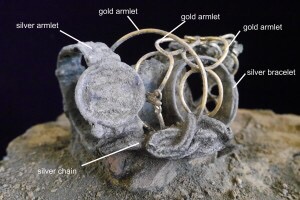
Back to modern Colchester and the dig under the grand department store on High Street. Archaeologists were called to the site, and in those charred remains, they stumbled across one of the most notable hoards of Roman jewelry ever discovered in Britain (or a
Roman Jewelry found in Colchester
nywhere for that matter! Precious metals datingfrom the Roman era are rarely found – when fungible precious metals were discovered they were melted down to use as currency, not adornment). The dig is still ongoing but the principle items discovered include: three gold armlets, a silver chain necklace, two silver bracelets, a substantial silver armlet, a small bag of coins, and a small jewellery box containing two sets of gold earrings and four gold finger-
rings.
Archaeologists speculate that these remarkable items belonged to a very wealthy woman who buried them in the basement of her house as Boudica and her army marched on the town, hoping to retrieve them when the danger passed – that they were
never retrieved implies that their owner met a dark end, as did most Roman residents of the city.
For more on the dig, see here: http://www.thecolchesterarchaeologist.co.uk/?p=14844
When you hear the word “Izmit”, what comes to mind?
How about capital of the Roman Empire?
Once known as the Roman city of Nicomedia, founded by refugees from the Greek city of Megara (whose compatriots also founded nearby Byzantium – Constantinople – Istanbul), Nicomedia, now Izmit, sits in modern Turkey on the Sea of Marmara.
In 286 CE, the Roman Emperor Diocletian (right) struggled to containwhat is known as the “Crisis of the Third Century”, when Rome came under ferocious attack along its northern and eastern frontiers. In response to these threats, Diocletian instituted a massive reform in Roman government. He split the power that resided in the office of Emperor into four, creating two senior Emperors, or Augustus (Diocletian and Maximian), and two junior Emperors, or Caesars (Galerius and Constantius, father of future Emperor Constantine the Great).
Diocletian assumed responsibility for the Roman East, establishing his capital at Nicomedia. It would remain the capital city of the Eastern Roman Empire under Diocletian and subsequently, under Constantine the Great until Constantine moved the capital across the Bosporus to Byzantium in 330CE (though Constantine would eventually die in Nicomedia seven years later in 337).
Nicomedia, a city lost in time, or at least lost to Western minds, remains a thriving metropolis, now known as Izmit.
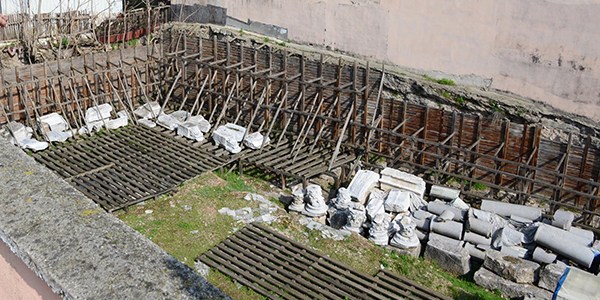
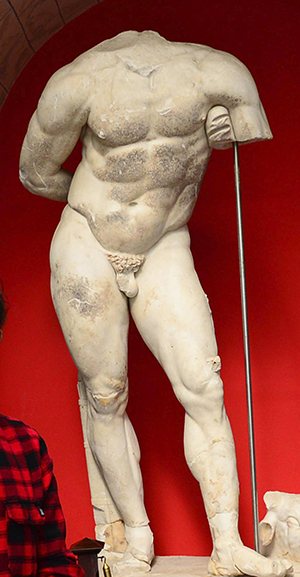
And under the streets of Izmit, the Roman city still lies, proof of which surfaced during routine work to recover from a devastating earthquake in 1999. Builders who discovered the headless Hercules in 2001 (pictured below) treated the Roman remains as garbage for fear that their construction work would be stopped by local authorities. Fortunately, that is precisely what happened and the site is now under protection from the local museum and a proper dig to excavate the unearthed remains of Nicomedia begin this month. Archaeologists now believe that that the headless Hercules once sat in Diocletian’s palace which
still rests meters below street level, waiting to be uncovered.
Remarkable stuff, and as surprising as the discovery may be to us, to many local residents it is just as novel. As one of the lead archaeologists on the soon to begin dig stated: “[M]any people living here are unaware that they have been living on a huge palace for centuries,”


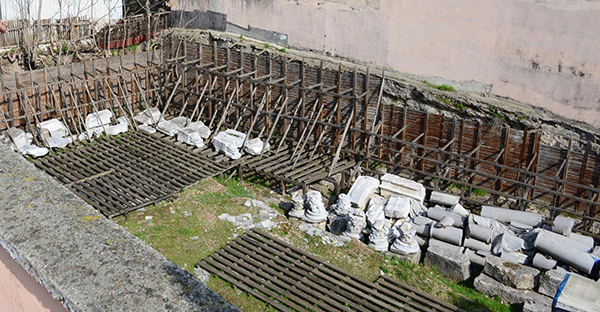
 A pile of marble, concrete and sandstone sits off a highway between Haifa and Tel Aviv.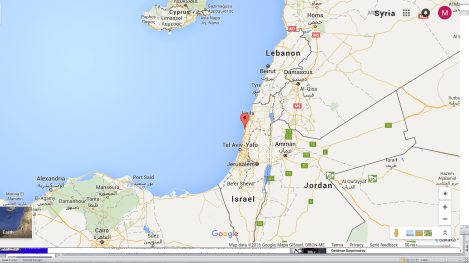









 ROME ON THE CUSP