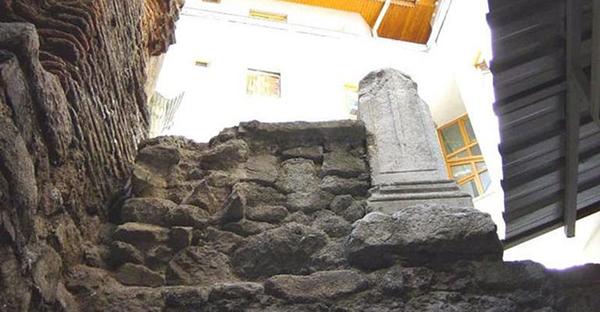
Last Roman church in Ankara (Turkey) close to disappearing

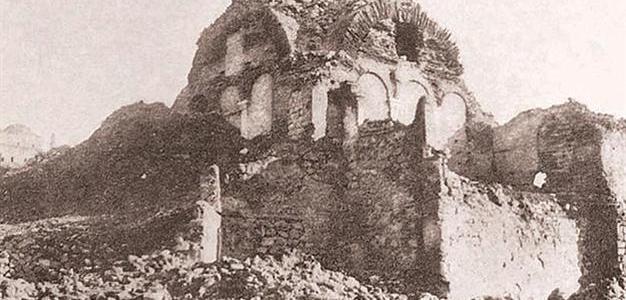
Saint Clement - ruins

It’s easy to forget that all of Turkey was once the heart of the Roman Empire after the far-sighted Emperor Constantine moved the Empire’s capital from Italy to Turkey (to Byzantium-Constantinople-Nova Roma-Istanbul).

Yet evidence of Rome’s presence in Turkey (not to mention Syria/Libya/Israel/Egypt/Algeria etc.) is everywhere, sitting patiently in the shadows, enduring benign and not so benign neglect by the country’s current government.

Hence this intriguing article.  There seems to be a rebirth of interest in Turkey’s Roman past among academics and ordinary citizens, and a growing movement to preserve and promote that past.  As you will see in the link below, the paper, Hurriyet, references what appears to be the last Roman church where traces (ruins) are still visible in the capital of modern Turkey, Ankara – far from Istanbul / Constantinople, wedged in between modern buildings, almost forgotten and rapidly disappearing.

The article speculates that the church known as Saint Clement’s was built as early as the 4th century, and the paper calls for the Roman building to be preserved.  From a glimpse at the picture above, one cannot help but hope that the call to action is heeded.  Saint Clement the man (and the structure) is described by Wikipedia as:

In 303, Ancyra was one of the towns where the co-Emperors Diocletian and his deputy Galerius launched their anti-Christian persecution. In Ancyra, their first target was the 38-year-old Bishop of the town, whose name was Clement. Clement’s life describes how he was taken to Rome, then sent back, and forced to undergo many interrogations and hardship before he, and his brother, and various companions were put to death. The remains of the church of St. Clement can be found today in a building just off Işıklar Caddesi in the Ulus district. Quite possibly this marks the site where Clement was originally buried.

Other Roman structures still exist in Ankara, including traces of the Roman Baths below.  See this Wikipedia on Roman Ankara for more on Ankara’s Roman past.
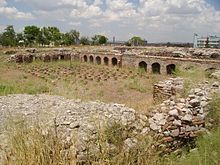
220px-AnkaraRomanBaths1


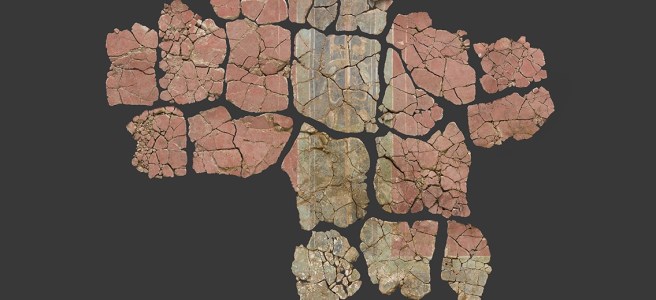
2000 Year Old Roman Fresco Discovered Under London

I am always captivated by news of archaeological discoveries in modern cities that have descended from Roman towns, forts and metropolises.  I’m particularly thrilled by finds in seemingly incongruous locations, those that remind us of how truly sprawlng the Roman Empire once was, like this recent discovery in London.

This week, archaeologists conducting a survey of the ground beneath 21 Lime Street in central London in preparation for the construction of a new office building discovered a remarkably well preserved Roman fresco in what must have been a stunning home built in Roman Londinium’s first decades in the first century CE.  The home was subsequently flattened by the Romans who built the largest temple north of the Alps on that same site.  This mosaic, discovered twenty feet underground, was preserved when it was deliberately buried under that new structure.  The quality of the craftmanship is still evident as is the wealth of the family that commissioned it for their home, as is indicated by the rare pigments that were used in its creation (like the very rare cinnabar used for its red coloring).  For more on the discovery see this article in the New Historian.

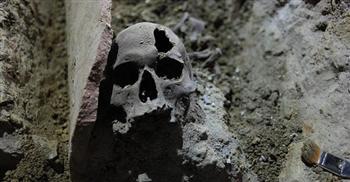
Roman Grave Discovered in Istanbul Shopping District

I love when a little piece of ancient Rome pops up unexpectedly in modern Istanbul reminding everyone of the city’s prior and longest tenured residents – the Romans!

The skeletons were found beneath the “Casa Garibaldi”, also known as “Societa Operaia Italiana di Mutuo Soccorso in Costantinopoli,” built in 1863 and located close to Taksim Square in a part of Istanbul closely associated with the city’s Ottoman past.  Taksim Square lies across the Golden Horn from Sultanahmet – the historical center of the Roman and Greek city.

What were the Romans doing in this fashionable Ottoman district?Beyoglu, the neighborhood where the Casa Garibaldi is located was once in fact a Roman suburb of Constantinople.  It’s not known precisely when these Romans were buried, or why, or what precisely had been located on this spot in Justinian’s day and perhaps we will never know.  But I am heartened by the fact that more attention is being given to these types of discoveries in Istanbul despite the clear opposition of the Turkish state to archaeological studies of the city’s Roman past.  A recently founded department of Byzantine (Roman) Studies at Istanbul’s Bosporus (Bogazici) University is a reflection of this movement.

Orthodox Christian monks from the monastery at Mount Athos were invited to bless the skeletons before they were moved to the Istanbul Archaeological Museum.

For more on this discovery, see the article in Hurriyet.

General Belisarius Enters Rome – on this day in 536CE

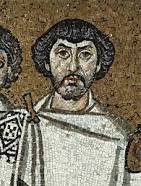
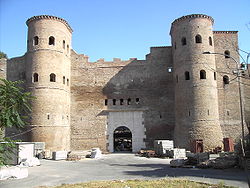
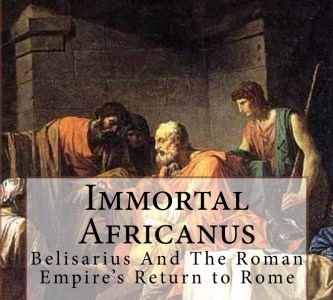
On this day, December 9th in 536CE, Roman General Flavius Belisarius (pictured above) entered the city of Rome through the Asinarian Gate (seen below) with his small cohort of Roman knights.

250px-Porta_Asinaria_2948

The city’s residents had not seen a Roman Legionnaire for almost exactly 60 years, when what remained of the Western armies deserted the Eternal City when the Goth warlord Odoacer toppled the last Western Roman Emperor, Romulus Augustulus.

Since that time, Rome (the city) had been under the control of a series of Goth rulers, including Odoacer, Theodoric (the “Great”), Amalasuntha (daughter of Theodoric), Theodad (cousin of Amalasuntha and her murderer) and at the time of Belisarius’ arrival, the Goth King Vitiges.

Imagine that!  For 60 years, the Roman Empire had gone about its business with an Emperor mounted on a throne in Constantinople, while Rome herself – the birthplace of Empire – was held by barbarians.  Imagine a United States continuing to exist, and to thrive, with a Washington D.C. belonging to a foreign power.  It sounds inconceivable and so it was to the Emperor Justinian who was determined to accomplish what none had dared, to return Rome to Rome.

By the time that Belisarius arrived in Rome his exploits (in Persia and Africa) were the stuff of legend.  But he arrived woefully understaffed and soon faced a Goth army that exceeded 100,000 in number surrounding the city, determined to crush Belisarius and with it, Justinian’s aspirations of restoration.

Absolutely fascinating stuff!

Following is a Wikipedia link which does a decent job of summarizing the ensuing Siege of Rome.

Swiss Cherry Farmer finds Roman Coin Hoard (in a mole hill)

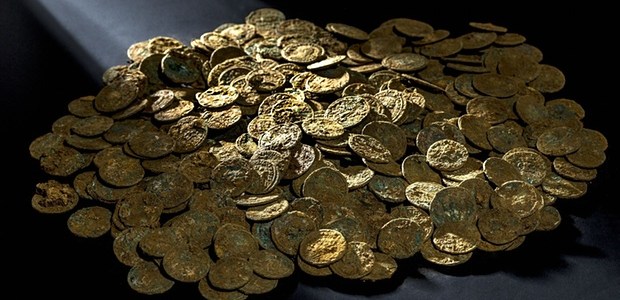
A Swiss farmer found a hoard of 4,166 Roman coins in a mole hill beneath his cherry orchard recently.  The 1,700 year old coins were in fantastic condition, the most recent of which dates to the reign of the Emperor Maximilian (buried shortly after it was minted in the year 294CE).  Their pristine condition was in part attributed to the fact that the land in which they were deliberately buried had never been built upon – it has been continuously farmed since this part of Switzerland was part of the Roman Empire.

Click here for more.


Justinian’s “Flat-Pack” Church, Raised from the Seabed

“We hope it will be easier [to assemble] than an Ikea wardrobe.”
– Dr Alexander Sturgis, Oxford University

A prefabricated church, built in Justinian’s Constantinople and lost at sea off the coast of Sicily 1,500 years ago will soon be reassembled in Oxford University’s Ashmolean Museum.

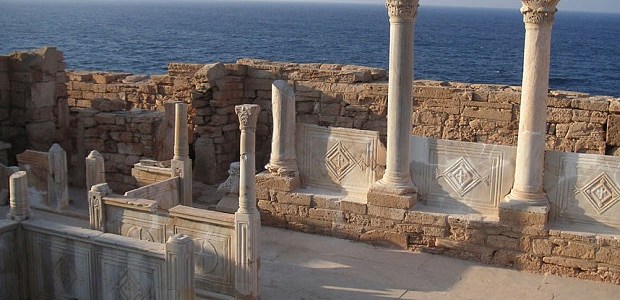
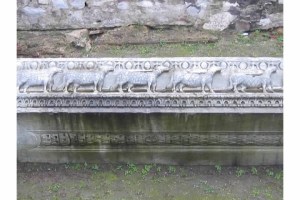
Justinian had such buildings constructed with interlocking pieces that might be be readily shipped and assembled in distant locations – the image above shows the ruins of one such Justinian construct from Libya.  They were transported by specially designed cargo vessels across his restored Roman Empire, and this particular church spent nearly fifteen hundred years on the Mediterranean seabed before it was discovered in the 1960’s.  While many pieces still lie submerged, Oxford will mount the structure with what they have to give museum-goers an opportunity to ‘visit’ a vestige of Justinian’s Rome.

For me, the sheer brilliance of the lego-like, prefabricated concept that Roman engineers invented fifteen centuries ago is an absolute marvel.  Cutting edge architectural magazines like Dwell now expound the pre-fab ‘trend’!   Just imagine Justinian’s ships plying Mare Nostrum fifteen centuries ago with civilization in their holds, exporting tangible proof of Rome’s continued strength long after the West had fallen away.

Click here for an article in the UK Telegraph (loaded with factual inaccuracies but fascinating nonetheless).

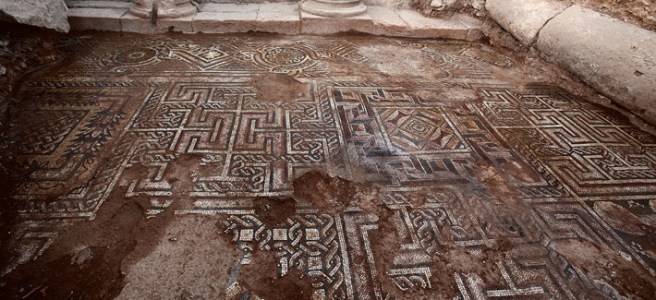
Roman Mosaic Floor Found in Turkey, near Syria

“The city is one of the few places where Syrian urban culture from the Hellenistic-Roman era can currently still be studied.” – Prof. Dr. Engelbert Winter from University of Münster

Archaeologists from Germany’s University of Munster have discovered a beautiful mosaic floor in Gaziantep, Turkey (just 60 miles from Aleppo, Syria),. once known as Doliche in Rome’s Syrian province.

This part of Turkey is one of the last protected parts of this once flourishing region of the Roman Empire.  Most of Roman Syria is now off-limits and under assault, as per the lead quote above making this corner of Turkey, and this find, that much more valuable.

Though the date in which the floor was set has not yet been disclosed it is of a late Roman vintage and very reminiscent of work seen in Istanbul’s Great Palace Mosaic Museum (once Constantinople’s Imperial Palace).

For more on the discovery see this link to the University of Munster’s press release.