The Justinian Plague and Volcanoes?

“The sun gave forth its light without brightness, and it seemed exceedingly like the sun in eclipse, for the beams it shed were not clear.” – Procopius of Caesarea

This has been an unusually rich last couple weeks for the Age of Justinian in the news but of all the recent bits, this takes the cake.

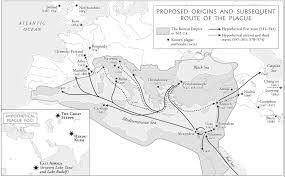
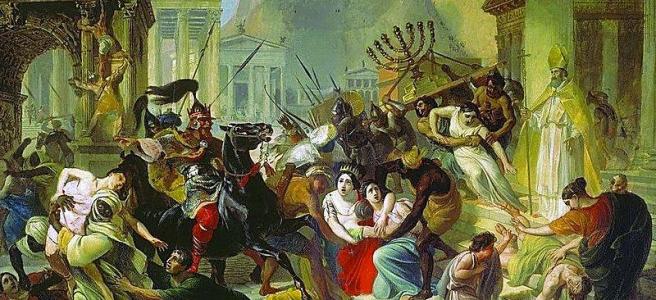
Not many know that the Black Plague of the 14th century first appeared (in recorded history) during Justinian’s reign and was one of the primary reasons for the calamities that followed (including the loss of many of Belisarius’ territorial gains and the collapse of the Persian Empire).  For more on the Justinian Plague, during which over a 1/3 of Constantinople’s one million residents died within a matter of months in the summer of 541, see the brilliant book – “Justinian’s Flea” by William Rosen (on Amazon.com).  The Justinian Plague was savage, ferocious, and more than any single factor can claim to have hastened the end of the ancient world (ushering in the Dark Ages).

This week we learned more about the origins of Justinian’s Plague.  A scientific study just published in the Journal of Nature, and summarized well for the lay-reader on Smithsonian.com, reveals that there were two epic volcanic eruptions that likely facilitated the terrifying Plague.  The first happened in 535/536 (possibly in El Salvador) and the second came later in 540 (somewhere in the Northern Hemisphere).  Together they spewed inconceivable quantities of sulfate and ash into Earth’s atmosphere and dimmed the sun around the Mediterranean Basin for years (as per the quote from Procopius above).   The dimmed sun cooled the planet, causing crops to fail and sparking widespread famine just at the very moment that y. pestis (the organism responsible for bubonic plague) began to spread northward and eastward from the Nile River Basin on the backs of rats.

The volcanic eruptions had opened the gates to Constantinople for the Plague, and Rome (and the civilized world) would never be the same.

For the article on Smithsonian.com see here:

http://www.smithsonianmag.com/science-nature/sixth-century-misery-tied-not-one-two-volcanic-eruptions-180955858/?no-ist

The Enduring Legacy of Roman Roads

Perhaps one of the most obvious and most enduring signs of Rome’s legacy lies underfoot in its network of roads that stretch from Scotland to north of the Danube, east to the Crimea and south to the Red Sea.

This article in Atlas Obscura has some fine pictures (including that of the Pont du Gard in Nimes, France pictured above) and highlights some of the more remarkable, and obscure bits of the Romans highway system that still exists across Western Europe, North Africa and the Middle East.

http://www.atlasobscura.com/articles/the-beautiful-network-of-ancient-roman-roads

Writing Rome Out Of Istanbul’s History

History has always  been written by the victors.

But what is it about the lingering power of Rome’s legacy in Istanbul (formerly Constantinople – Nova Roma – Byzantium), that 600 hundred years after Mehmed the Conqueror breached Constantinople’s walls, the modern Turkish government finds the Roman Empire to be such a threat?  Or so it would seem given the resources that Turkey (led by Prime Minister Erdogan’s party) has devoted to programs to eliminate Rome from the archaelogical record by selectively restoring Roman monuments and buildings in Istanbul to emphasize their Ottoman influences at the expense of their Roman origins.

Perhaps the headline from this recent piece in the Financial Times should have read (encouragingly) as follows: “Rome Still Matters.”

http://www.ft.com/intl/cms/s/0/e697a0b2-0a97-11e5-a8e8-00144feabdc0.html#

Immortal Africanus – Coming Soon

The third (and final) novel in the Legend of Africanus series, Immortal Africanus, will be available on Amazon.com by September 2015. In Immortal Africanus, Caesar sends General Belisarius, Valentinian, Procopius and a small army of Roman Knights to Italy to reclaim the City of Rome for the Empire.  But the Goth King and his hundred thousand man horde will do whatever they can to crush the Emperor Justinian’s dreams of restoring the Western Empire.

Avenging Africanus – coming soon

Avenging Africanus, the sequel to From Africanus will be available on Amazon by September 2015.

In “Avenging Africanus”, General Belisarius leads Valentinian and the Roman Army on a perilous journey across Mare Nostrum to Africa in order to punish the Vandals for the Sack of Rome a century before, their invasion of Rome’s African province, and their role in the collapse of the Western Empire.  The  journey is perilous – many prior expeditions against the Vandals had been tried and failed.  The Vandal horde outnumbers the Romans twenty to one.    If they fail there will be no rescue.  If they prevail, the Emperor Justinian’s plan for restoring the Western Empire will be within reach.

Justinian’s Basilica Cistern

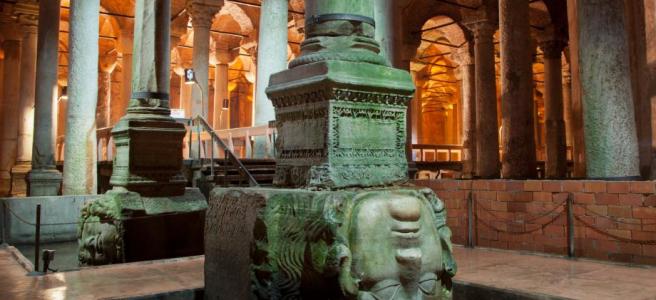
This is an unconventional post for me, but it’s not often that Justinian appears in popular media, so I couldn’t resist posting a link to this decent piece on the grand cistern in Istanbul known as the “Basilica Cistern” due to it’s close proximity to the Hagia Sophia (the breathtaking Church of the Holy Wisdom, Justinian’s stunning cathedral rebuilt after the prior incarnation was incinerated in the Nika Riots).

Note that while the cistern was begun during the reign of Anastasius (not Justinian as the article claims) it’s completion was nonetheless Justinian’s achievement.  For anyone who has visited it in person I’m sure you would agree that pictures can’t properly convey the majesty of this place.  For anyone heading to Istanbul, please do not visit the city without descending below the streets to get a sense of Justinian’s Constantinople.

Here is a link to the Slate article:

http://www.slate.com/blogs/atlas_obscura/2015/03/09/basilica_cistern_in_istanbul.html


The Nika Riots, Theodora and Belisarius

Beware the Ides of January.

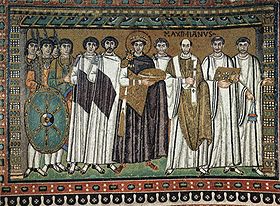
On this date in 532CE the Nika Riots ignited in Constantinople and almost toppled “The Last Roman”, Justinian the Great.   He was the last Roman Emperor to speak Latin as his native tongue, the man that resurrected the Western Empire (ever so briefly), the last who could count the original city of Rome amongst his dominions, and the man that codified and preserved the Roman law that underpins Western democracies.   For all these reasons and more, and with all his flaws, Justinian deserves to be remembered.

Yet he was not the “last Roman”, the moniker given to him by his own contemporaries.  The Roman state would last another thousand years.  Nor was he the only truly exceptional Roman of his age as the events of the Nika Riots, some fourteen centuries ago, remind us.

(As an aside, the Romans were always ready to name ‘the last’ of them, perhaps understandable given the remarkable durability of their line – on more than one occasion naming the ‘last’ must have seemed like a safe bet yet that honor, in my opinion, really belongs to the last Emperor of all, Constantine Palaiologos who died during the Siege of Constantinople in 1453 and who will figure prominently in the next book I will write once I finish the “Legend of Africanus” series, please stay tuned).

The Riots began as a just protest in Constantinople against an Imperial bureacracy that was riddled with corruption.  Constantine the Great had reformed the sclerotic Roman administration two hundred years before after eliminating his co-Caesars, but subsequent emperors had let it deteriorate- none had Constantine’s ability.  When the Western Empire was lost, the mandarins in Constantinople did little to adapt the kleptocratic state in the surviving East.  The average Roman was crushed under high and arbitrary taxes, private property was amassed by the select few, and the concept of citizenship itself suffered greatly.

Justinian I came to power scant years before Nika.  Aware of the corruption and rot in his inherited government, he embarked upon an ambitious program of reform, raising taxes and reducing privileges for the senatorial class.  Because he was born to a peasant family in Thrace, and despite the fact that his uncle Justin had preceded him on the throne, Justnian was never accepted by blue-blooded Rome.  Yet his humble origins also allowed Justinian to empathize with his citizens in a way that few Caesars of the latter Empire had.

In that cauldron of inequity and uncertainty, the Riots erupted.  But what had started spontaneously soon turned into something more sinister – an organized attempt by a cabal of senators and major landholders to overthrow the upstart Justinian.

The details of what happened during the Riots, that reduced much of Constantinople to ashes in one terrifying week, are contained in my book, “From Africanus” and I won’t repeat them here.  The book is a work of historical fiction but I spent years researching that stunning moment in time and tried to represent it faithfully in the book.  But as we celebrate the anniversary of that event, I would like to acknowledge the two people that saved Justinian from certain death during the Riots – Theodora, his Empress and wife, and Belisarius, one of the greatest generals that ever lived.

When his attempts to reason with the rioters failed, and the city burned, Justinian lost heart and loaded ships with treasure in Bucoleon Harbor, preparing to flee the city.  Yet when he called his final cabinet meeting to announce his decision, the Empress Theodora refused to follow him into exile! This extraordinary woman stood her ground and told all present that she preferred to die in the purple than flee in shame. Her conviction changed his mind, and Justinian remained in the palace (a move that might well have ended in both their deaths had it not been for the General).

The General, Flavius Belisarius, was an unknown when Nika exploded. A young commander, in his mid twenties, Belisarius had a single notable victory to his credit before January 532, a recent triumph against the Persians “Immortals” at a frontier fortress at Dara (in modern Syria). Since long before Julius Caesar crossed the Rubicon, the Romans had prohibited army officers from bringing their soldiers into the capital. Coincidentally, the young general was in Constantinople that week on leave, and outside the city walls he had left a clutch of his knights to camp and await his return. When called upon by his Emperor, Belisarius brought his men into the city and in a bold, brilliant, bloody strike he fell upon the rebels that had massed in the Hippodrome to proclaim a new emperor, and he killed them to a man.  The riots ended there.

So what?  Why does Nika matter?  Few of us have ever heard of one of the most pivotal events in the last days of the ancient world. Justinian’s survival would keep the onset of the Dark Ages at bay for another generation or two, during which time he would consolidate, and insulate enough of Rome and Greece’s intellectual legacy to help spark a Renaissance still one thousand years distant.

And for me, this is about a debt we all owe to two exceptional people that we get our first important glimpse of on this day, January 13, 532.

Theodora, whose steel kept Justinian in the Palace that day and whose brilliant mind played apart in every decision he would make until her early death.

And Belisarius, whose armored knights – the first of their kind in the history of the world (they rode like Persians, they fired bows like Huns, they organized and endured like the ancient Roman legions) ended the rebellion and would go on to win back the Western Empire.

Justinian I was a remarkable sovereign, remarkable in his achievements and in his flaws. Yet his most incredible was his ability to attract the truly exceptional to his court. Among those exceptional individuals that helped to write his story, which is ultimately the story of ROME on the verge of the dark ages, the last chapter of the ancient world, none were more exceptional than Theodora his queen and Belisarius, his general.

Tonight I drink a scotch for you both.

(A brief postscript.  This was just the beginning of Belisarius’ almost fantastical life, a life distinguished by brilliance on the battle field, honorable treatment of his foes, dedication to his wife (who did everything she could not to deserve him), and loyalty to his Emperor.  Above all, this great man was humble, his most remarkable trait.  To learn more about him, please read the sequel to “From Africanus”, “Avenging Africanus”, available on Amazon.com this Summer 2015.)

Roman Glass in Ancient Japan

Roman Glass in Japan

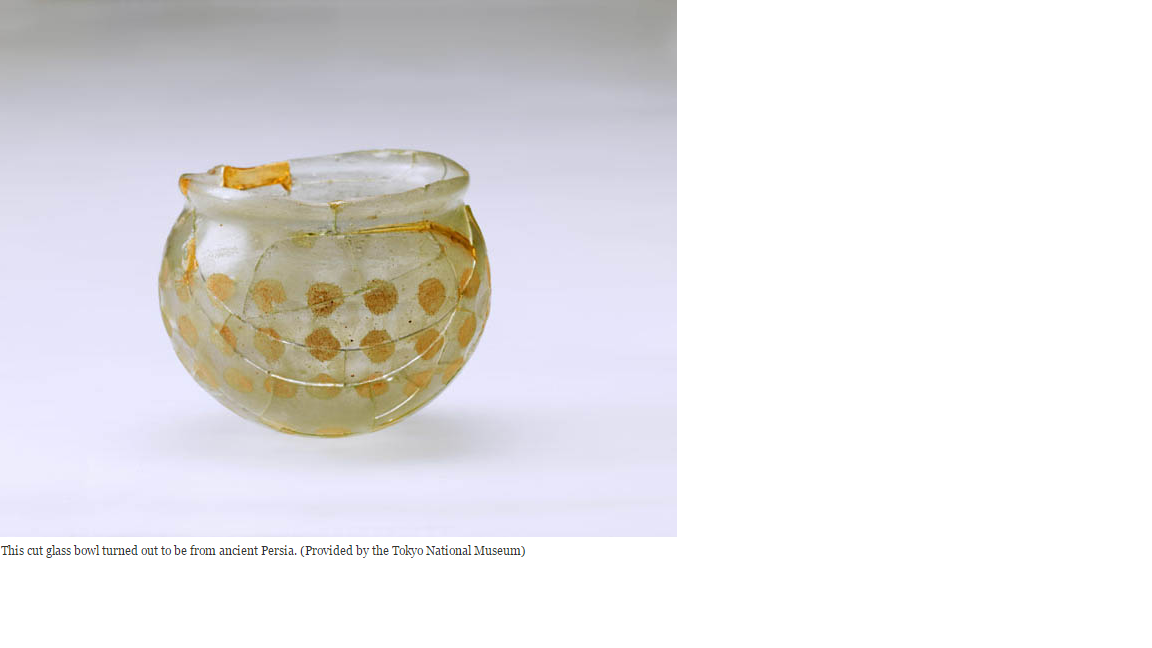
ROMAN GLASS has been found in a recently opened Japanese tomb dating to the 5th century, as per an article in this week’s Asahi Shimbum (courtesy of Adrian Murdoch’s fine blog).

Read the original article on this stunning discovery here: http://ajw.asahi.com/article/behind_news/social_affairs/AJ201411130064

map japan

The ornamental glass (a beautiful cobalt blue plate and a delicate golden bowl seen above) is believed to have made it’s way to Japan through Sassanid Persia.  Scientific analysis suggests that both items were created by Roman artisans working within the Empire at some point in the 3rd century.  While it’s unknown precisely when and how they made their way to Japan, they were buried along with the denizen of tumulus #126, within a cluster of ancient graves dating to the late 5th century.

Niizawa Senzuka burial mounds

So what does it have to do with the Age of Justinian, this turbulent time when the light of Rome still shined in the East as darkness fell in the West?

In these fragile pieces of blue and gold glass, fantastically preserved, we have an example of how far Rome reached even in an era in which common wisdom says Rome had already “fallen”.

The truth, as found in this burial mound in Nara Prefecture suggests something very different.

While Roman trade with Japan was indeed rare, the Romans (and their trading partners and sometimes enemies, the Persians) traded actively with the East. Most of this trade centered around silk that could only be sourced from China at this time. Roman gold moved east, and Chinese silk moved West. That river of gold sustained the Persians.

But there would come a day, not long after our blue glass plate was buried in Japan, when an exceptional man, a missionary, took an extraordinary risk by smuggling silk worms out of the Forbidden City in a hollow-tipped cane. When he arrived at the Emperor Justinian’s court in Constantinople he irrevocably changed the course of history….

– Matthew J. Storm