Swiss Cherry Farmer finds Roman Coin Hoard (in a mole hill)

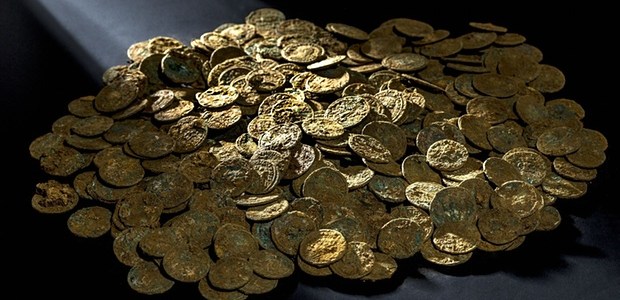
A Swiss farmer found a hoard of 4,166 Roman coins in a mole hill beneath his cherry orchard recently.  The 1,700 year old coins were in fantastic condition, the most recent of which dates to the reign of the Emperor Maximilian (buried shortly after it was minted in the year 294CE).  Their pristine condition was in part attributed to the fact that the land in which they were deliberately buried had never been built upon – it has been continuously farmed since this part of Switzerland was part of the Roman Empire.

Click here for more.


Justinian’s “Flat-Pack” Church, Raised from the Seabed

“We hope it will be easier [to assemble] than an Ikea wardrobe.”
– Dr Alexander Sturgis, Oxford University

A prefabricated church, built in Justinian’s Constantinople and lost at sea off the coast of Sicily 1,500 years ago will soon be reassembled in Oxford University’s Ashmolean Museum.

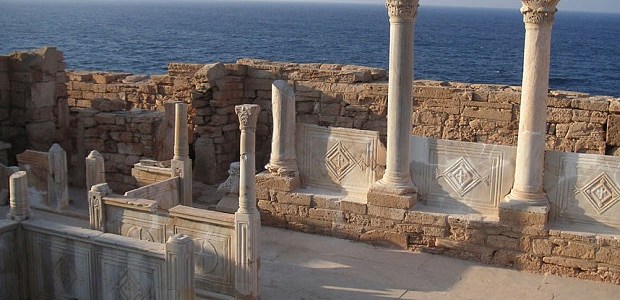
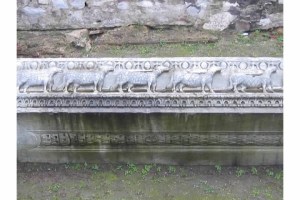
Justinian had such buildings constructed with interlocking pieces that might be be readily shipped and assembled in distant locations – the image above shows the ruins of one such Justinian construct from Libya.  They were transported by specially designed cargo vessels across his restored Roman Empire, and this particular church spent nearly fifteen hundred years on the Mediterranean seabed before it was discovered in the 1960’s.  While many pieces still lie submerged, Oxford will mount the structure with what they have to give museum-goers an opportunity to ‘visit’ a vestige of Justinian’s Rome.

For me, the sheer brilliance of the lego-like, prefabricated concept that Roman engineers invented fifteen centuries ago is an absolute marvel.  Cutting edge architectural magazines like Dwell now expound the pre-fab ‘trend’!   Just imagine Justinian’s ships plying Mare Nostrum fifteen centuries ago with civilization in their holds, exporting tangible proof of Rome’s continued strength long after the West had fallen away.

Click here for an article in the UK Telegraph (loaded with factual inaccuracies but fascinating nonetheless).
Roman Mosaic Floor Found in Turkey, near Syria

“The city is one of the few places where Syrian urban culture from the Hellenistic-Roman era can currently still be studied.” – Prof. Dr. Engelbert Winter from University of Münster

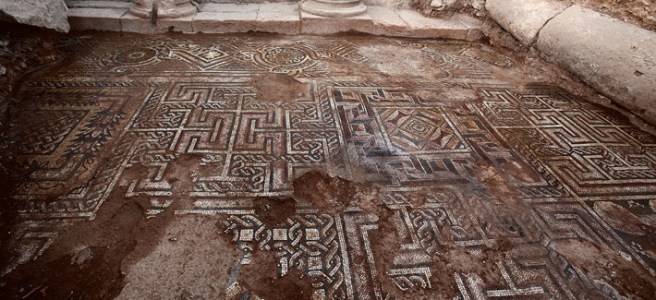
Archaeologists from Germany’s University of Munster have discovered a beautiful mosaic floor in Gaziantep, Turkey (just 60 miles from Aleppo, Syria),. once known as Doliche in Rome’s Syrian province.

This part of Turkey is one of the last protected parts of this once flourishing region of the Roman Empire.  Most of Roman Syria is now off-limits and under assault, as per the lead quote above making this corner of Turkey, and this find, that much more valuable.

Though the date in which the floor was set has not yet been disclosed it is of a late Roman vintage and very reminiscent of work seen in Istanbul’s Great Palace Mosaic Museum (once Constantinople’s Imperial Palace).

For more on the discovery see this link to the University of Munster’s press release.


Medusa Head Discovered in Turkey

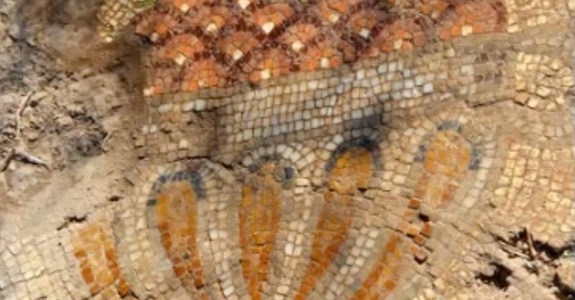
On a hilltop in Turkey’s Antalya province, overlooking the Mediterranean, in what was once the Roman city of Antiochia ad Cragum, a team of archaeologists from the University of Nebraska discovered a remarkable Roman-era Medusa head (see above) below Mount Cragus.

Somehow this pagan symbol survived the Christian-era purges that destroyed so many pagan artifacts.

There is no knowing (yet) as to the date Medusa was carved, but the dig team speculates that she survived the purges because she was part of a building’s facade.

Read here for more.


Justinian Era Mosaics found in Israel

The Israel Antiquities Authority just released pictures of marvelous mosaics found in an industrial park in Qiryat Gat, Israel – they once graced the floor of a church likely built in Justinian’s lifetime, featuring christian and more traditional (pagan) images.  Curiously, the mosaics also depicted a map of an Egyptian city – Chortaso – which might have been the original home of this congregation though the true meaning of the map is a mystery.

Why would a church in Judaea have a map of a town in Egypt gracing its floor?

See here for more:

http://www.livescience.com/52335-photos-ancient-church-mosaic.html


Romans in Germany!

Nothing gets my juices flowing like a new archaeological find that illustrates the breathtakingly broad reach of Imperial Rome.

Though this doesn’t date to the era of Rome on the Cusp, this little find is fascinating nonetheless.

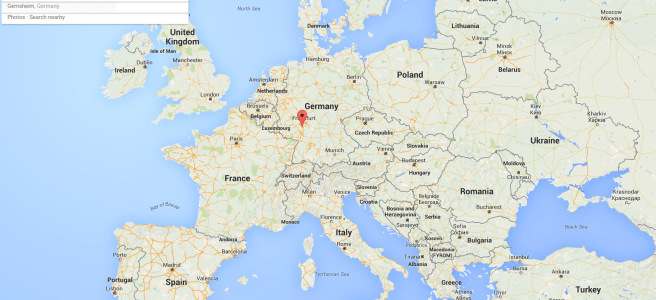
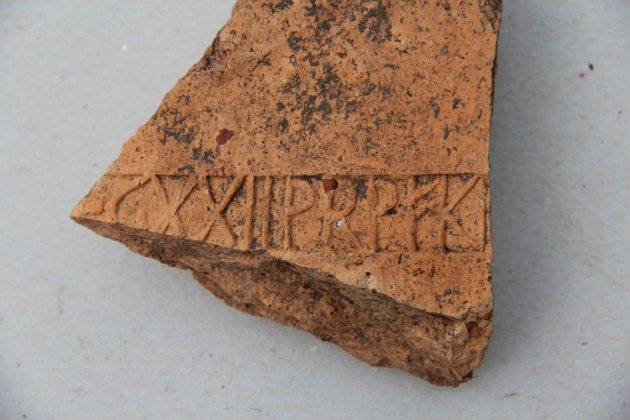
Near the modern town of Gernsheim (on the Rhine River), archaeologists from Goethe University just discovered an early 2nd century Roman fort.  They estimate that it was abandoned around 120CE when the soldiers stationed there were moved to the Roman frontier with Germania along the Danube.  Found in the dig thus far are signs of ordinary life, dice, combs, etc. and a masonry fragment indicating the name of the unit stationed there (see below), the Legio XXII Primigenia Pia Fidelis, part of the Limes Germanicus.

gernsheim find

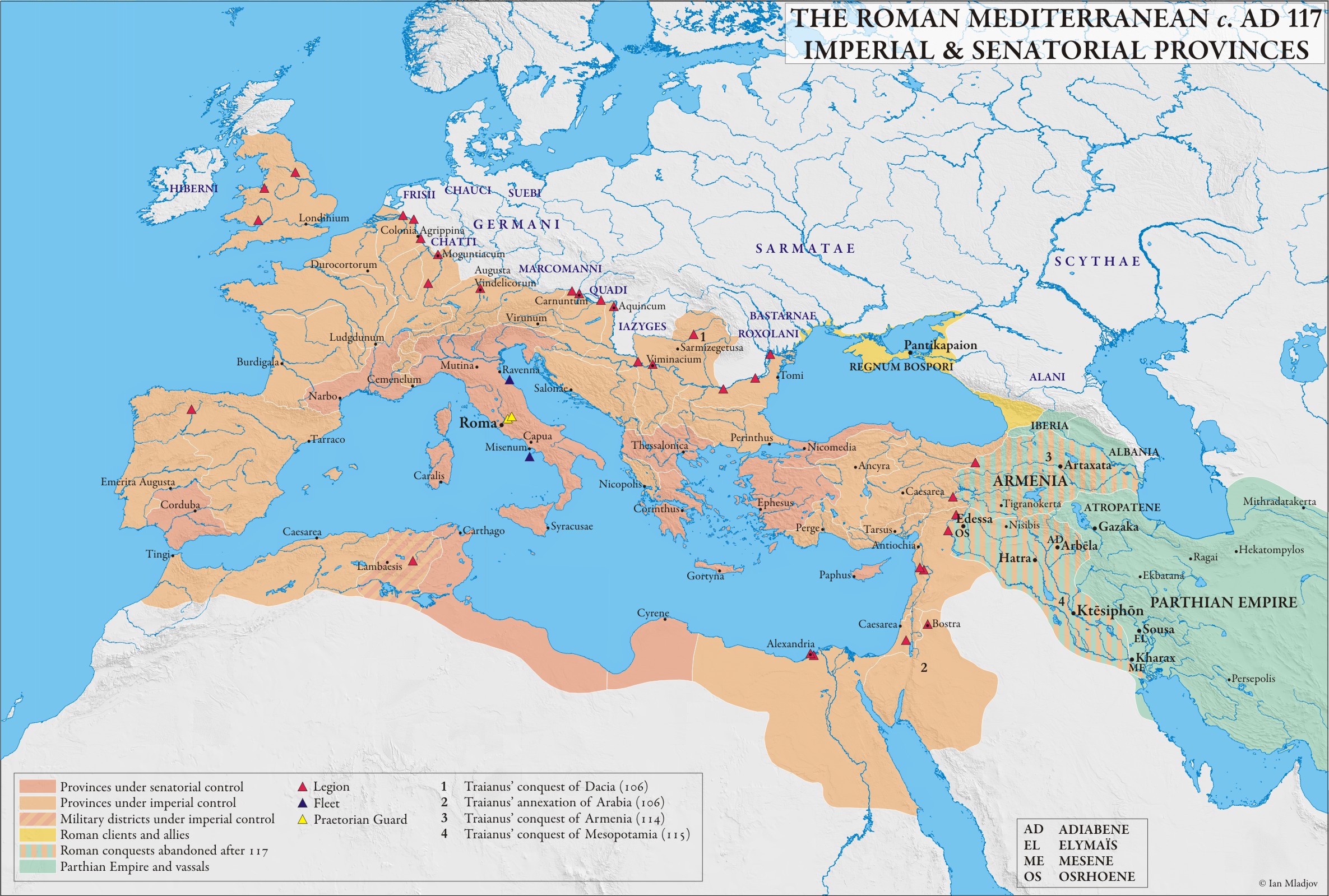
Here is a reminder of what the Roman Empire looked like at that date.

romana117

And here is a brief article on the dig in Archaeology.

And a better article in the International Business Tribune.