Roman Villa under your Tennis Court

Imagine you are a loving father – not such a terrible stretch, and you want to wire your old country barn for electricity so that your children can play indoor tennis at night. That’s something that many of us would gladly do. Just lay some electric cable (hire a professional of course), and there you have it, tennis day and night, year round, and grateful children…

Now if you are in the former Roman colony of Britannia, homeowners that take a spade to their backyard are used to surprises given the rich history of the island.  Yet no one in their right might would expect anything quite as rich as what this homeowner uncovered – one of the most stunning Roman villas ever unearthed, anywhere in the world.

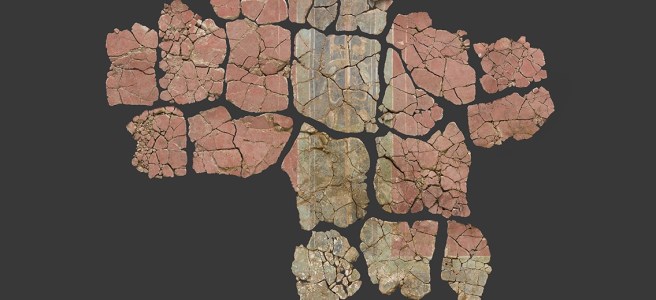
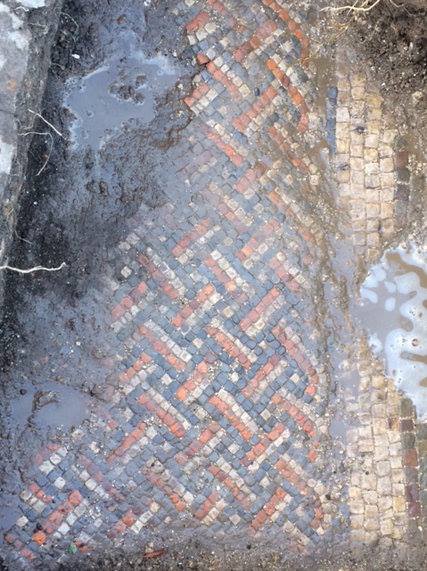
Workers had sunk their shovels about 24 inches below the surface when they struck something hard. Some quick work with their hands revealed Roman mosaic (right) whereupon the homeowner called in the archaeologists who quickly determined that what lay beneath this Mosaic Floor of Tennis Court Villacountry home was the most perfectly intact Roman villa ever discovered in England, one that had been virtually untouched since it collapsed in the 6th century CE, approximately a century after Roman legions were evacuated from Britannia by the Emperor Honorius who told the Romans in Britain to “look to their own defenses”,  in 410CE, because Rome could no longer support its most distant borders.
Returning to the villa (images of the dig below along with an artist’s rendering of the home), which was believed to possess three stories – it has rather stunned archaeologists thrilling with what might be found once it is excavated. As one opined: “This is a hugely valuable site with incredible potential. The discovery of such an elaborate and extraordinarily well-preserved villa, undamaged by agriculture for over 1,500 years, is unparalleled in recent years and it gives us a perfect opportunity to understand Roman and post-Roman Britain.”
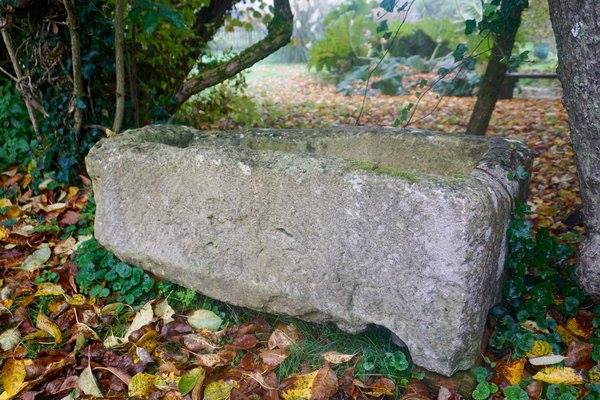
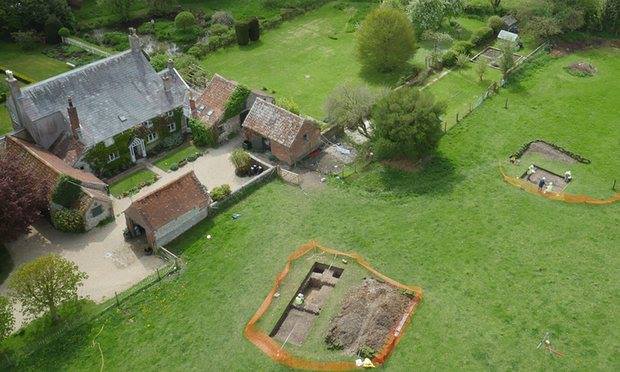
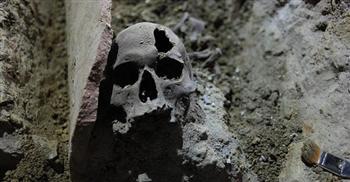
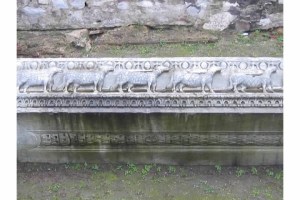
Coffin of Tennis Court Villa Active Dig of Tennis Court Villa Artist Rendering of Tennis Court Villa

That said, for the time being, Historic England covered over the recent finds with earth to preserve them until such time as their raise sufficient funds to run a proper dig, a thoughtful move. Until then this Roman villa will continue to slumber underground, dreaming of Honorius perhaps, and his fateful decision one thousand four hundred years ago to abandon Britannia…

I can’t help imagine what the owner of that palatial estate thought as they watched the Picts, Celts and Jutes come loping out of the forest, knowing that their time had come.

For more on the villa see here.
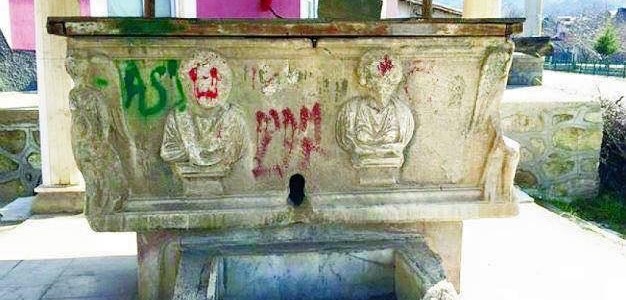
A Roman Tomb in Turkey, Lost and Found

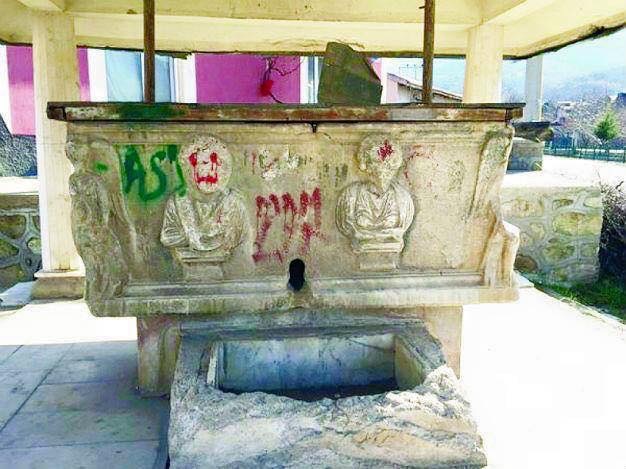
A Roman tomb, graffiti clad, filled with water, quenches thirst, lost in Çakırköy, Turkey.

This little snippet (below) fascinated me. How this 2,000 year old Roman tomb was unearthed and somehow wound up as a fountain in this small town in the heart of what once was Roman Anatolia and is now Turkey – somewhere between Istanbul and Ankara – no one knows. But there it is in the picture below, alive, used. Perhaps that is best. One wonders what the thirsty passerby thinks when they lean in to take sip…

image

“A 2,000-year-old tomb from the late Roman era serves as a fountain in the village of Çakırköy in the western province Afyonkarahisar.

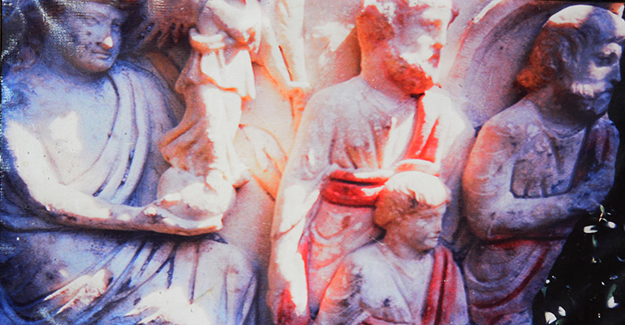
Nike, the god of victory, is depicted on four sides of the Roman tomb, which was discovered in 1986 by the Turkish Grain Board. On one of the long sides of the tomb, the reliefs depict a man and woman, who were most probably the owners of the tomb, and two Medusa heads on the other side. The writings on the tomb have been destroyed, as reported by Aktüel Archaeology magazine. The tomb is thought to have served as an important family grave in the ancient age.

Museum officials say the tomb is used as a fountain in order to keep treasure hunters away from the area.”
March/29/2016 – From Hurriyet Daily News

A Reminder of Romans in Colchester

“Camulodunum.”

Once upon a time she was a Roman city, the first Roman city in Britannia.

Today Camulodunum goes by the name of Colchester, and it lies 66 miles northeast of London (Roman “Londinium”). It is known as the oldest town in England and was once the capital of Britannia, one of Rome’s prized possessions when it was part of the Roman Empire from 43CE to 410CE.

Camulodunum / Colchester was recently in the news when workers renovating a department store on High Street discovered the charred ruins of a Roman home beneath the shop’s basement.

The Dig in Colchester


Archaeologists are used to sifting through the charred remnants of Roman-era Colchester, because the first Camulodunum was sacked and burnt to the ground shortly after the city of London was founded. This destruction left a layer of burnt sediment upon which the Roman city was subsequently rebuilt. That sediment remains under Colchester and is frequently encountered.

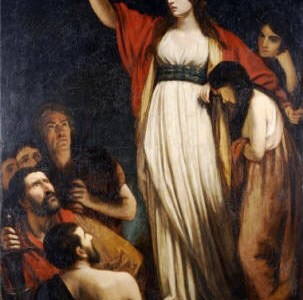
Colchester was sacked during the revolt of Queen Boudica (see featured image of this post for representation), the Celtic warrior queen who led a brief but smashingly destructive uprising against Roman rule in 61CE, a revolt that left an estimated 70,000 Romans and Britons dead before the Romans reestablished control over the island. In the Battle for Camulodunum, the Roman IX Legion tried to relieve the residents of the city but arrived too late to provide succor. Gaius Suetonius Pauline’s, the Roman Governor of Britannia eventually prevailed over Boudica at the Battle of Watling Street. Though they were grossly outnumbered, Roman discipline and strategy prevailed over Boudica’s Celts and Roman rule was reestablished on the island for 400 years.

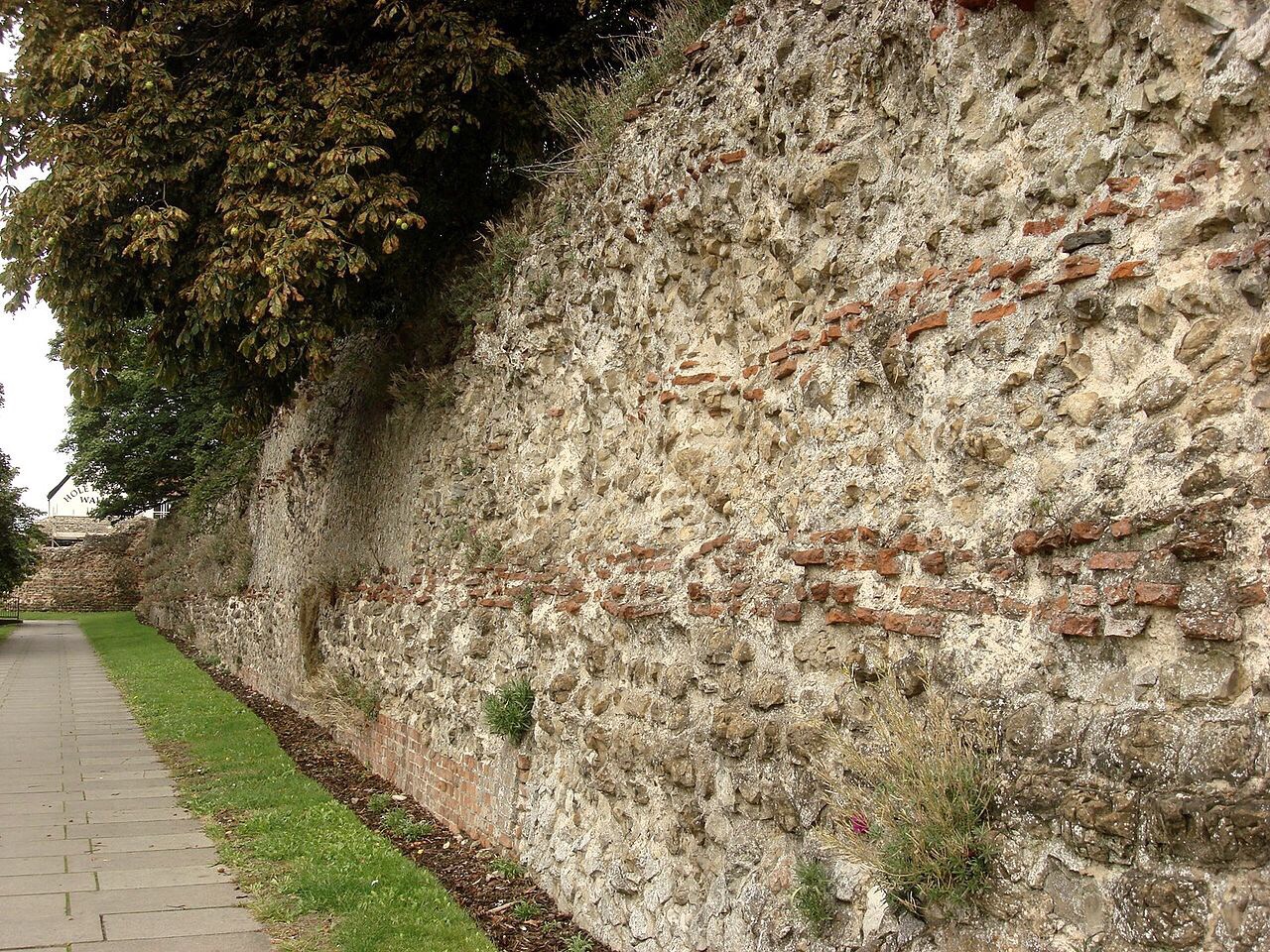
Roman Walls of Colchester


Found under the Department Store

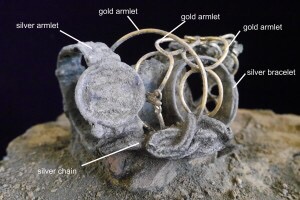
Back to modern Colchester and the dig under the grand department store on High Street. Archaeologists were called to the site, and in those charred remains, they stumbled across one of the most notable hoards of Roman jewelry ever discovered in Britain (or a

Roman Jewelry found in Colchester

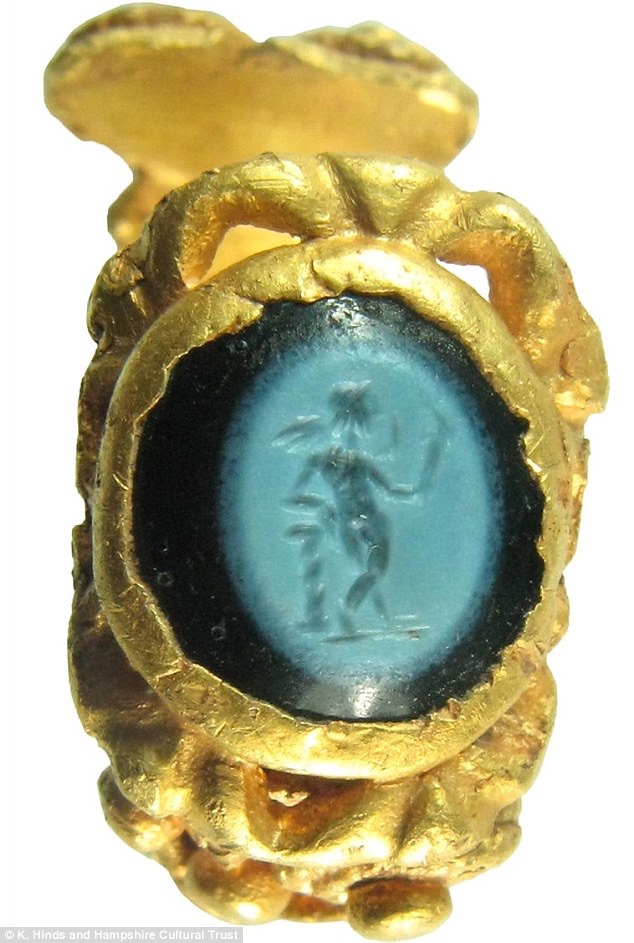
nywhere for that matter! Precious metals datingfrom the Roman era are rarely found – when fungible precious metals were discovered they were melted down to use as currency, not adornment). The dig is still ongoing but the principle items discovered include: three gold armlets, a silver chain necklace, two silver bracelets, a substantial silver armlet, a small bag of coins, and a small jewellery box containing two sets of gold earrings and four gold finger-
rings.
Archaeologists speculate that these remarkable items belonged to a very wealthy woman who buried them in the basement of her house as Boudica and her army marched on the town, hoping to retrieve them when the danger passed – that they were
never retrieved implies that their owner met a dark end, as did most Roman residents of the city.
For more on the dig, see here:
http://www.thecolchesterarchaeologist.co.uk/?p=14844


Diocletian’s lost palace, discovered…

When you hear the word “Izmit”, what comes to mind?

How about capital of the Roman Empire?

Once known as the Roman city of Nicomedia, founded by refugees from the Greek city of Megara (whose compatriots also founded nearby Byzantium – Constantinople – Istanbul), Nicomedia, now Izmit, sits in modern Turkey on the Sea of Marmara.

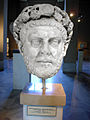
DiocletianIn 286 CE, the Roman Emperor Diocletian (right) struggled to containwhat is known as the “Crisis of the Third Century”, when Rome came under ferocious attack along its northern and eastern frontiers. In response to these threats, Diocletian instituted a massive reform in Roman government. He split the power that resided in the office of Emperor into four, creating two senior Emperors, or Augustus (Diocletian and Maximian), and two junior Emperors, or Caesars (Galerius and Constantius, father of future Emperor Constantine the Great).

Diocletian assumed responsibility for the Roman East, establishing his capital at Nicomedia. It would remain the capital city of the Eastern Roman Empire under Diocletian and subsequently, under Constantine the Great until Constantine moved the capital across the Bosporus to Byzantium in 330CE (though Constantine would eventually die in Nicomedia seven years later in 337).

Nicomedia, a city lost in time, or at least lost to Western minds, remains a thriving metropolis, now known as Izmit.

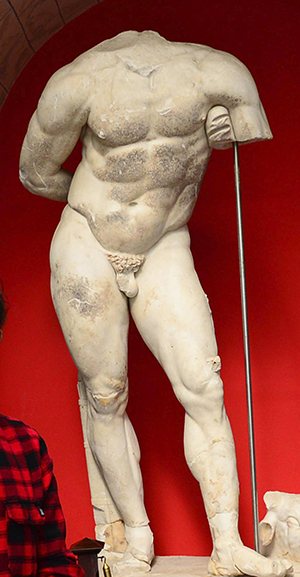
And under the streets of Izmit, the Roman city still lies, proof of which Izmit Marble surfaced during routine work to recover from a devastating earthquake in 1999. Builders who discovered the headless Hercules in 2001 (pictured below) treated the Roman remains as garbage for fear that their construction work would be stopped by local authorities. Fortunately, that is precisely what happened and the site is now Headless Hercules from Izmitunder protection from the local museum and a proper dig to excavate the unearthed remains of Nicomedia begin this month. Archaeologists now believe that that the headless Hercules once sat in Diocletian’s palace which
still rests meters below street level, waiting to be uncovered.

Izmit Palace

Remarkable stuff, and as surprising as the discovery may be to us, to many local residents it is just as novel. As one of the lead archaeologists on the soon to begin dig stated: “[M]any people living here are unaware that they have been living on a huge palace for centuries,”

For more see the Turkish paper Hurriyet.

Ancient Roman Tavern found in France

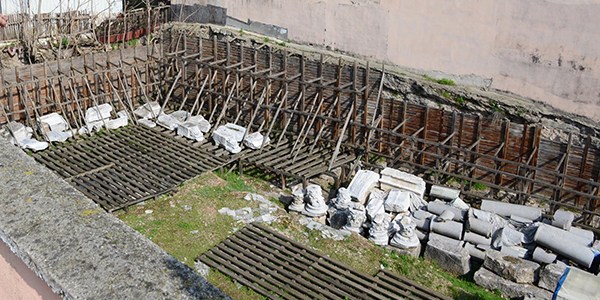
It doesn’t look like much in the picture above, but this restaurant just unearthed in Southern France has archaeologists quite excited.  It is located in what was once the Roman seaside town of Lattara, and two millenia ago it catered to local diners as well as Roman immigrants that had settled in the area.  Few such Roman taverns have been found making this discovery particularly compelling.  Archaeologists have concluded that the restaurant made its own bread, served food and in an adjacent space they served libations as well (traces of alcohol have been identified in bowls imported from Italy for that purpose).

For more on this discovery see Archaeology Magazine.

Lattes_-_Musée_Henri-Prades_-_Vue_du_site_archéologique_de_Lattara

And for more on the port city of Littara (remains pictured below) see the website for the local museum, Henri Prades of Montpellier Méditerranée Métropole in Lattes.

Last Roman church in Ankara (Turkey) close to disappearing

Saint Clement - ruins

It’s easy to forget that all of Turkey was once the heart of the Roman Empire after the far-sighted Emperor Constantine moved the Empire’s capital from Italy to Turkey (to Byzantium-Constantinople-Nova Roma-Istanbul).

Yet evidence of Rome’s presence in Turkey (not to mention Syria/Libya/Israel/Egypt/Algeria etc.) is everywhere, sitting patiently in the shadows, enduring benign and not so benign neglect by the country’s current government.

Hence this intriguing article.  There seems to be a rebirth of interest in Turkey’s Roman past among academics and ordinary citizens, and a growing movement to preserve and promote that past.  As you will see in the link below, the paper, Hurriyet, references what appears to be the last Roman church where traces (ruins) are still visible in the capital of modern Turkey, Ankara – far from Istanbul / Constantinople, wedged in between modern buildings, almost forgotten and rapidly disappearing.

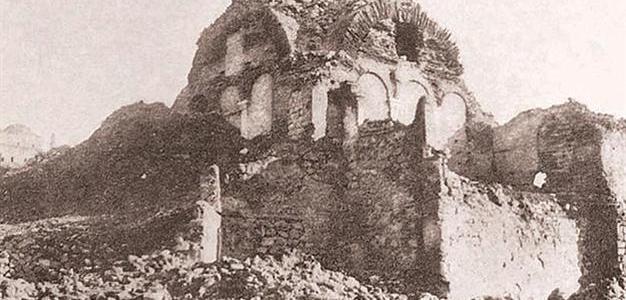
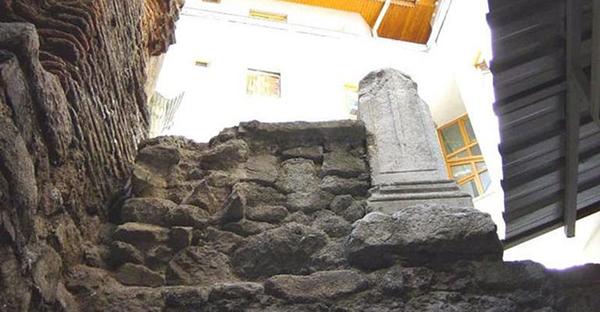
The article speculates that the church known as Saint Clement’s was built as early as the 4th century, and the paper calls for the Roman building to be preserved.  From a glimpse at the picture above, one cannot help but hope that the call to action is heeded.  Saint Clement the man (and the structure) is described by Wikipedia as:

In 303, Ancyra was one of the towns where the co-Emperors Diocletian and his deputy Galerius launched their anti-Christian persecution. In Ancyra, their first target was the 38-year-old Bishop of the town, whose name was Clement. Clement’s life describes how he was taken to Rome, then sent back, and forced to undergo many interrogations and hardship before he, and his brother, and various companions were put to death. The remains of the church of St. Clement can be found today in a building just off Işıklar Caddesi in the Ulus district. Quite possibly this marks the site where Clement was originally buried.

Other Roman structures still exist in Ankara, including traces of the Roman Baths below.  See this Wikipedia on Roman Ankara for more on Ankara’s Roman past.

220px-AnkaraRomanBaths1


2000 Year Old Roman Fresco Discovered Under London

I am always captivated by news of archaeological discoveries in modern cities that have descended from Roman towns, forts and metropolises.  I’m particularly thrilled by finds in seemingly incongruous locations, those that remind us of how truly sprawlng the Roman Empire once was, like this recent discovery in London.

This week, archaeologists conducting a survey of the ground beneath 21 Lime Street in central London in preparation for the construction of a new office building discovered a remarkably well preserved Roman fresco in what must have been a stunning home built in Roman Londinium’s first decades in the first century CE.  The home was subsequently flattened by the Romans who built the largest temple north of the Alps on that same site.  This mosaic, discovered twenty feet underground, was preserved when it was deliberately buried under that new structure.  The quality of the craftmanship is still evident as is the wealth of the family that commissioned it for their home, as is indicated by the rare pigments that were used in its creation (like the very rare cinnabar used for its red coloring).  For more on the discovery see this article in the New Historian.

Roman Grave Discovered in Istanbul Shopping District

I love when a little piece of ancient Rome pops up unexpectedly in modern Istanbul reminding everyone of the city’s prior and longest tenured residents – the Romans!

The skeletons were found beneath the “Casa Garibaldi”, also known as “Societa Operaia Italiana di Mutuo Soccorso in Costantinopoli,” built in 1863 and located close to Taksim Square in a part of Istanbul closely associated with the city’s Ottoman past.  Taksim Square lies across the Golden Horn from Sultanahmet – the historical center of the Roman and Greek city.

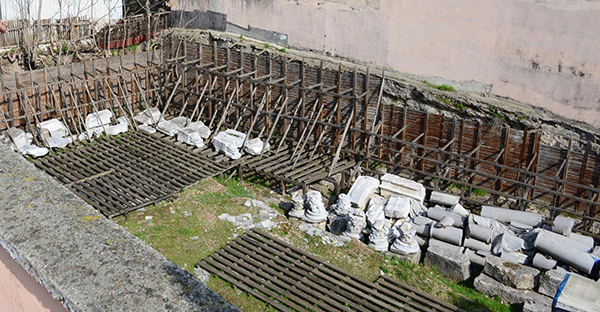
What were the Romans doing in this fashionable Ottoman district?Beyoglu, the neighborhood where the Casa Garibaldi is located was once in fact a Roman suburb of Constantinople.  It’s not known precisely when these Romans were buried, or why, or what precisely had been located on this spot in Justinian’s day and perhaps we will never know.  But I am heartened by the fact that more attention is being given to these types of discoveries in Istanbul despite the clear opposition of the Turkish state to archaeological studies of the city’s Roman past.  A recently founded department of Byzantine (Roman) Studies at Istanbul’s Bosporus (Bogazici) University is a reflection of this movement.

Orthodox Christian monks from the monastery at Mount Athos were invited to bless the skeletons before they were moved to the Istanbul Archaeological Museum.

For more on this discovery, see the article in Hurriyet.

General Belisarius Enters Rome – on this day in 536CE

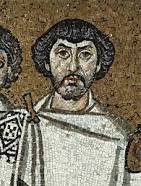
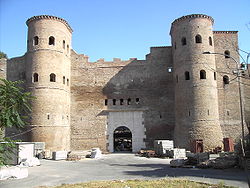
On this day, December 9th in 536CE, Roman General Flavius Belisarius (pictured above) entered the city of Rome through the Asinarian Gate (seen below) with his small cohort of Roman knights.

250px-Porta_Asinaria_2948

The city’s residents had not seen a Roman Legionnaire for almost exactly 60 years, when what remained of the Western armies deserted the Eternal City when the Goth warlord Odoacer toppled the last Western Roman Emperor, Romulus Augustulus.

Since that time, Rome (the city) had been under the control of a series of Goth rulers, including Odoacer, Theodoric (the “Great”), Amalasuntha (daughter of Theodoric), Theodad (cousin of Amalasuntha and her murderer) and at the time of Belisarius’ arrival, the Goth King Vitiges.

Imagine that!  For 60 years, the Roman Empire had gone about its business with an Emperor mounted on a throne in Constantinople, while Rome herself – the birthplace of Empire – was held by barbarians.  Imagine a United States continuing to exist, and to thrive, with a Washington D.C. belonging to a foreign power.  It sounds inconceivable and so it was to the Emperor Justinian who was determined to accomplish what none had dared, to return Rome to Rome.

By the time that Belisarius arrived in Rome his exploits (in Persia and Africa) were the stuff of legend.  But he arrived woefully understaffed and soon faced a Goth army that exceeded 100,000 in number surrounding the city, determined to crush Belisarius and with it, Justinian’s aspirations of restoration.

Absolutely fascinating stuff!

Following is a Wikipedia link which does a decent job of summarizing the ensuing Siege of Rome.